School of Medicine, Nankai University, Tianjin, China.
Center of Pulmonary & Critical Care Medicine, Chinese People's Liberation Army (PLA) General Hospital, Beijing, China.
Front Immunol. 2022 Aug 9;13:971189. doi: 10.3389/fimmu.2022.971189. eCollection 2022.
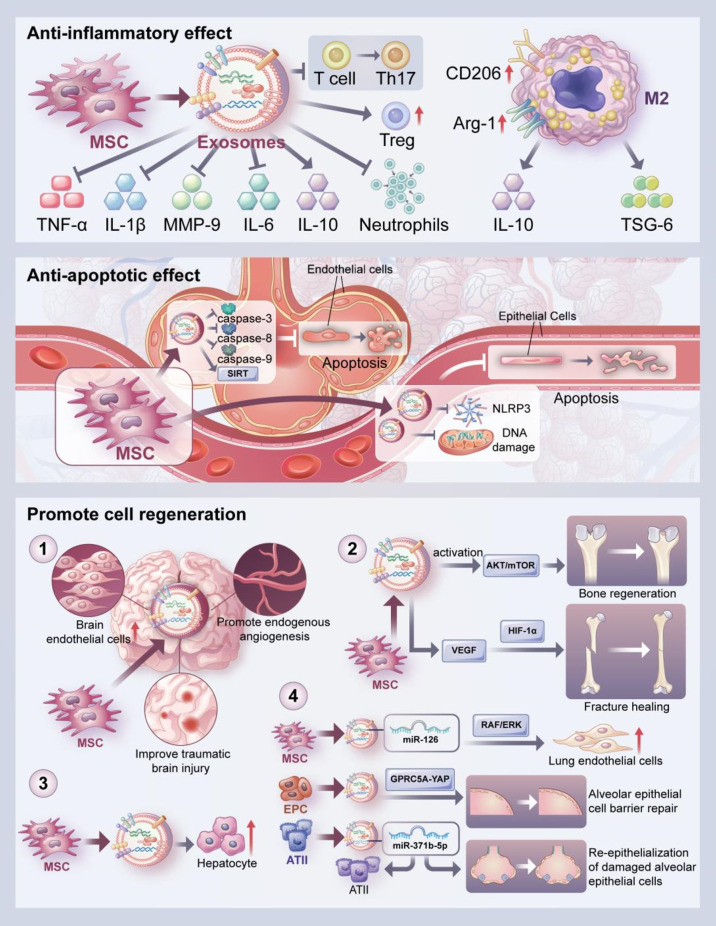
Acute lung injury (ALI)/acute respiratory distress syndrome (ARDS) is a critical clinical syndrome with high morbidity and mortality. Currently, the primary treatment for ALI/ARDS is mainly symptomatic therapy such as mechanical ventilation and fluid management. Due to the lack of effective treatment strategies, most ALI/ARDS patients face a poor prognosis. The discovery of exosomes has created a promising prospect for the treatment of ALI/ARDS. Exosomes can exert anti-inflammatory effects, inhibit apoptosis, and promote cell regeneration. The microRNA contained in exosomes can participate in intercellular communication and play an immunomodulatory role in ALI/ARDS disease models. This review discusses the possible mechanisms of exosomes in ALI/ARDS to facilitate the development of innovative treatments for ALI/ARDS.
急性肺损伤(ALI)/急性呼吸窘迫综合征(ARDS)是一种具有高发病率和死亡率的严重临床综合征。目前,ALI/ARDS 的主要治疗方法主要是对症治疗,如机械通气和液体管理。由于缺乏有效的治疗策略,大多数 ALI/ARDS 患者预后不良。外泌体的发现为 ALI/ARDS 的治疗带来了有希望的前景。外泌体可以发挥抗炎作用,抑制细胞凋亡,促进细胞再生。外泌体中包含的 microRNA 可以参与细胞间通讯,并在 ALI/ARDS 疾病模型中发挥免疫调节作用。本综述讨论了外泌体在 ALI/ARDS 中的可能作用机制,以促进 ALI/ARDS 的创新治疗方法的发展。