Lorsung Ethan, Karthikeyan Ramanujam, Cao Ruifeng
Department of Biomedical Sciences, University of Minnesota Medical School, Duluth, MN, United States.
Department of Neuroscience, University of Minnesota Medical School, Minneapolis, MN, United States.
Front Neurosci. 2021 Mar 12;15:642745. doi: 10.3389/fnins.2021.642745. eCollection 2021.
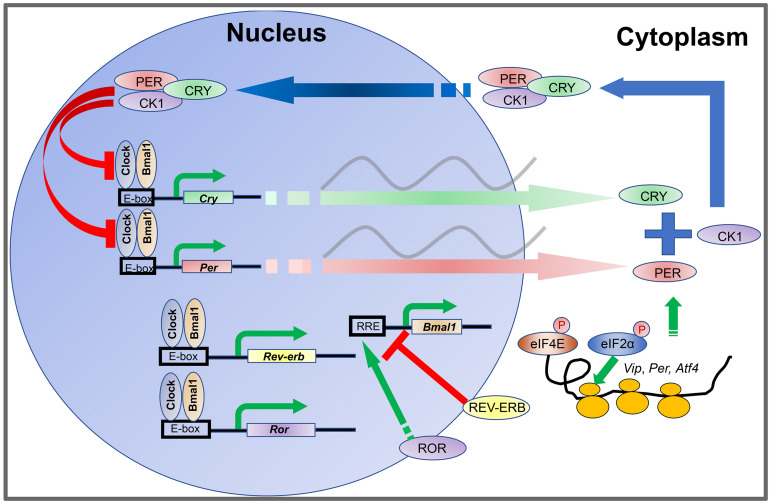
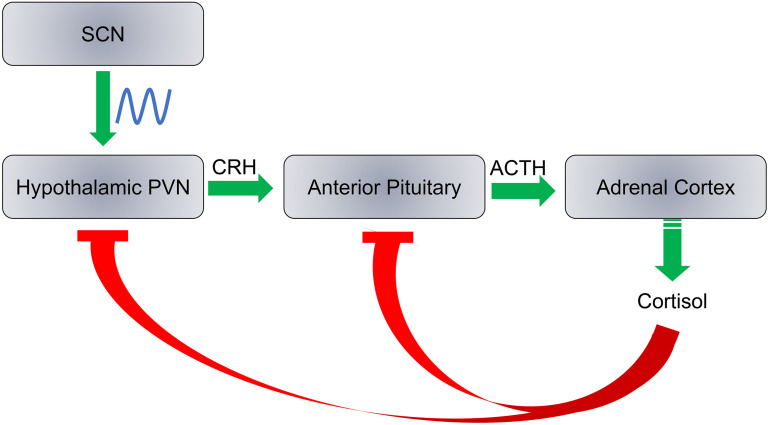
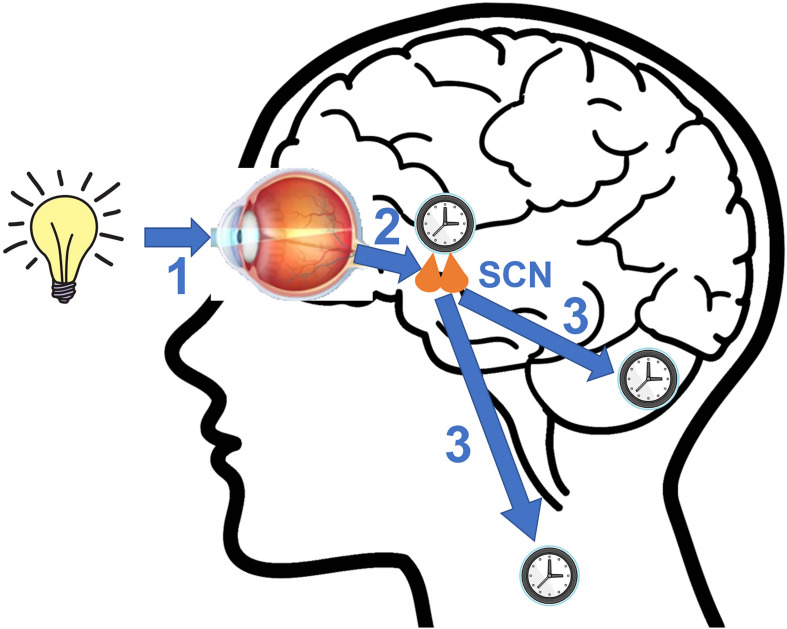
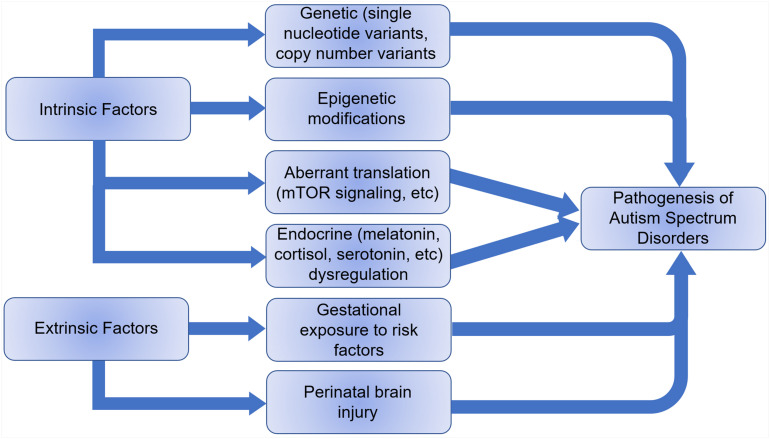
Autism spectrum disorders (ASDs) are a spectrum of neurodevelopmental disorders characterized by impaired social interaction and communication, as well as stereotyped and repetitive behaviors. ASDs affect nearly 2% of the United States child population and the worldwide prevalence has dramatically increased in recent years. The etiology is not clear but ASD is thought to be caused by a combination of intrinsic and extrinsic factors. Circadian rhythms are the ∼24 h rhythms driven by the endogenous biological clock, and they are found in a variety of physiological processes. Growing evidence from basic and clinical studies suggest that the dysfunction of the circadian timing system may be associated with ASD and its pathogenesis. Here we review the findings that link circadian dysfunctions to ASD in both experimental and clinical studies. We first introduce the organization of the circadian system and ASD. Next, we review physiological indicators of circadian rhythms that are found disrupted in ASD individuals, including sleep-wake cycles, melatonin, cortisol, and serotonin. Finally, we review evidence in epidemiology, human genetics, and biochemistry that indicates underlying associations between circadian regulation and the pathogenesis of ASD. In conclusion, we propose that understanding the functional importance of the circadian clock in normal and aberrant neurodevelopmental processes may provide a novel perspective to tackle ASD, and clinical treatments for ASD individuals should comprise an integrative approach considering the dynamics of daily rhythms in physical, mental, and social processes.
自闭症谱系障碍(ASD)是一系列神经发育障碍,其特征为社交互动和沟通受损,以及存在刻板和重复行为。ASD影响着近2%的美国儿童人口,且近年来全球患病率急剧上升。病因尚不清楚,但ASD被认为是由内在和外在因素共同导致的。昼夜节律是由内源性生物钟驱动的约24小时节律,在多种生理过程中都能发现。基础和临床研究的越来越多证据表明,昼夜节律系统功能障碍可能与ASD及其发病机制有关。在此,我们综述了实验和临床研究中昼夜节律功能障碍与ASD相关的研究结果。我们首先介绍昼夜节律系统和ASD的构成。接下来,我们综述在ASD个体中发现的被打乱的昼夜节律生理指标,包括睡眠-觉醒周期、褪黑素、皮质醇和血清素。最后,我们综述流行病学、人类遗传学和生物化学方面的证据,这些证据表明昼夜节律调节与ASD发病机制之间存在潜在关联。总之,我们提出,了解昼夜节律钟在正常和异常神经发育过程中的功能重要性,可能为解决ASD提供一个新的视角,并且针对ASD个体的临床治疗应采用综合方法,考虑身体、心理和社会过程中日常节律的动态变化。