Scientific and Medical Direction, Medical Center Foltra, Teo, Spain.
Front Endocrinol (Lausanne). 2021 Mar 11;12:636403. doi: 10.3389/fendo.2021.636403. eCollection 2021.
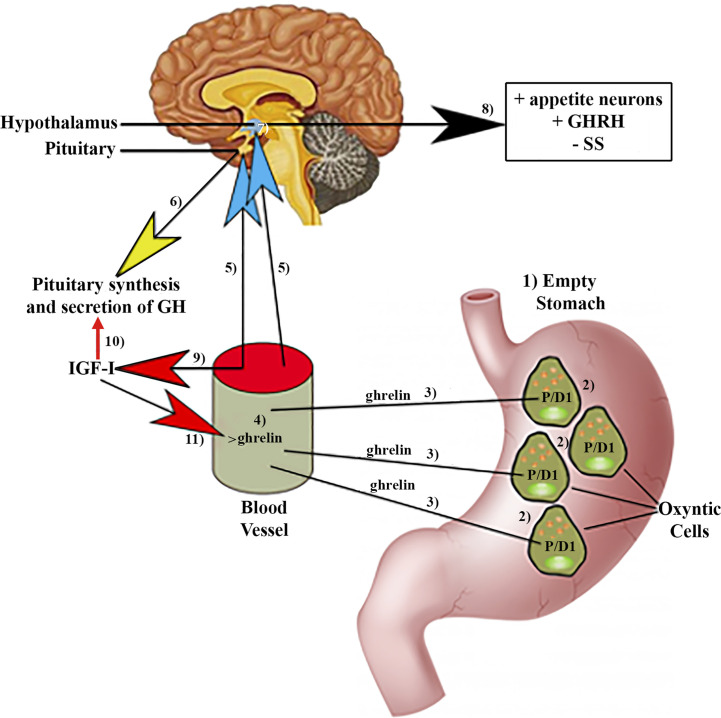
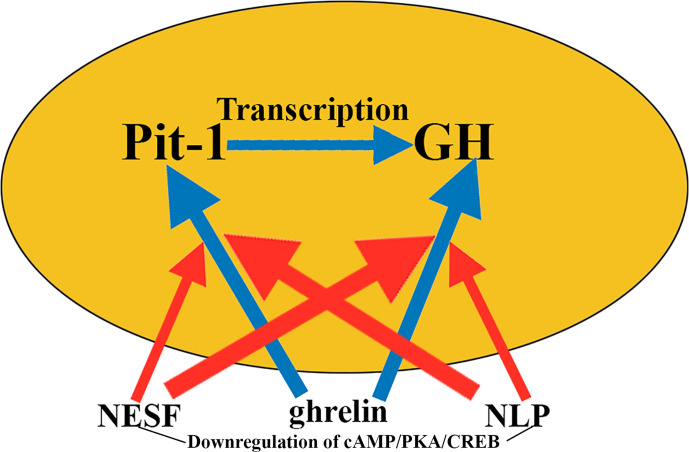
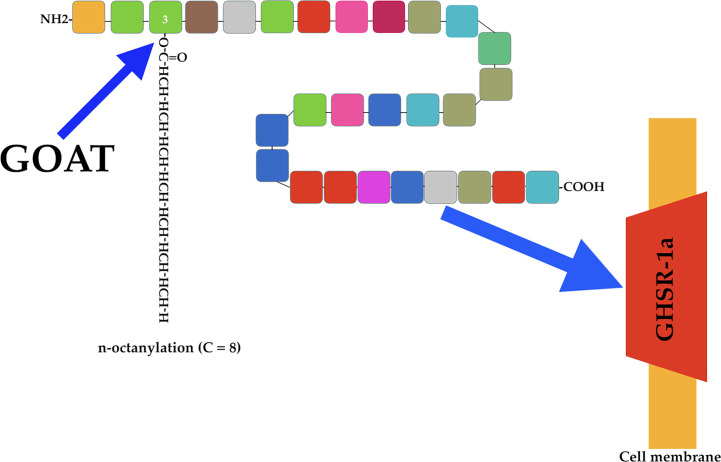
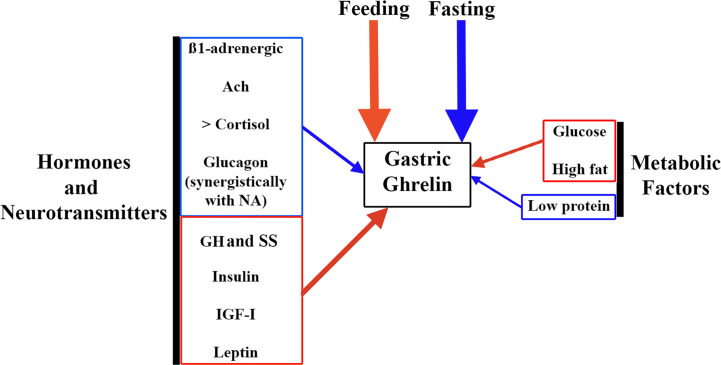
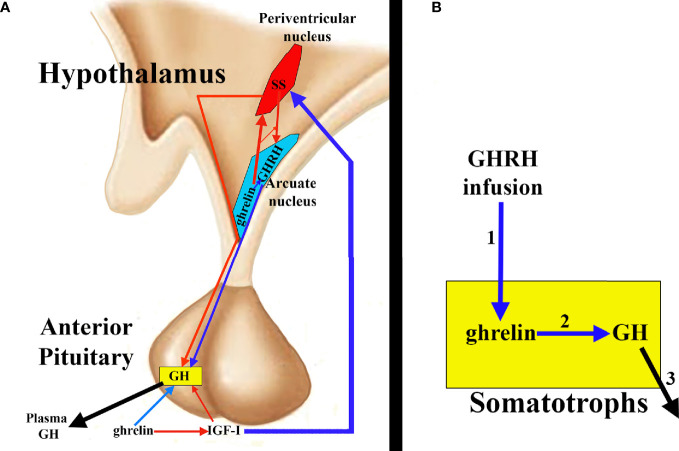
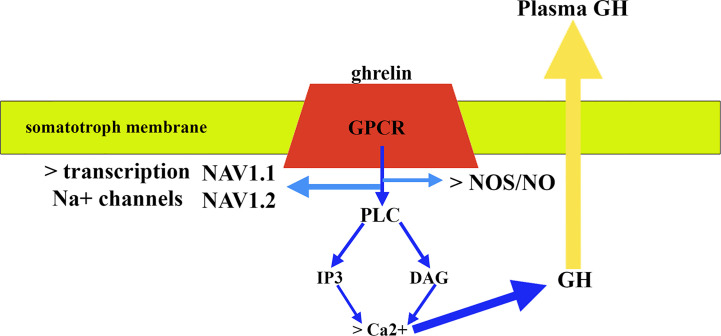
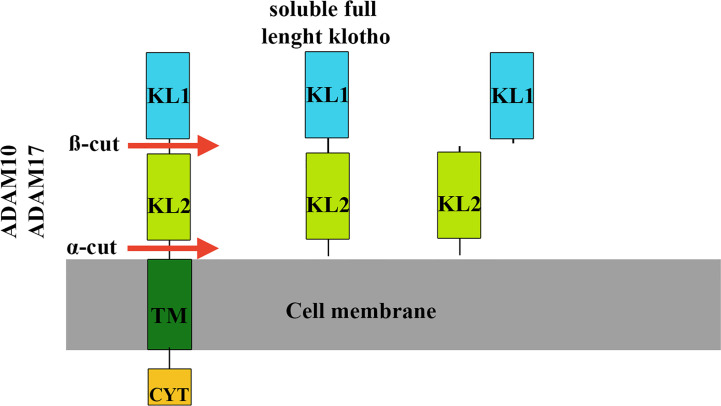
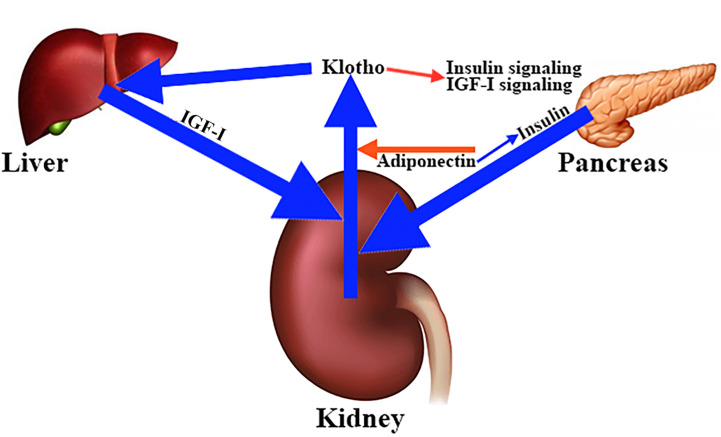
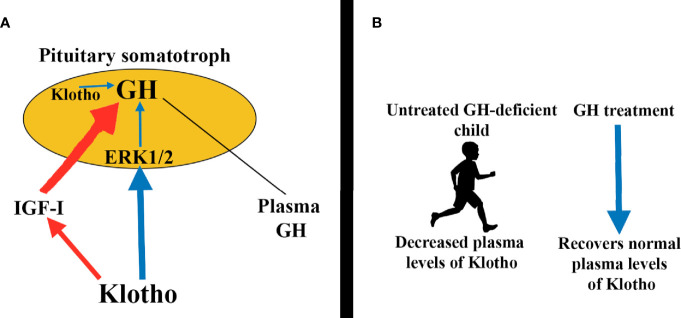
The classic concept of how pituitary GH is regulated by somatostatin and GHRH has changed in recent years, following the discovery of peripheral hormones involved in the regulation of energy homeostasis and mineral homeostasis. These hormones are ghrelin, nesfatins, and klotho. Ghrelin is an orexigenic hormone, released primarily by the gastric mucosa, although it is widely expressed in many different tissues, including the central nervous system and the pituitary. To be active, ghrelin must bind to an n-octanoyl group (n = 8, generally) on serine 3, forming acyl ghrelin which can then bind and activate a G-protein-coupled receptor leading to phospholipase C activation that induces the formation of inositol 1,4,5-triphosphate and diacylglycerol that produce an increase in cytosolic calcium that allows the release of GH. In addition to its direct action on somatotrophs, ghrelin co-localizes with GHRH in several neurons, facilitating its release by inhibiting somatostatin, and acts synergistically with GHRH stimulating the synthesis and secretion of pituitary GH. Gastric ghrelin production declines with age, as does GH. Klotho is an anti-aging agent, produced mainly in the kidneys, whose soluble circulating form directly induces GH secretion through the activation of ERK1/2 and inhibits the inhibitory effect that IGF-I exerts on GH. Children and adults with untreated GH-deficiency show reduced plasma levels of klotho, but treatment with GH restores them to normal values. Deletions or mutations of the gene affect GH production. Nesfatins 1 and 2 are satiety hormones, they inhibit food intake. They have been found in GH3 cell cultures where they significantly reduce the expression of mRNA and that of pituitary-specific positive transcription factor 1, consequently acting as inhibitors of GH production. This is a consequence of the down-regulation of the cAMP/PKA/CREB signaling pathway. Interestingly, nesfatins eliminate the strong positive effect that ghrelin has on GH synthesis and secretion. Throughout this review, we will attempt to broadly analyze the role of these hormones in the complex world of GH regulation, a world in which these hormones already play a very important role.
近年来,随着参与调节能量和矿物质稳态的外周激素的发现,生长激素(GH)受生长激素释放激素(GHRH)和生长抑素(somatostatin)调节的经典概念发生了变化。这些激素包括 ghrelin、nesfatins 和 klotho。Ghrelin 是一种食欲刺激激素,主要由胃黏膜释放,尽管它广泛表达于许多不同的组织中,包括中枢神经系统和垂体。为了发挥活性,ghrelin 必须与丝氨酸 3 上的 n-辛酰基(通常为 n = 8)结合,形成酰基 ghrelin,然后它可以与 G 蛋白偶联受体结合并激活,导致磷脂酶 C 激活,诱导肌醇 1,4,5-三磷酸和二酰基甘油的形成,从而增加细胞质钙,允许 GH 释放。除了对生长激素细胞的直接作用外,ghrelin 还与几种神经元中的 GHRH 共定位,通过抑制生长抑素促进其释放,并与 GHRH 协同作用刺激垂体 GH 的合成和分泌。随着年龄的增长,胃 ghrelin 的产生减少,GH 也是如此。Klotho 是一种抗衰老剂,主要在肾脏中产生,其可溶性循环形式通过激活 ERK1/2 直接诱导 GH 分泌,并抑制 IGF-I 对 GH 的抑制作用。未经治疗的 GH 缺乏症儿童和成人的血浆 klotho 水平降低,但用 GH 治疗可使其恢复正常。基因的缺失或突变会影响 GH 的产生。Nesfatins 1 和 2 是饱腹感激素,它们抑制食欲。它们已在 GH3 细胞培养物中发现,可显著降低 mRNA 的表达和垂体特异性阳性转录因子 1 的表达,从而作为 GH 产生的抑制剂。这是由于 cAMP/PKA/CREB 信号通路的下调所致。有趣的是,nesfatins 消除了 ghrelin 对 GH 合成和分泌的强烈正向作用。在整篇综述中,我们将尝试广泛分析这些激素在 GH 调节这一复杂世界中的作用,在这个世界中,这些激素已经发挥了非常重要的作用。