Jairajpuri Deeba S, Malalla Zainab H, Sarray Sameh, Mahmood Naeema
Department of Medical Biochemistry, College of Medicine and Medical Sciences, Arabian Gulf University, Manama, Bahrain.
Department of Obstetrics and Gynecology, Salmaniya Medical Complex, Manama, Bahrain.
Noncoding RNA Res. 2021 Mar 9;6(1):51-57. doi: 10.1016/j.ncrna.2021.03.001. eCollection 2021 Mar.
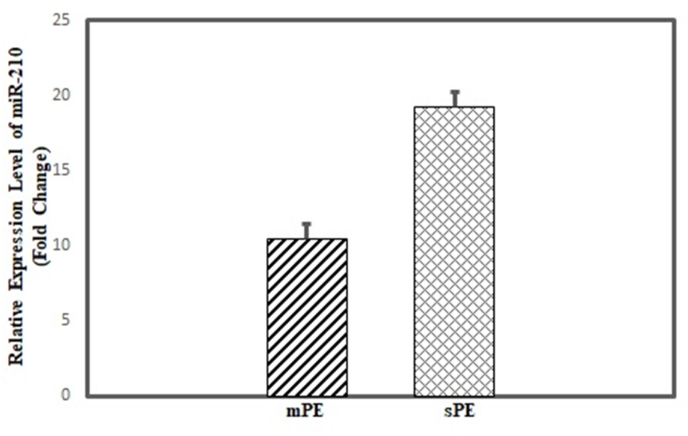
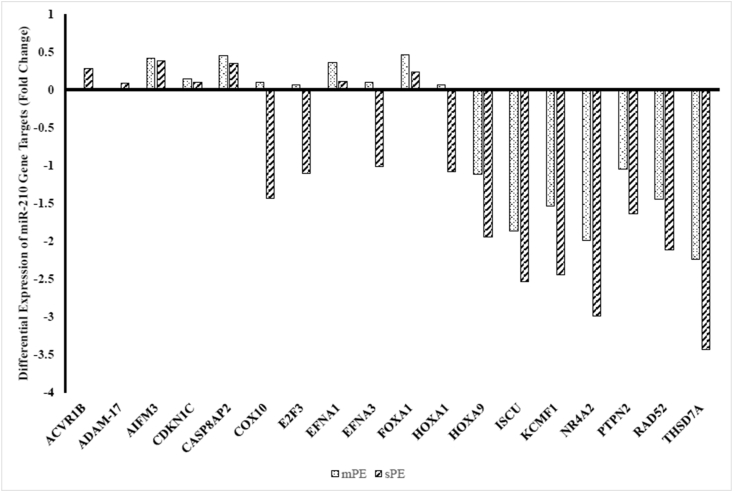
Preeclampsia (PE) is a multi-system disorder that is specific to human pregnancy. Inadequate oxygenation of uterus and placenta is considered as one of the leading causes for the disease. MicroRNA-210(miR-210) is one of the prime molecules that has emerged in response to hypoxia. The objective of this study was to determine miR-210 expression patterns in plasma from severe PE and mild PE patients, and how that affects the expression of miR-210 target genes. The expression levels of miR-210 were validated using reverse transcription-quantitative PCR in plasma of severe PE (15) and mild PE (15) patients in comparison to controls subjects (15) with normal pregnancy. Then, the association between miR-210 and its downstream genes was validated by using human miR-210 targets RT2 profiler PCR Array. Both the categories (mild and severe) showed significantly high miR-210 expression levels. Also out of the 84 hypoxia miR-210 associated genes screened using mRNA, 18 genes were found to be differentially expressed in severe PE whereas 16 genes in mild PE cases with varying magnitude. All the genes in both the PE groups were found downregulated in comparison to controls. These downregulated genes expressed in both the cases were shown to be participating in immunosuppression, apoptosis, cell growth, signaling, angiogenesis, DNA repair. This study provides novel data on the genes that work downstream of miR-210 and how dysregulated expression of miR-210 can affect their expression and in turn functioning which can be associated with PE risk and severity. This study is the very first to determine the effect of miR-210 expression levels on associated genes in plasma samples.
子痫前期(PE)是一种人类妊娠特有的多系统疾病。子宫和胎盘的氧合不足被认为是该疾病的主要病因之一。微小RNA-210(miR-210)是应对缺氧时出现的主要分子之一。本研究的目的是确定重度PE和轻度PE患者血浆中miR-210的表达模式,以及这如何影响miR-210靶基因的表达。与正常妊娠的对照受试者(15例)相比,使用逆转录定量PCR验证了重度PE(15例)和轻度PE(15例)患者血浆中miR-210的表达水平。然后,使用人类miR-210靶标RT2 Profiler PCR阵列验证miR-210与其下游基因之间的关联。两个类别(轻度和重度)均显示出显著高的miR-210表达水平。此外,在使用mRNA筛选的84个与缺氧miR-210相关的基因中,发现18个基因在重度PE中差异表达,而在轻度PE病例中有16个基因有不同程度的差异表达。与对照组相比,两个PE组中的所有基因均被发现下调。在这两种情况下下调表达的这些基因被证明参与免疫抑制、细胞凋亡、细胞生长、信号传导、血管生成、DNA修复。本研究提供了关于在miR-210下游起作用的基因的新数据,以及miR-210表达失调如何影响其表达,进而影响其功能,这可能与PE风险和严重程度相关。本研究是首次确定miR-210表达水平对血浆样本中相关基因的影响。