Department of Neuroscience, College of Medicine, University of Florida, 1275 Center Drive, Gainesville, FL, 32610, USA.
Center for Translational Research in Neurodegenerative Disease, College of Medicine, University of Florida, Gainesville, FL, 32610, USA.
Virol J. 2021 Mar 29;18(1):66. doi: 10.1186/s12985-021-01526-y.
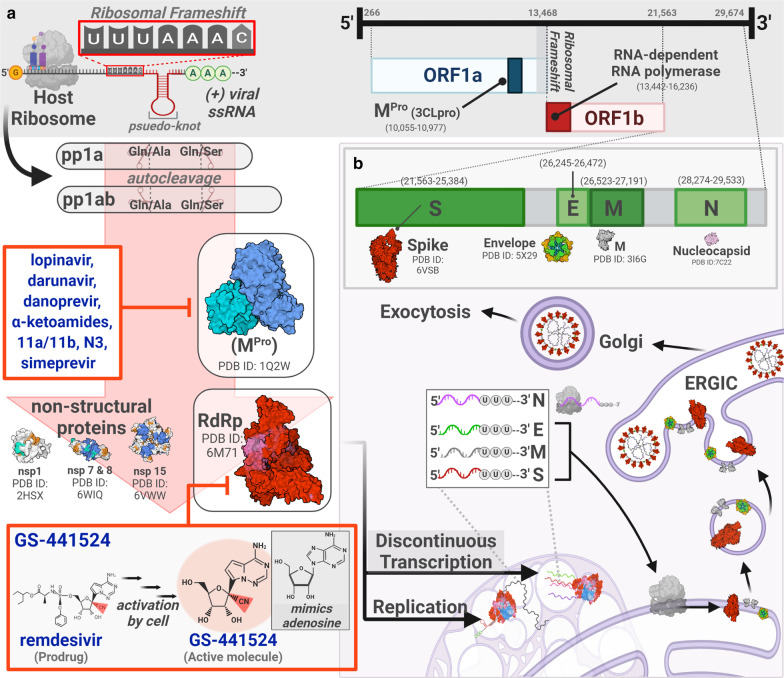
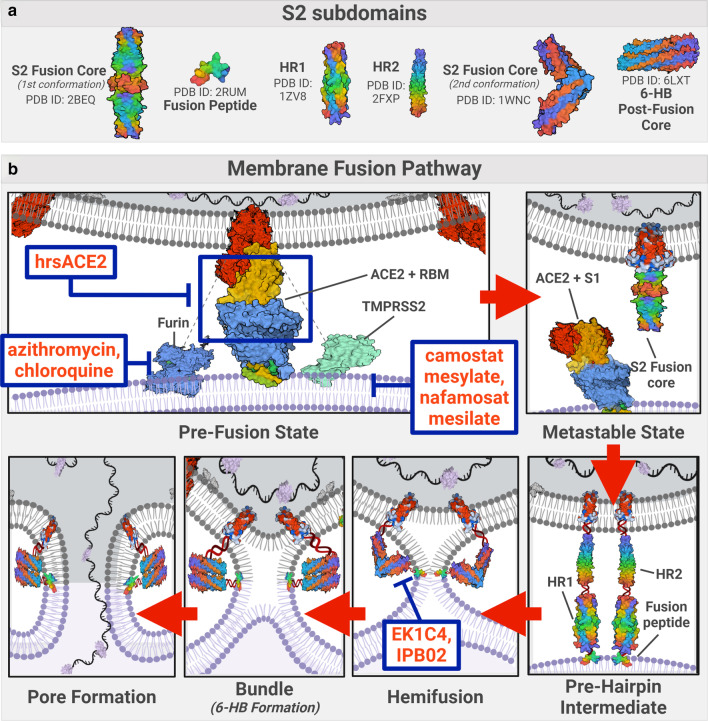
Beginning in late 2019, severe acute respiratory syndrome coronavirus 2 (SARS-CoV-2) emerged as a novel pathogen that causes coronavirus disease 2019 (COVID-19). SARS-CoV-2 has infected more than 111 million people worldwide and caused over 2.47 million deaths. Individuals infected with SARS-CoV-2 show symptoms of fever, cough, dyspnea, and fatigue with severe cases that can develop into pneumonia, myocarditis, acute respiratory distress syndrome, hypercoagulability, and even multi-organ failure. Current clinical management consists largely of supportive care as commonly administered treatments, including convalescent plasma, remdesivir, and high-dose glucocorticoids. These have demonstrated modest benefits in a small subset of hospitalized patients, with only dexamethasone showing demonstrable efficacy in reducing mortality and length of hospitalization. At this time, no SARS-CoV-2-specific antiviral drugs are available, although several vaccines have been approved for use in recent months. In this review, we will evaluate the efficacy of preclinical and clinical drugs that precisely target three different, essential steps of the SARS-CoV-2 replication cycle: the spike protein during entry, main protease (M) during proteolytic activation, and RNA-dependent RNA polymerase (RdRp) during transcription. We will assess the advantages and limitations of drugs that precisely target evolutionarily well-conserved domains, which are less likely to mutate, and therefore less likely to escape the effects of these drugs. We propose that a multi-drug cocktail targeting precise proteins, critical to the viral replication cycle, such as spike protein, M, and RdRp, will be the most effective strategy of inhibiting SARS-CoV-2 replication and limiting its spread in the general population.
自 2019 年末以来,严重急性呼吸综合征冠状病毒 2(SARS-CoV-2)作为一种新型病原体出现,导致 2019 年冠状病毒病(COVID-19)。SARS-CoV-2 已在全球感染超过 1.11 亿人,并导致超过 247 万人死亡。感染 SARS-CoV-2 的个体表现出发热、咳嗽、呼吸困难和疲劳等症状,严重病例可发展为肺炎、心肌炎、急性呼吸窘迫综合征、高凝状态,甚至多器官衰竭。目前的临床治疗主要包括支持性护理,包括恢复期血浆、瑞德西韦和高剂量糖皮质激素。这些治疗方法在一小部分住院患者中显示出适度的益处,只有地塞米松显示出降低死亡率和住院时间的明显疗效。目前,尚无针对 SARS-CoV-2 的特异性抗病毒药物,尽管最近几个月已有几种疫苗获得批准使用。在这篇综述中,我们将评估针对 SARS-CoV-2 复制周期中三个不同的关键步骤的临床前和临床药物的疗效:进入时的刺突蛋白、蛋白水解激活时的主蛋白酶(M)和转录时的 RNA 依赖性 RNA 聚合酶(RdRp)。我们将评估针对进化上保守良好的、不太可能发生突变的、因此不太可能逃避这些药物作用的靶域的药物的优势和局限性。我们提出,针对病毒复制周期中关键的精确蛋白(如刺突蛋白、M 和 RdRp)的多药物鸡尾酒疗法将是抑制 SARS-CoV-2 复制并限制其在普通人群中传播的最有效策略。