Adeloye Davies, Ige-Elegbede Janet O, Ezejimofor Martinsixtus, Owolabi Eyitayo O, Ezeigwe Nnenna, Omoyele Chiamaka, Mpazanje Rex G, Dewan Mary T, Agogo Emmanuel, Gadanya Muktar A, Alemu Wondimagegnehu, Harhay Michael O, Auta Asa, Adebiyi Akindele O
Centre for Global Health, Usher Institute, University of Edinburgh, Edinburgh, UK.
Centre for Public Health and Wellbeing, School of Health and Social Wellbeing, University of the West of England, Bristol, UK.
Ann Med. 2021 Dec;53(1):495-507. doi: 10.1080/07853890.2021.1897665.
Targeted public health response to obesity in Nigeria is relatively low due to limited epidemiologic understanding. We aimed to estimate nationwide and sub-national prevalence of overweight and obesity in the adult Nigerian population.
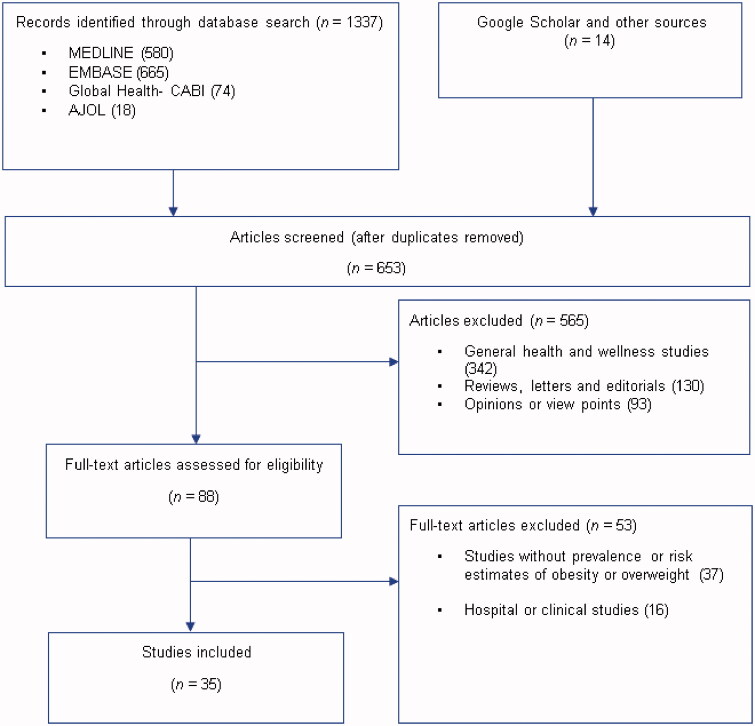
MEDLINE, EMBASE, Global Health, and Africa Journals Online were systematically searched for relevant epidemiologic studies in Nigeria published on or after 01 January 1990. We assessed quality of studies and conducted a random-effects meta-analysis on extracted crude prevalence rates. Using a meta-regression model, we estimated the number of overweight and obese persons in Nigeria in the year 2020.
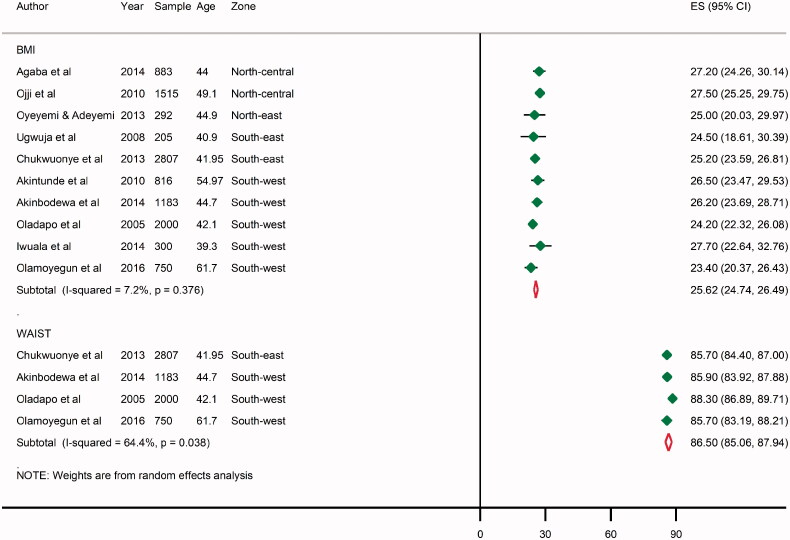
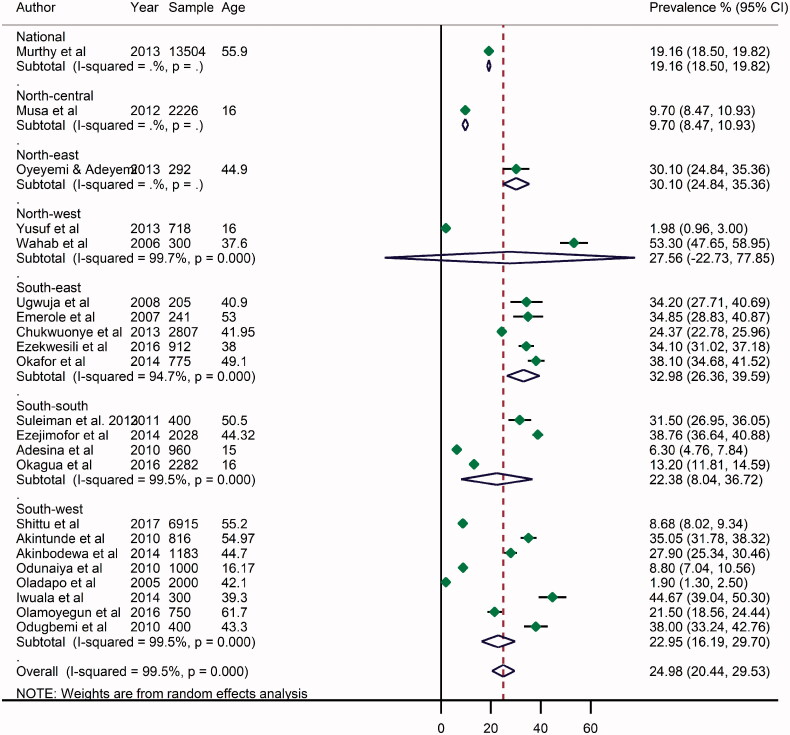
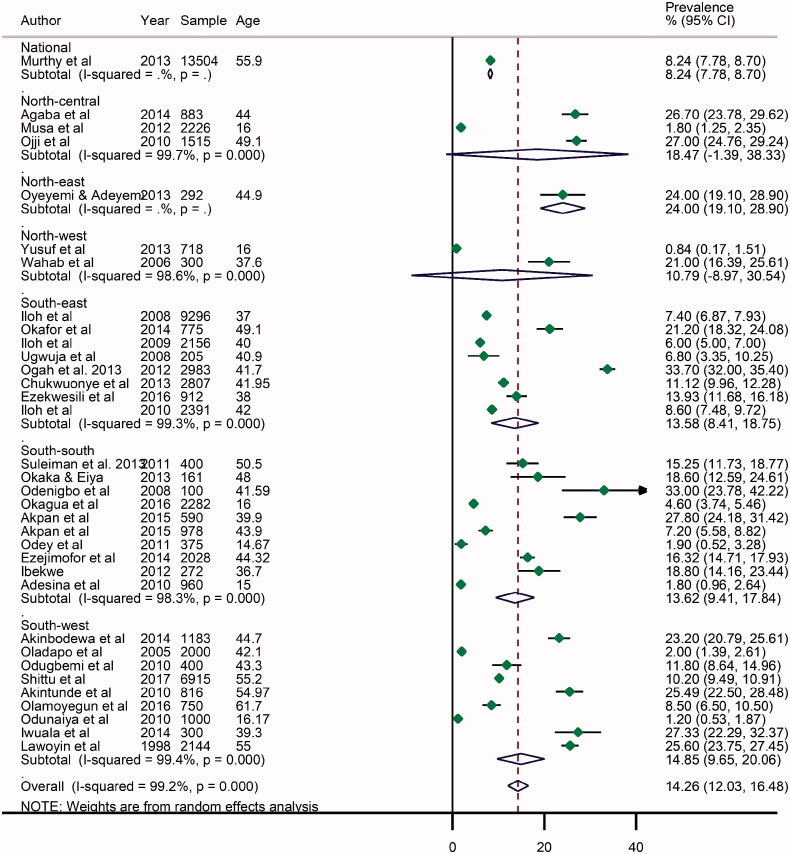
From 35 studies ( = 52,816), the pooled crude prevalence rates of overweight and obesity in Nigeria were 25.0% (95% confidence interval, CI: 20.4-29.6) and 14.3% (95% CI: 12.0-15.5), respectively. The prevalence in women was higher compared to men at 25.5% (95% CI: 17.1-34.0) versus 25.2% (95% CI: 18.0-32.4) for overweight, and 19.8% (95% CI: 3.9-25.6) versus 12.9% (95% CI: 9.1-16.7) for obesity, respectively. The pooled mean body mass index (BMI) and waist circumference were 25.6 kg/m and 86.5 cm, respectively. We estimated that there were 21 million and 12 million overweight and obese persons in the Nigerian population aged 15 years or more in 2020, accounting for an age-adjusted prevalence of 20.3% and 11.6%, respectively. The prevalence rates of overweight and obesity were consistently higher among urban dwellers (27.2% and 14.4%) compared to rural dwellers (16.4% and 12.1%).
Our findings suggest a high prevalence of overweight and obesity in Nigeria. This is marked in urban Nigeria and among women, which may in part be due to widespread sedentary lifestyles and a surge in processed food outlets, largely reflective of a trend across many African settings.KEY MESSAGESAbout 12 million persons in Nigeria were estimated to be obese in 2020, with prevalence considerably higher among women. Nutritional and epidemiological transitions driven by demographic changes, rising income, urbanization, unhealthy lifestyles, and consumption of highly processed diets appear to be driving an obesity epidemic in the country.
由于对流行病学的了解有限,尼日利亚针对肥胖问题的公共卫生应对措施相对较少。我们旨在估计尼日利亚成年人口中超重和肥胖在全国及各次国家级层面的患病率。
系统检索了MEDLINE、EMBASE、《全球健康》和《非洲在线期刊》,以查找1990年1月1日及以后发表的关于尼日利亚的相关流行病学研究。我们评估了研究质量,并对提取的粗患病率进行随机效应荟萃分析。使用荟萃回归模型,我们估计了2020年尼日利亚超重和肥胖人群的数量。
从35项研究(n = 52,816)中得出,尼日利亚超重和肥胖的合并粗患病率分别为25.0%(95%置信区间,CI:20.4 - 29.6)和14.3%(95% CI:12.0 - 15.5)。女性的患病率高于男性,超重患病率分别为25.5%(95% CI:17.1 - 34.0)和25.2%(95% CI:18.0 - 32.4),肥胖患病率分别为19.8%(95% CI:3.9 - 25.6)和12.9%(95% CI:9.1 - 16.7)。合并的平均体重指数(BMI)和腰围分别为25.6 kg/m²和86.5 cm。我们估计,2020年尼日利亚15岁及以上人口中有2100万超重者和1200万肥胖者,年龄调整后的患病率分别为20.3%和11.6%。城市居民中超重和肥胖的患病率(分别为27.2%和14.4%)始终高于农村居民(分别为16.4%和12.1%)。
我们的研究结果表明,尼日利亚超重和肥胖的患病率很高。在尼日利亚城市地区以及女性中尤为明显,这可能部分归因于普遍的久坐生活方式以及加工食品店的激增,这在很大程度上反映了许多非洲地区的一种趋势。关键信息2020年估计尼日利亚约有1200万人肥胖,女性患病率显著更高。人口结构变化、收入增加、城市化、不健康生活方式以及高加工饮食消费所驱动的营养和流行病学转变似乎正在该国引发肥胖流行。