Agaba Emmanuel I, Akanbi Maxwell O, Agaba Patricia A, Ocheke Amaka N, Gimba Zumnan M, Daniyam Steve, Okeke Edith N
Department of Medicine, University of Jos, Nigeria. Email:
Department of Medicine, University of Jos, Nigeria.
Cardiovasc J Afr. 2017;28(6):377-384. doi: 10.5830/CVJA-2017-021. Epub 2017 Aug 15.
The incidence of non-communicable diseases (NCDs) is rising globally, with its attendant morbidity and mortality, especially in developing countries. This study evaluated the prevalence of NCDs and their risk factors among members of a university community.
All employees of the university were invited to the University health clinic for screening, using the World Health Organisation's STEPwise approach to NCDs.
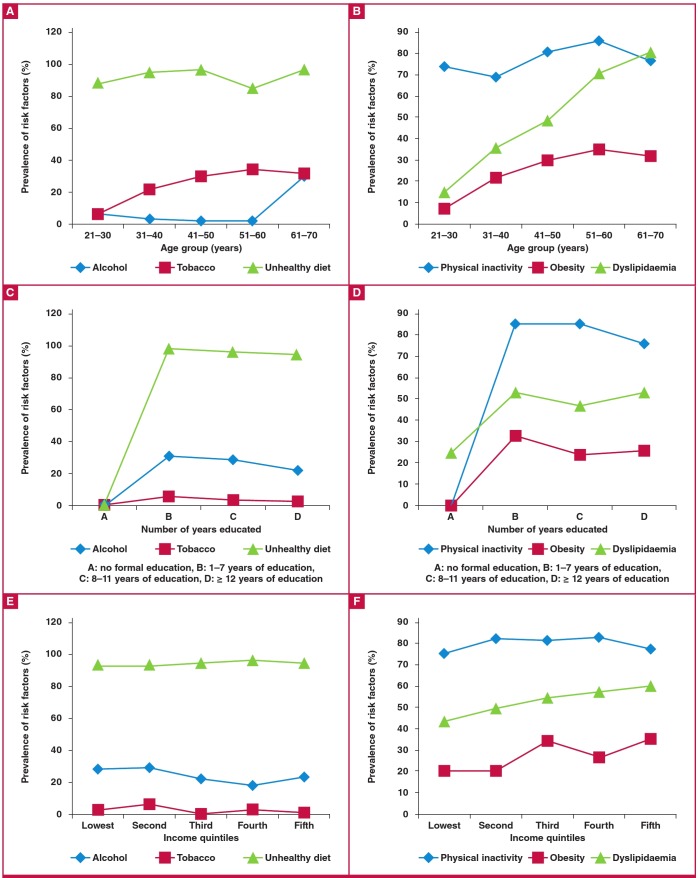
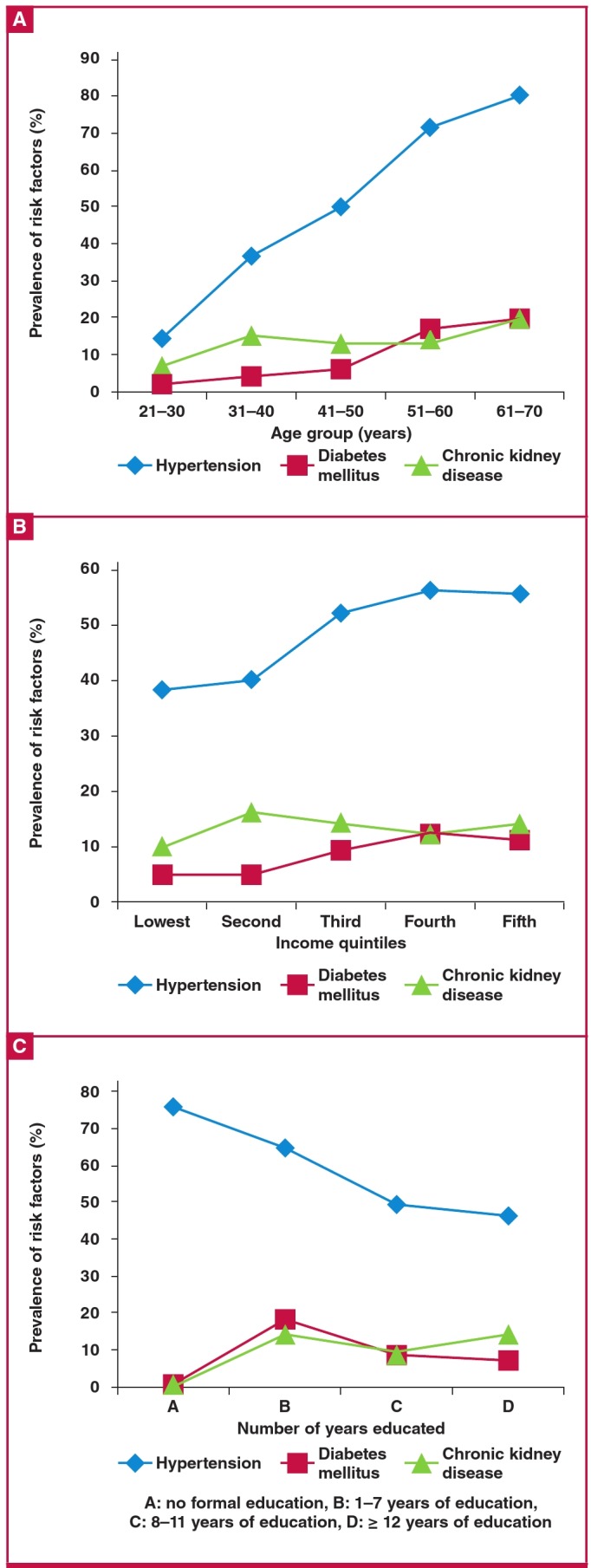
A total of 883 (521; 59.0% males) employees with a mean age of 44 ± 10 years were studied. The median (IQR) number of NCD risk factors was three (two to three) per participant. The most common NCD risk factors were inadequate intake of fruit and vegetables (94.6%; 95% CI: 92.8-95.9), physical inactivity (77.8%; 95% CI: 74.9-80.5%) and dyslipidaemia (51.8%; 95% CI: 48.4-51.6%). Others included obesity (26.7%; 95% CI: 23.9-29.8%), alcohol use (24.0%; 95% CI: 21.3-27.0%) and cigarette smoking (2.9%; 95% CI: 2.0-4.3). Hypertension was the most common NCD (48.5%; 95% CI: 45.1-51.8%), followed by chronic kidney disease (13.6%; 95% CI: 11.4-16.1) and diabetes mellitus (8.0%; 95% CI: 6.4-10.1). There was no gender-specific difference in the prevalence of NCDs.
This study identified that NCDs and their modifiable risk factors are highly prevalent in this community. Workplace policy to support the adoption of healthy living is needed.
全球非传染性疾病(NCDs)的发病率正在上升,随之而来的是发病率和死亡率,特别是在发展中国家。本研究评估了大学社区成员中非传染性疾病的患病率及其危险因素。
邀请该大学的所有员工到大学健康诊所进行筛查,采用世界卫生组织的非传染性疾病逐步评估方法。
共研究了883名员工(521名男性,占59.0%),平均年龄为44±10岁。每位参与者的非传染性疾病危险因素中位数(四分位间距)为3个(2至3个)。最常见的非传染性疾病危险因素是水果和蔬菜摄入不足(94.6%;95%置信区间:92.8 - 95.9)、身体活动不足(77.8%;95%置信区间:74.9 - 80.5%)和血脂异常(51.8%;95%置信区间:48.4 - 51.6%)。其他因素包括肥胖(26.7%;95%置信区间:23.9 - 29.8%)、饮酒(24.0%;95%置信区间:21.3 - 27.0%)和吸烟(2.9%;95%置信区间:2.0 - 4.3)。高血压是最常见的非传染性疾病(48.5%;95%置信区间:45.1 - 51.8%),其次是慢性肾脏病(13.6%;95%置信区间:11.4 - 16.1)和糖尿病(8.0%;95%置信区间:6.4 - 10.1)。非传染性疾病的患病率没有性别差异。
本研究发现非传染性疾病及其可改变的危险因素在该社区中非常普遍。需要制定工作场所政策来支持采用健康的生活方式。