Department of Internal Medicine 5, Hematology, and Oncology, University Hospital Erlangen and Friedrich-Alexander-University Erlangen-Nürnberg, Erlangen, Germany.
Institute of Virology, University Hospital Erlangen and Friedrich-Alexander-University Erlangen-Nürnberg, Erlangen, Germany.
Eur J Immunol. 2021 Jun;51(6):1436-1448. doi: 10.1002/eji.202049135. Epub 2021 Apr 19.
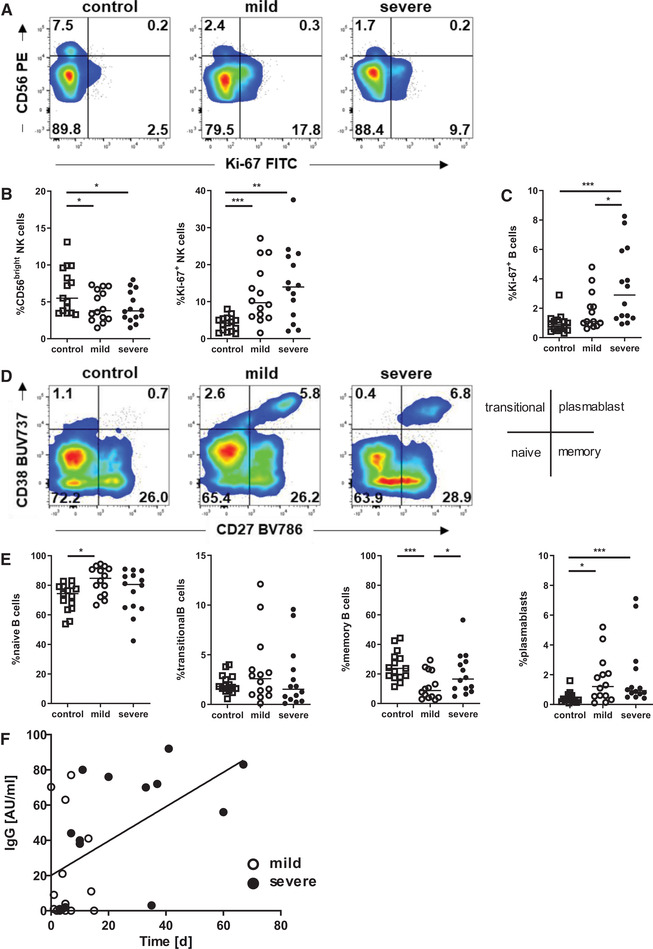
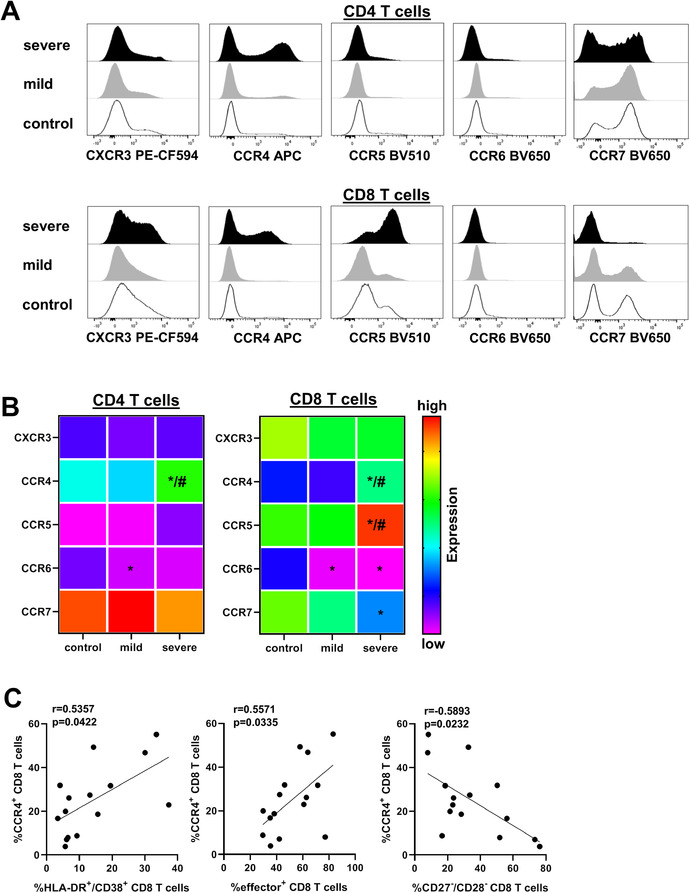
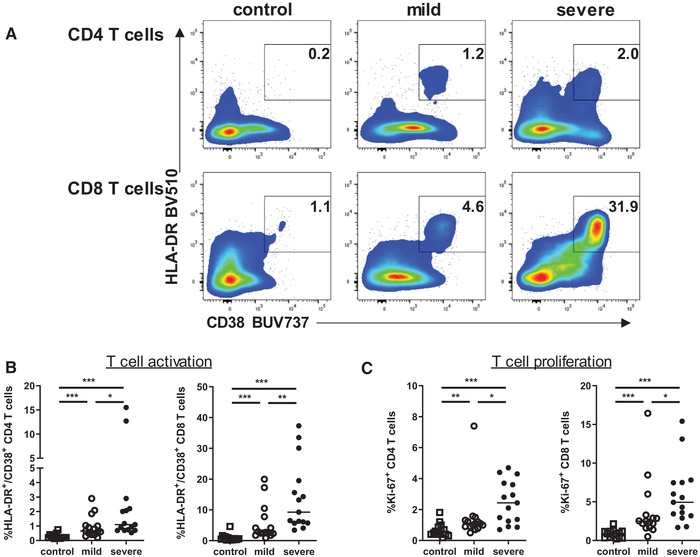
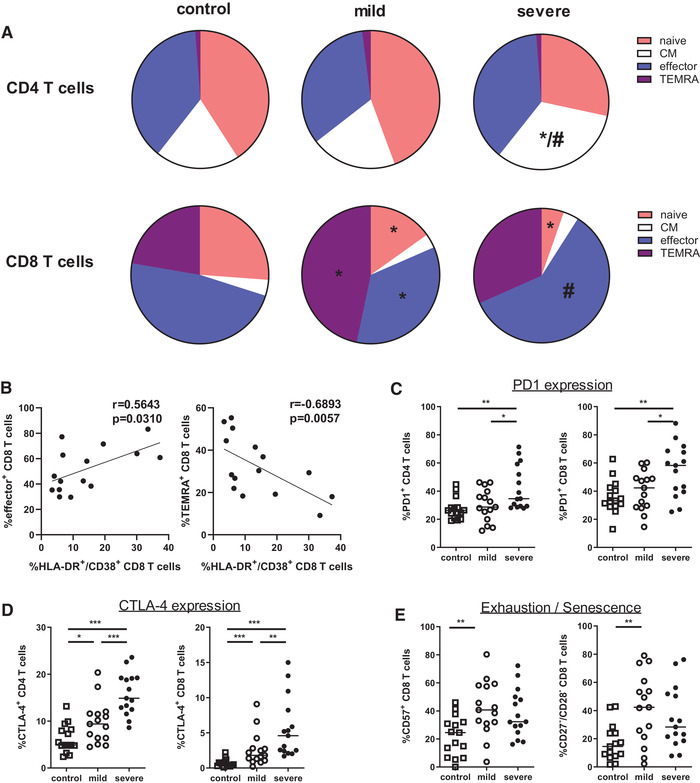
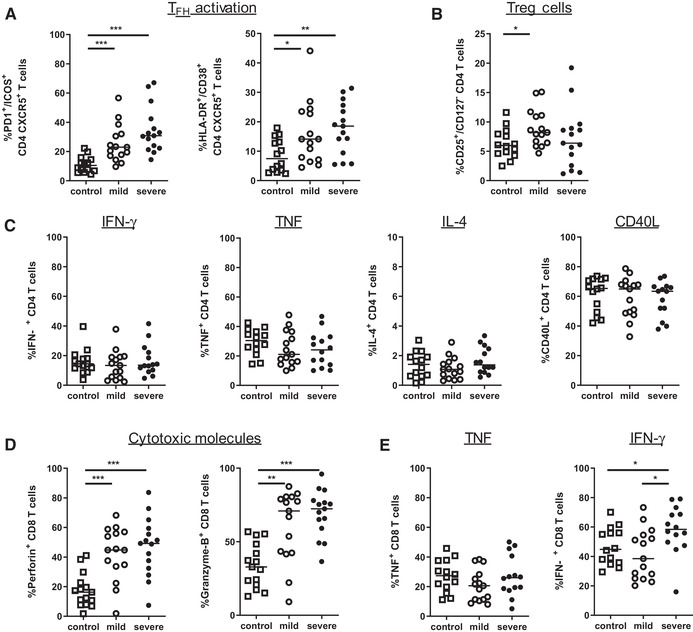
COVID-19 is a life-threatening disease leading to bilateral pneumonia and respiratory failure. The underlying reasons why a smaller percentage of patients present with severe pulmonary symptoms whereas the majority is only mildly affected are to date not well understood. Comparing the immunological phenotype in healthy donors and patients with mild versus severe COVID-19 shows that in COVID-19 patients, NK-/B-cell activation and proliferation are enhanced independent of severity. As an important precondition for effective antibody responses, T-follicular helper cells and antibody secreting cells are increased both in patients with mild and severe SARS-CoV-2 infection. Beyond this, T cells in COVID-19 patients exhibit a stronger activation profile with differentiation toward effector cell phenotypes. Importantly, when looking at the rates of pulmonary complications in COVID-19 patients, the chemokine receptor CCR4 is higher expressed by both CD4 and CD8 T cells of patients with severe COVID-19. This raises the hypothesis that CCR4 upregulation on T cells in the pathogenesis of COVID-19 promotes stronger T-cell attraction to the lungs leading to increased immune activation with presumably higher pulmonary toxicity. Our study contributes significantly to the understanding of the immunological changes during COVID-19, as new therapeutic agents, preferentially targeting the immune system, are highly warranted.
COVID-19 是一种危及生命的疾病,可导致双侧肺炎和呼吸衰竭。迄今为止,人们还不太清楚为什么只有一小部分患者出现严重的肺部症状,而大多数患者只是轻度感染的根本原因。比较健康供体与轻度和重度 COVID-19 患者的免疫表型表明,在 COVID-19 患者中,NK-/B 细胞的激活和增殖增强,而与严重程度无关。作为有效抗体反应的重要前提条件,滤泡辅助 T 细胞和分泌抗体的细胞在轻度和重度 SARS-CoV-2 感染的患者中均增加。除此之外,COVID-19 患者的 T 细胞表现出更强的激活特征,向效应细胞表型分化。重要的是,当观察 COVID-19 患者的肺部并发症发生率时,严重 COVID-19 患者的 CD4 和 CD8 T 细胞均高表达趋化因子受体 CCR4。这提出了一个假设,即在 COVID-19 的发病机制中,T 细胞上 CCR4 的上调促进了 T 细胞向肺部的更强吸引,从而导致免疫激活增加,可能导致更高的肺部毒性。我们的研究对理解 COVID-19 期间的免疫变化有重要贡献,因为需要开发新的治疗药物,特别是针对免疫系统的药物。