Erdős Balázs, van Sloun Bart, Adriaens Michiel E, O'Donovan Shauna D, Langin Dominique, Astrup Arne, Blaak Ellen E, Arts Ilja C W, van Riel Natal A W
TiFN, Wageningen, The Netherlands.
Maastricht Centre for Systems Biology (MaCSBio), Maastricht University, Maastricht, The Netherlands.
PLoS Comput Biol. 2021 Mar 31;17(3):e1008852. doi: 10.1371/journal.pcbi.1008852. eCollection 2021 Mar.
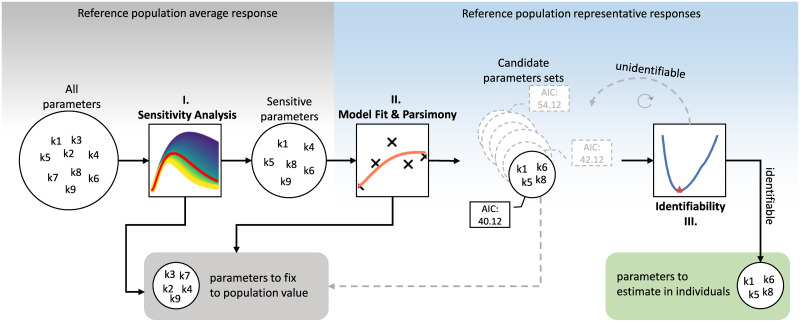
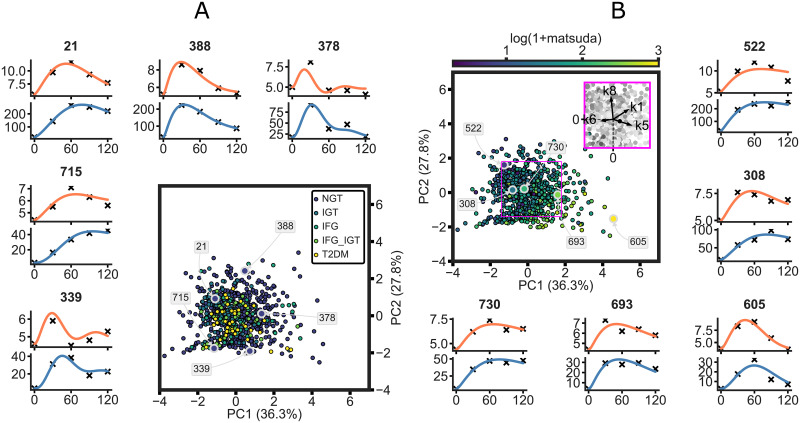
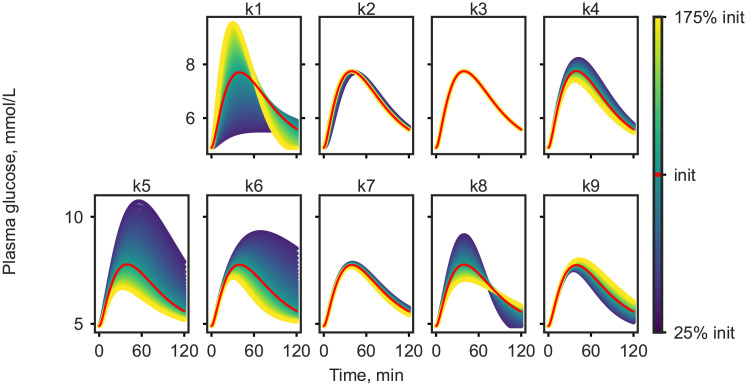
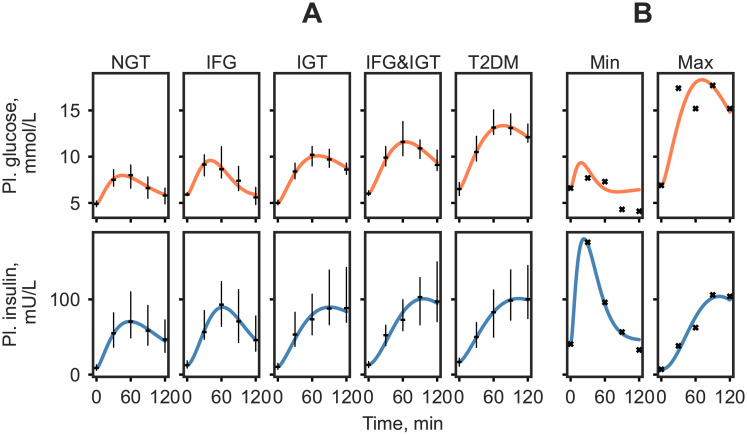
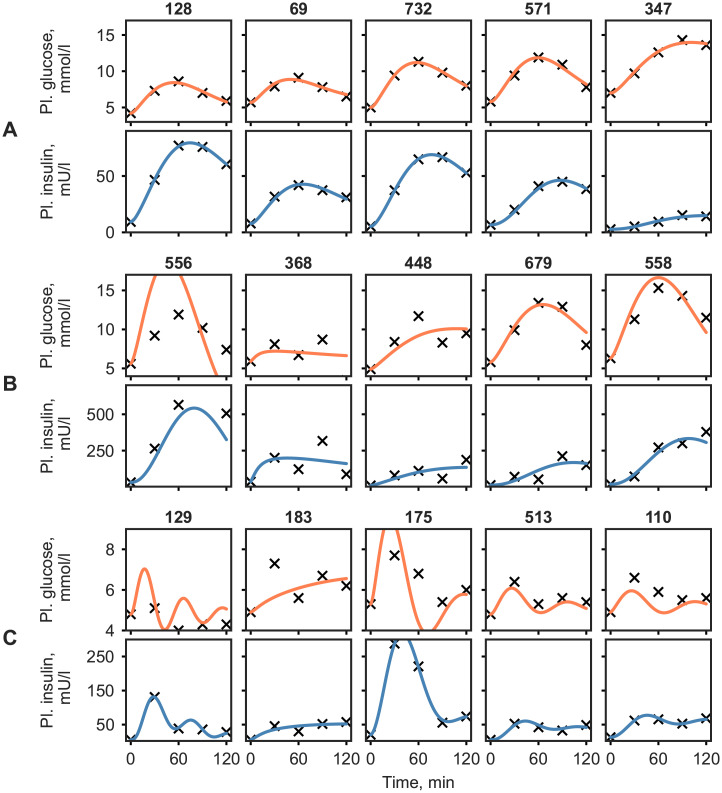
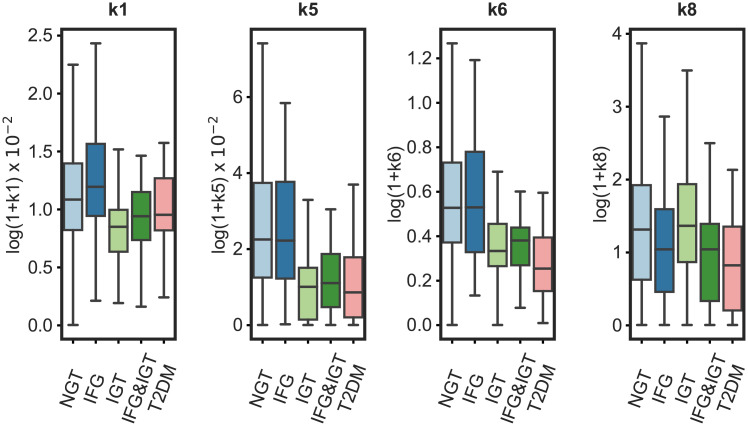
Plasma glucose and insulin responses following an oral glucose challenge are representative of glucose tolerance and insulin resistance, key indicators of type 2 diabetes mellitus pathophysiology. A large heterogeneity in individuals' challenge test responses has been shown to underlie the effectiveness of lifestyle intervention. Currently, this heterogeneity is overlooked due to a lack of methods to quantify the interconnected dynamics in the glucose and insulin time-courses. Here, a physiology-based mathematical model of the human glucose-insulin system is personalized to elucidate the heterogeneity in individuals' responses using a large population of overweight/obese individuals (n = 738) from the DIOGenes study. The personalized models are derived from population level models through a systematic parameter selection pipeline that may be generalized to other biological systems. The resulting personalized models showed a 4-5 fold decrease in discrepancy between measurements and model simulation compared to population level. The estimated model parameters capture relevant features of individuals' metabolic health such as gastric emptying, endogenous insulin secretion and insulin dependent glucose disposal into tissues, with the latter also showing a significant association with the Insulinogenic index and the Matsuda insulin sensitivity index, respectively.
口服葡萄糖耐量试验后的血浆葡萄糖和胰岛素反应是葡萄糖耐量和胰岛素抵抗的代表,而葡萄糖耐量和胰岛素抵抗是2型糖尿病病理生理学的关键指标。个体挑战试验反应的巨大异质性已被证明是生活方式干预有效性的基础。目前,由于缺乏量化葡萄糖和胰岛素时间进程中相互关联动态的方法,这种异质性被忽视了。在此,使用来自DIOGenes研究的大量超重/肥胖个体(n = 738),对基于生理学的人体葡萄糖-胰岛素系统数学模型进行个性化,以阐明个体反应中的异质性。个性化模型通过一个系统的参数选择管道从群体水平模型推导而来,该管道可能适用于其他生物系统。与群体水平相比,所得的个性化模型显示测量值与模型模拟之间的差异降低了4至5倍。估计的模型参数捕捉了个体代谢健康的相关特征,如胃排空、内源性胰岛素分泌以及胰岛素依赖的葡萄糖向组织中的处置,后者还分别与胰岛素生成指数和松田胰岛素敏感性指数显示出显著关联。