Bancone Germana, Chu Cindy S
Shoklo Malaria Research Unit, Mahidol-Oxford Tropical Medicine Research Unit, Faculty of Tropical Medicine, Mahidol University, Mae Sot, Thailand.
Centre for Tropical Medicine and Global Health, Nuffield Department of Medicine, University of Oxford, Oxford, United Kingdom.
Front Pharmacol. 2021 Mar 15;12:638885. doi: 10.3389/fphar.2021.638885. eCollection 2021.
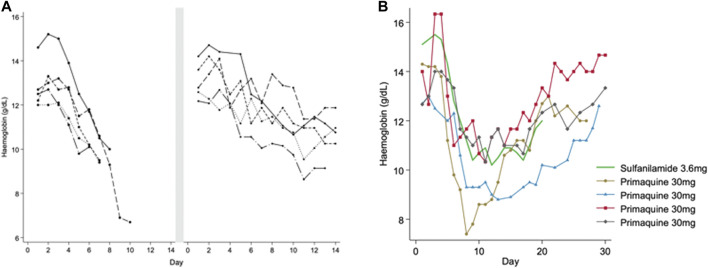
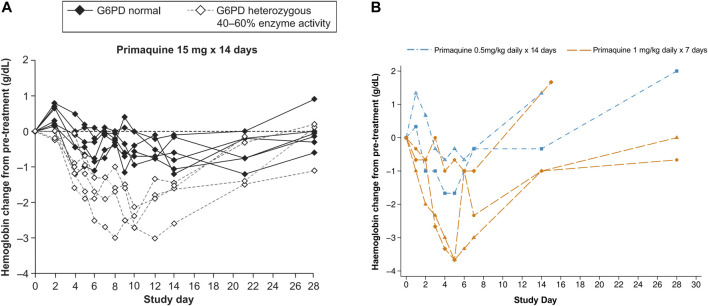
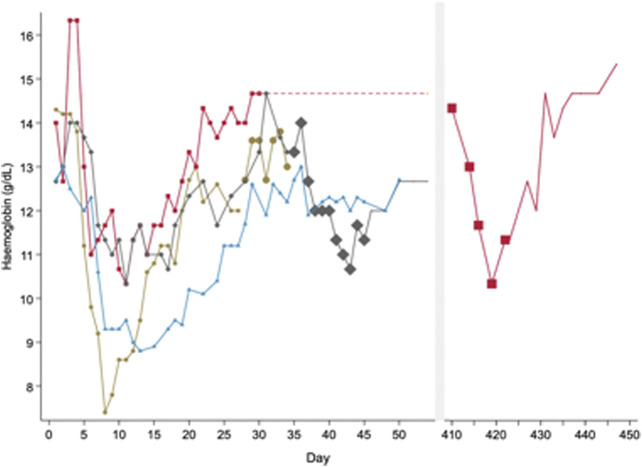
Restrictions on the cultivation and ingestion of fava beans were first reported as early as the fifth century BC. Not until the late 19th century were clinical descriptions of fava-induced disease reported and soon after characterised as "favism" in the early 20th century. It is now well known that favism as well as drug-induced haemolysis is caused by a deficiency of the glucose-6-phosphate dehydrogenase (G6PD) enzyme, one of the most common enzyme deficiency in humans. Interest about the interaction between G6PD deficiency and therapeutics has increased recently because mass treatment with oxidative 8-aminoquinolines is necessary for malaria elimination. Historically, assessments of haemolytic risk have focused on the clinical outcomes (e.g., haemolysis) associated with either a simplified phenotypic G6PD characterisation (deficient or normal) or an ill-fitting classification of G6PD genetic variants. It is increasingly apparent that detailed knowledge of both aspects is required for a complete understanding of haemolytic risk. While more attention has been devoted recently to better phenotypic characterisation of G6PD activity (including the development of new point-of care tests), the classification of G6PD variants should be revised to be clinically useful in malaria eliminating countries and in populations with prevalent G6PD deficiency. The scope of this work is to summarize available literature on drug-induced haemolysis among individuals with different G6PD variants and to highlight knowledge gaps that could be filled with further clinical and laboratory research.
早在公元前五世纪就首次报道了对蚕豆种植和食用的限制。直到19世纪末才有关于蚕豆诱发疾病的临床描述,随后在20世纪初很快被定性为“蚕豆病”。现在众所周知,蚕豆病以及药物性溶血是由葡萄糖-6-磷酸脱氢酶(G6PD)缺乏引起的,这是人类最常见的酶缺乏症之一。最近,由于使用氧化型8-氨基喹啉进行大规模治疗对于消除疟疾至关重要,因此人们对G6PD缺乏与治疗方法之间相互作用的兴趣有所增加。从历史上看,对溶血风险的评估主要集中在与简化的G6PD表型特征(缺乏或正常)或不恰当的G6PD基因变异分类相关的临床结果(如溶血)上。越来越明显的是,要全面了解溶血风险,需要详细了解这两个方面。虽然最近更多的注意力集中在更好地表征G6PD活性的表型(包括开发新的即时检测方法),但G6PD变异的分类应进行修订,以便在疟疾消除国家和G6PD缺乏普遍存在的人群中具有临床实用性。这项工作的范围是总结关于不同G6PD变异个体中药物性溶血的现有文献,并突出可通过进一步临床和实验室研究填补的知识空白。