Lednicky John A, Tagliamonte Massimiliano S, White Sarah K, Elbadry Maha A, Alam Md Mahbubul, Stephenson Caroline J, Bonny Tania S, Loeb Julia C, Telisma Taina, Chavannes Sonese, Ostrov David A, Mavian Carla, Beau De Rochars Valerie Madsen, Salemi Marco, Morris J Glenn
Emerging Pathogens Institute, University of Florida, Gainesville, FL.
Department of Environmental and Global Health, College of Public Health and Health Professions, University of Florida, Gainesville, FL.
medRxiv. 2021 Mar 25:2021.03.19.21253391. doi: 10.1101/2021.03.19.21253391.
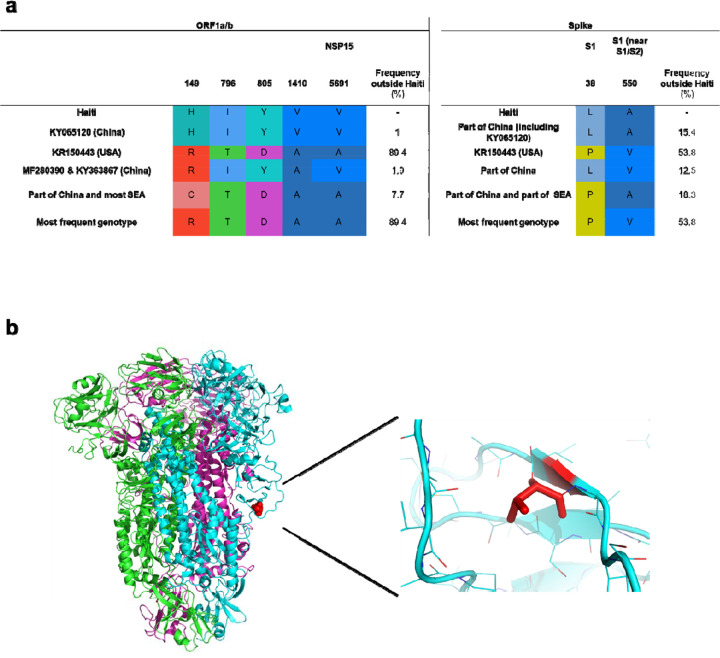
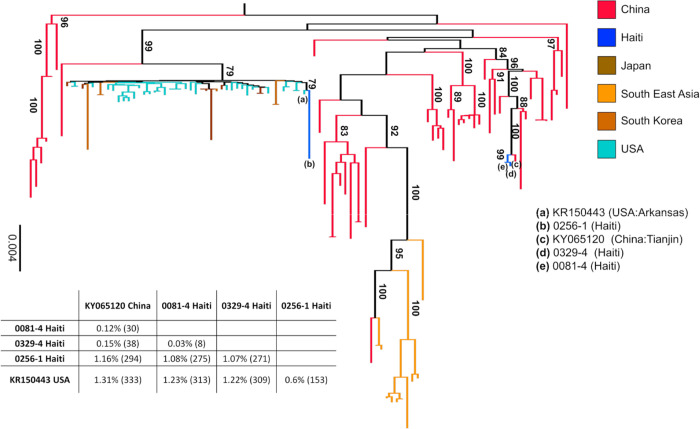
Coronaviruses have caused three major epidemics since 2003, including the ongoing SARS-CoV-2 pandemic. In each case, coronavirus emergence in our species has been associated with zoonotic transmissions from animal reservoirs , underscoring how prone such pathogens are to spill over and adapt to new species. Among the four recognized genera of the family - , - human infections reported to date have been limited to alpha- and betacoronaviruses . We identify, for the first time, porcine deltacoronavirus (PDCoV) strains in plasma samples of three Haitian children with acute undifferentiated febrile illness. Genomic and evolutionary analyses reveal that human infections were the result of at least two independent zoonoses of distinct viral lineages that acquired the same mutational signature in the and the glycoprotein genes by convergent evolution. In particular, structural analysis predicts that one of the changes in the Spike S1 subunit, which contains the receptor-binding domain, may affect protein's flexibility and binding to the host cell receptor. Our findings not only underscore the ability of deltacoronaviruses to adapt and potentially lead to human-to-human transmission, but also raise questions about the role of such transmissions in development of pre-existing immunity to other coronaviruses, such as SARS-CoV-2.
自2003年以来,冠状病毒已引发了三次重大疫情,包括目前仍在肆虐的新型冠状病毒肺炎疫情。在每一次疫情中,冠状病毒在人类中的出现都与来自动物宿主的人畜共患病传播有关,这凸显了这类病原体是多么容易溢出并适应新物种。在该病毒科四个公认的属中,迄今为止报告的人类感染仅限于甲型和乙型冠状病毒。我们首次在三名患有急性未分化发热疾病的海地儿童的血浆样本中鉴定出猪三角洲冠状病毒(PDCoV)毒株。基因组和进化分析表明,人类感染是至少两次独立人畜共患病的结果,这些不同的病毒谱系通过趋同进化在刺突蛋白(Spike)的S1亚基和糖蛋白基因中获得了相同的突变特征。特别是,结构分析预测,包含受体结合结构域的刺突蛋白S1亚基中的一处变化可能会影响该蛋白的灵活性及其与宿主细胞受体的结合。我们的研究结果不仅强调了三角洲冠状病毒适应并可能导致人际传播的能力,还引发了关于此类传播在对其他冠状病毒(如新型冠状病毒)的既有免疫力发展中所起作用的疑问。