Graduated Program in Health Sciences, Health Sciences Center, Federal University of Piauí, Ininga Campus, Teresina, Brazil.
Department of Physiology, Health Sciences Center, State University of Piauí, Teresina, Brazil.
J Mater Sci Mater Med. 2021 Apr 1;32(4):39. doi: 10.1007/s10856-021-06511-z.
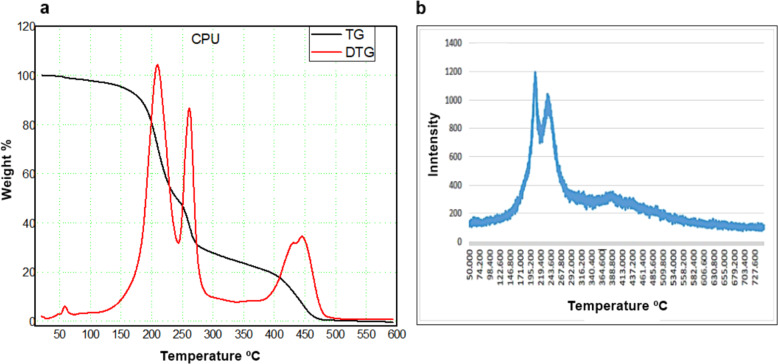
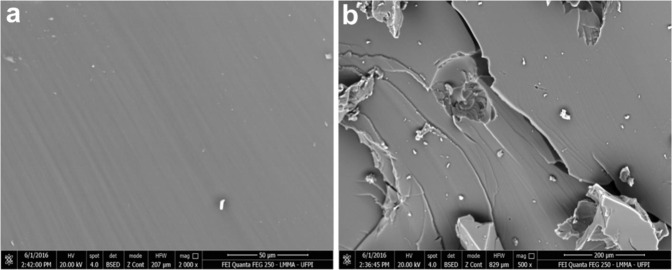
Biomaterials used in tissue regeneration processes represent a promising option for the versatility of its physical and chemical characteristics, allowing for assisting or speeding up the repair process stages. This research has characterized a polyurethane produced from castor oil monoacylglyceride (Ricinus communis L) and tested its effect on reconstructing bone defects in rat calvaria, comparing it with commercial castor oil polyurethane. The characterizations of the synthesized polyurethane have been performed by spectroscopy in the infrared region with Fourier transform (FTIR); thermogravimetric analysis (TG/DTG); X-ray diffraction (XRD) and Scanning Electron Microscopy (SEM). For the in vivo test, 24 animals have been used, divided into 3 groups: untreated group (UG); control group treated with Poliquil® castor polyurethane (PCP) and another group treated with castor polyurethane from the Federal University of Piauí - UFPI (CPU). Sixteen weeks after surgery, samples of the defects were collected for histological and histomorphometric analysis. FTIR analysis has shown the formation of monoacylglyceride and polyurethane. TG and DTG have indicated thermal stability of around 125 °C. XRD has determined the semi-crystallinity of the material. The polyurethane SEM has shown a smooth morphology with areas of recesses. Histological and histomorphometric analyzes have indicated that neither CPU nor PCP induced a significant inflammatory process, and CPU has shown, statistically, better performance in bone formation. The data obtained shows that CPU can be used in the future for bone reconstruction in the medical field.
用于组织再生过程的生物材料代表了一种很有前途的选择,因为其物理和化学特性具有多功能性,可以辅助或加速修复过程的各个阶段。本研究对由蓖麻油单酰基甘油(Ricinus communis L)制成的聚氨酯进行了表征,并测试了其在大鼠颅骨骨缺损重建中的作用,将其与商业蓖麻油聚氨酯进行了比较。通过傅里叶变换红外光谱(FTIR)、热重分析(TG/DTG)、X 射线衍射(XRD)和扫描电子显微镜(SEM)对合成的聚氨酯进行了表征。在体内试验中,使用了 24 只动物,分为 3 组:未处理组(UG);用聚癸二酸甘油酯(PCP)处理的对照组和用联邦大学皮奥伊分校(UFPI)的蓖麻油聚氨酯(CPU)处理的另一组。手术后 16 周,收集了缺陷样本进行组织学和组织形态计量学分析。FTIR 分析表明形成了单酰基甘油和聚氨酯。TG 和 DTG 表明热稳定性约为 125°C。XRD 确定了材料的半结晶度。聚氨酯 SEM 显示出具有凹陷区域的光滑形态。组织学和组织形态计量学分析表明,CPU 和 PCP 均未引起明显的炎症反应,并且 CPU 在骨形成方面表现出更好的统计学性能。所获得的数据表明,CPU 将来可用于医学领域的骨重建。