CIRAD, UMR ASTRE, 97491, Sainte-Clotilde, Reunion, France.
ASTRE, CIRAD, INRAE, Univ Montpellier, Montpellier, France.
Sci Rep. 2021 Apr 1;11(1):7354. doi: 10.1038/s41598-021-86798-8.
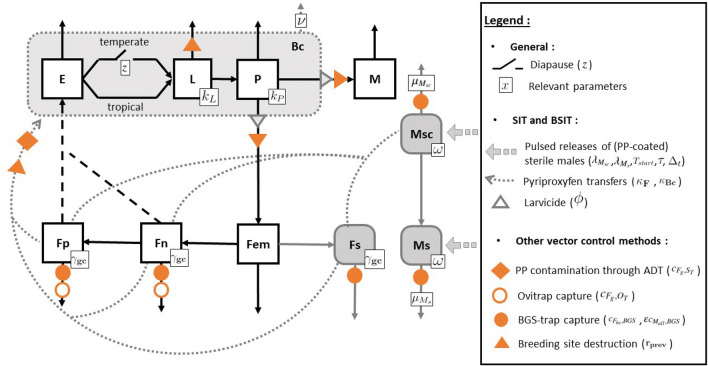
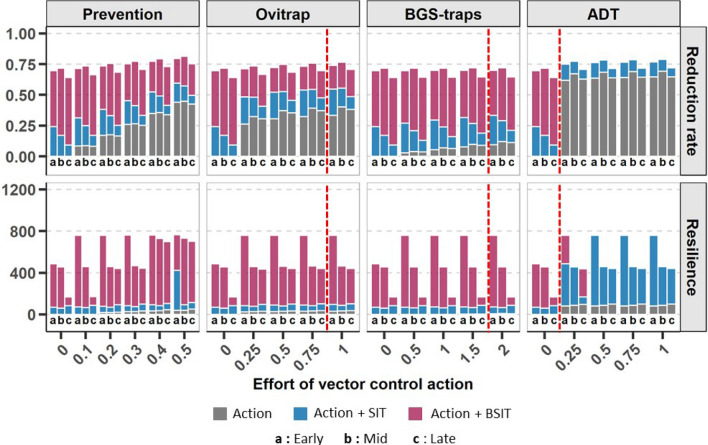
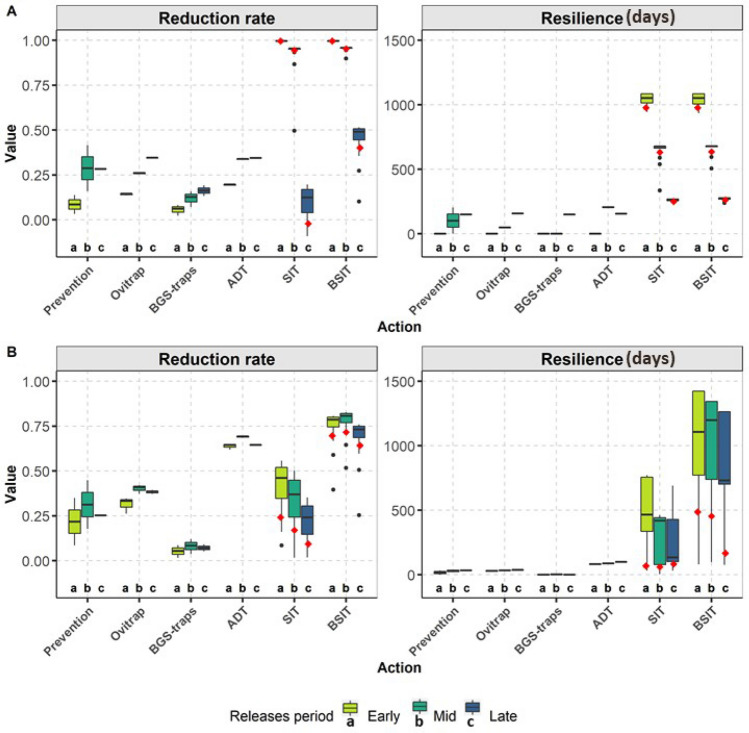
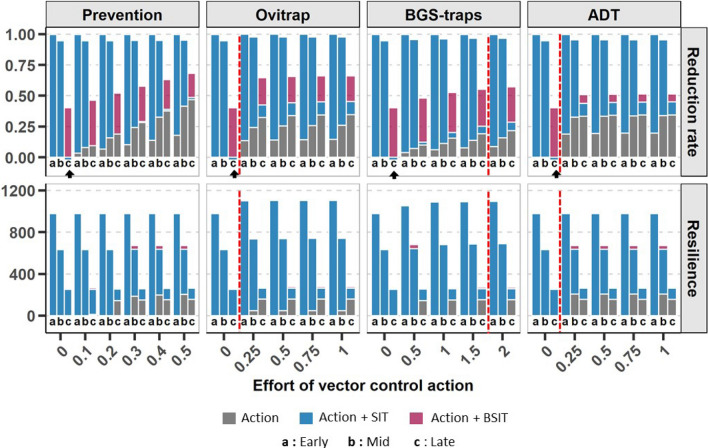
The expansion of mosquito species worldwide is creating a powerful network for the spread of arboviruses. In addition to the destruction of breeding sites (prevention) and mass trapping, methods based on the sterile insect technique (SIT), the autodissemination of pyriproxyfen (ADT), and a fusion of elements from both of these known as boosted SIT (BSIT), are being developed to meet the urgent need for effective vector control. However, the comparative potential of these methods has yet to be explored in different environments. This is needed to propose and integrate informed guidelines into sustainable mosquito management plans. We extended a weather-dependent model of Aedes albopictus population dynamics to assess the effectiveness of these different vector control methods, alone or in combination, in a tropical (Reunion island, southwest Indian Ocean) and a temperate (Montpellier area, southern France) climate. Our results confirm the potential efficiency of SIT in temperate climates when performed early in the year (mid-March for northern hemisphere). In such a climate, the timing of the vector control action was the key factor in its success. In tropical climates, the potential of the combination of methods becomes more relevant. BSIT and the combination of ADT with SIT were twice as effective compared to the use of SIT alone.
全球蚊子种类的扩张正在为虫媒病毒的传播创建一个强大的网络。除了破坏滋生地(预防)和大量诱捕外,还开发了基于不育昆虫技术(SIT)、吡丙醚的自动传播(ADT)以及这两种方法的融合(称为增强型 SIT(BSIT))的方法,以满足对有效病媒控制的迫切需求。然而,这些方法的相对潜力尚未在不同环境中进行探索。这是为了提出并整合明智的指导方针,纳入可持续的蚊子管理计划。我们扩展了一种依赖天气的白纹伊蚊种群动态模型,以评估这些不同的病媒控制方法单独或组合使用在热带(印度洋西南部的留尼汪岛)和温带(法国南部的蒙彼利埃地区)气候下的有效性。我们的结果证实了 SIT 在温带气候中的潜在效率,当在年初(北半球为 3 月中旬)进行时。在这种气候下,病媒控制行动的时间是其成功的关键因素。在热带气候下,方法组合的潜力变得更加相关。与单独使用 SIT 相比,BSIT 和 ADT 与 SIT 的结合的效果提高了一倍。