Division of Rheumatology, Department of Medicine, Faculty of Medicine, University of Geneva, Geneva, Switzerland.
Department of Pathology and Immunology, Faculty of Medicine, University of Geneva, Geneva, Switzerland.
Front Immunol. 2021 Mar 16;12:652846. doi: 10.3389/fimmu.2021.652846. eCollection 2021.
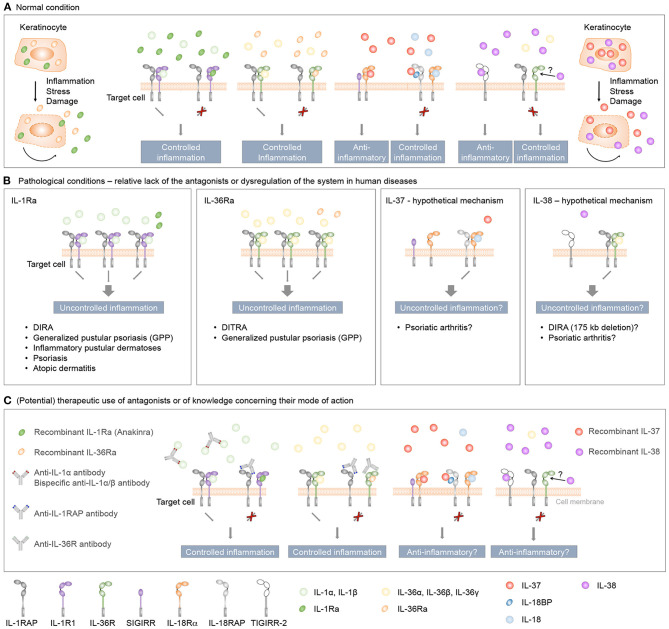
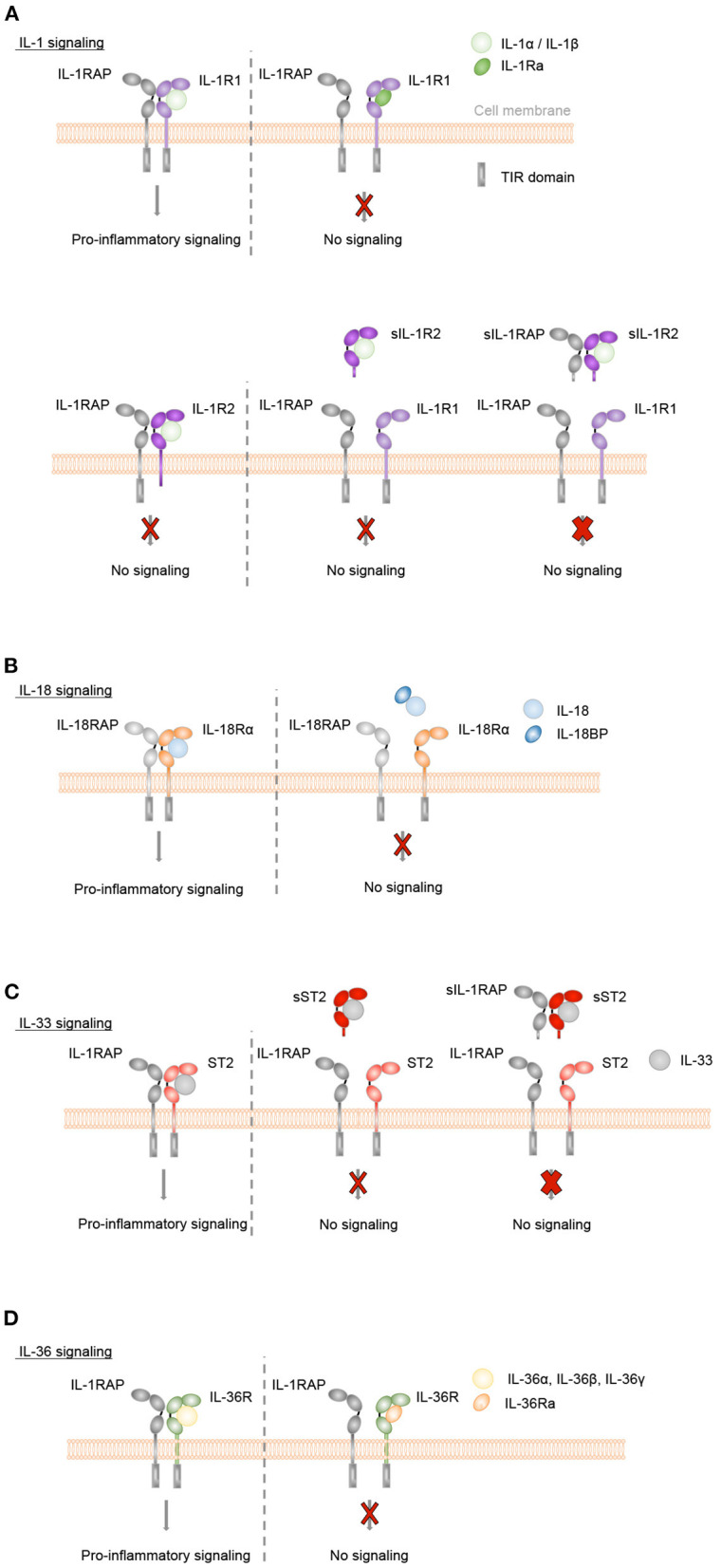
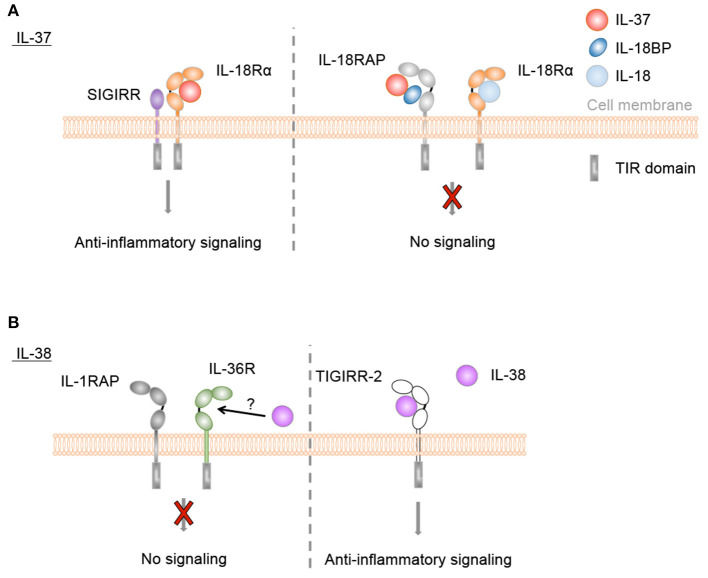
Interleukin (IL)-1 family cytokines initiate inflammatory responses, and shape innate and adaptive immunity. They play important roles in host defense, but excessive immune activation can also lead to the development of chronic inflammatory diseases. Dysregulated IL-1 family signaling is observed in a variety of skin disorders. In particular, IL-1 family cytokines have been linked to the pathogenesis of psoriasis and atopic dermatitis. The biological activity of pro-inflammatory IL-1 family agonists is controlled by the natural receptor antagonists IL-1Ra and IL-36Ra, as well as by the regulatory cytokines IL-37 and IL-38. These four anti-inflammatory IL-1 family members are constitutively and highly expressed at steady state in the epidermis, where keratinocytes are a major producing cell type. In this review, we provide an overview of the current knowledge concerning their regulatory roles in skin biology and inflammation and their therapeutic potential in human inflammatory skin diseases. We further highlight some common misunderstandings and less well-known observations, which persist in the field despite recent extensive interest for these cytokines.
白细胞介素 (IL)-1 家族细胞因子启动炎症反应,并塑造先天和适应性免疫。它们在宿主防御中发挥重要作用,但过度的免疫激活也可能导致慢性炎症性疾病的发展。在各种皮肤疾病中观察到白细胞介素 (IL)-1 家族信号的失调。特别是,IL-1 家族细胞因子与银屑病和特应性皮炎的发病机制有关。促炎的 IL-1 家族激动剂的生物学活性受天然受体拮抗剂 IL-1Ra 和 IL-36Ra 以及调节细胞因子 IL-37 和 IL-38 的控制。这四个抗炎性 IL-1 家族成员在表皮中以稳定状态持续高度表达,表皮中角质形成细胞是主要的产生细胞类型。在这篇综述中,我们概述了它们在皮肤生物学和炎症中的调节作用及其在人类炎症性皮肤病中的治疗潜力。我们还强调了一些常见的误解和鲜为人知的观察结果,尽管最近这些细胞因子引起了广泛的关注,但这些误解和观察结果在该领域仍然存在。