Paediatrics, Global Links Program, the Royal College of Paediatrics and Child Health, London, United Kingdom.
College of Medicine and Allied Health Sciences, Faculty of Nursing, University of Sierra Leone, Freetown, Sierra Leone.
Pan Afr Med J. 2020 Dec 18;37:356. doi: 10.11604/pamj.2020.37.356.23607. eCollection 2020.
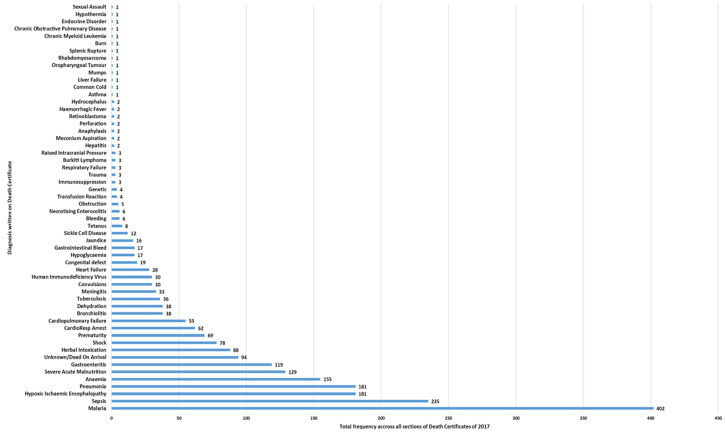
health care data accuracy feeds the development of sound healthcare policy and the prioritisation of interventions in scarce resource environments. We designed a retrospective study at the sole paediatric government hospital in Sierra Leone to examine mortality statistics, specifically: the accuracy of mortality data collected in 2017; and the quality of cause of death (CoD) reporting for 2017.
the retrospective audit included all available mortality statistics collected at the hospital during the 2017 calendar year. For the purpose of calculating a mortality rate, admission data was additionally gathered. Four different hospital entities were identified that collected mortality data (the Monitoring and Evaluation (M&E) office; the nurse ledgers; the office of births and deaths; and the mortuary). Data from each hospital entity were used for the comparative analysis.
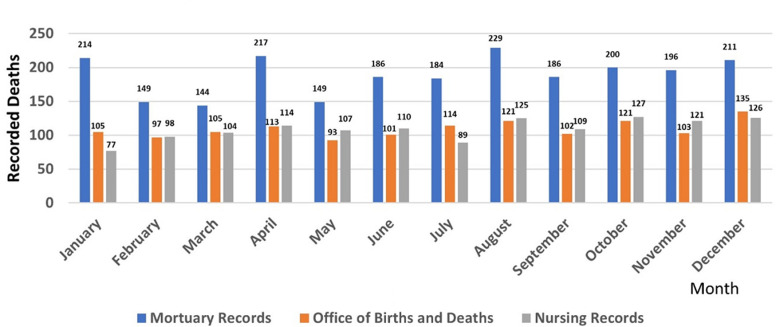
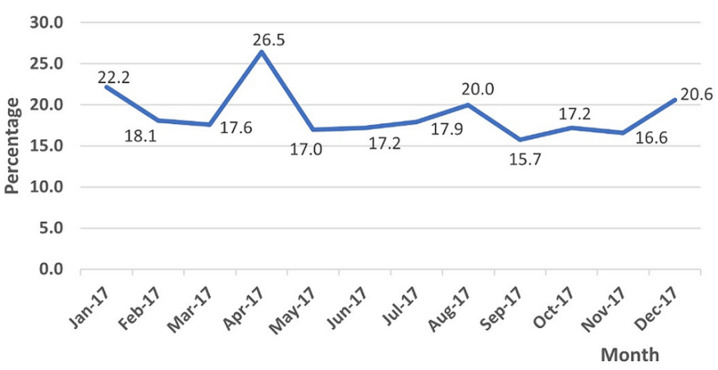
striking differences were found in the rate of hospital mortality reported by different entities. The M&E office (responsible for providing data to the ministry of health and sanitation) reported a hospital mortality rate of 2.94% in 2017. Mortuary and nursing admissions records showed a hospital mortality rate of 18.7%. Discrepancies and issues of quality in CoD reporting between hospital entities were identified.
significant variations were found in the generation of official hospital mortality data. Mortality data informs health service prioritisation, resource distribution, outcome measures and epidemiological surveillance. Resources to support quality improvement initiatives are needed in the creation of an in-hospital system that reports accurate data with a process for real-time institutional data feedback.
医疗保健数据的准确性为健全的医疗保健政策的制定以及在资源稀缺环境中优先干预措施提供了依据。我们在塞拉利昂唯一的一家儿科政府医院进行了一项回顾性研究,以检查死亡率统计数据,具体而言:检查 2017 年收集的死亡率数据的准确性;以及 2017 年死因报告的质量。
这项回顾性审计包括 2017 年在医院收集的所有可用死亡率统计数据。为了计算死亡率,还收集了入院数据。确定了四个不同的医院实体来收集死亡率数据(监测和评估(M&E)办公室;护士分类帐;出生和死亡办公室;和太平间)。使用每个医院实体的数据进行比较分析。
不同实体报告的医院死亡率存在显著差异。M&E 办公室(负责向卫生部和公共卫生署提供数据)报告 2017 年医院死亡率为 2.94%。太平间和护理入院记录显示医院死亡率为 18.7%。在死因报告方面,医院实体之间存在差异和质量问题。
在生成官方医院死亡率数据方面存在显著差异。死亡率数据为卫生服务的优先排序、资源分配、结果衡量和流行病学监测提供依据。需要资源支持质量改进举措,以建立一个能够报告准确数据并具有实时机构数据反馈流程的院内系统。