Research School of Population Health, Australian National University, Canberra, Australia.
Research School of Population Health, Australian National University, Canberra, Australia; Kirby Institute, University of New South Wales, Sydney, Australia.
Int J Parasitol. 2021 Aug;51(9):729-739. doi: 10.1016/j.ijpara.2021.01.005. Epub 2021 Mar 31.
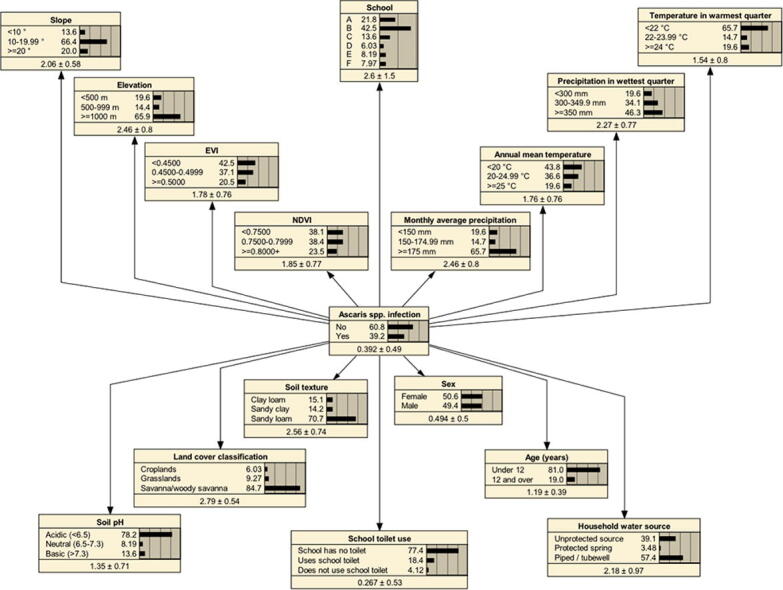
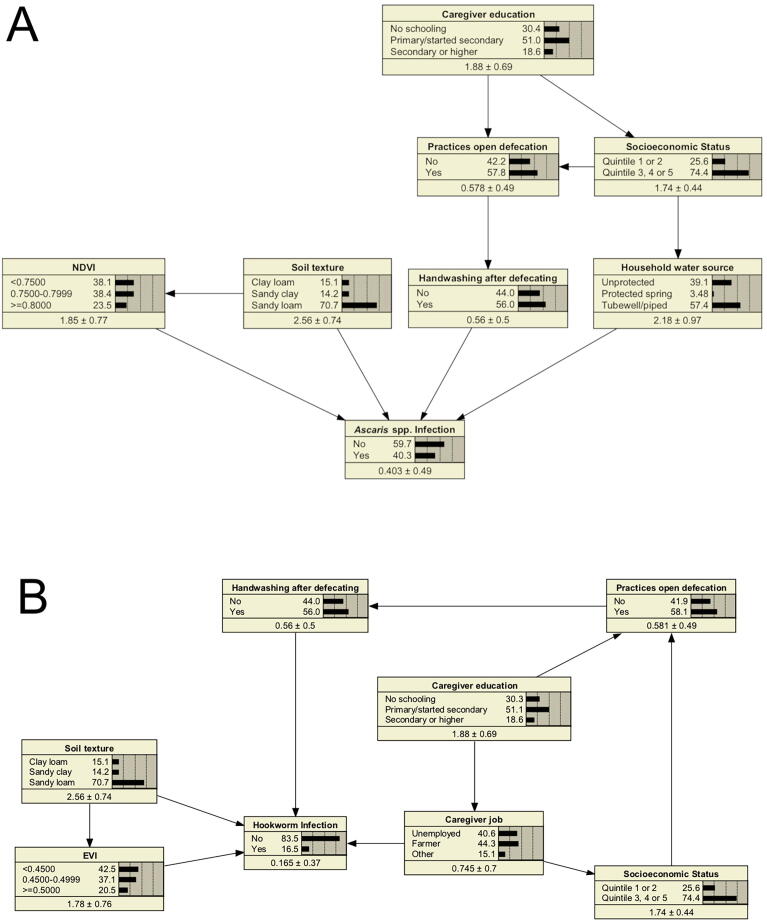
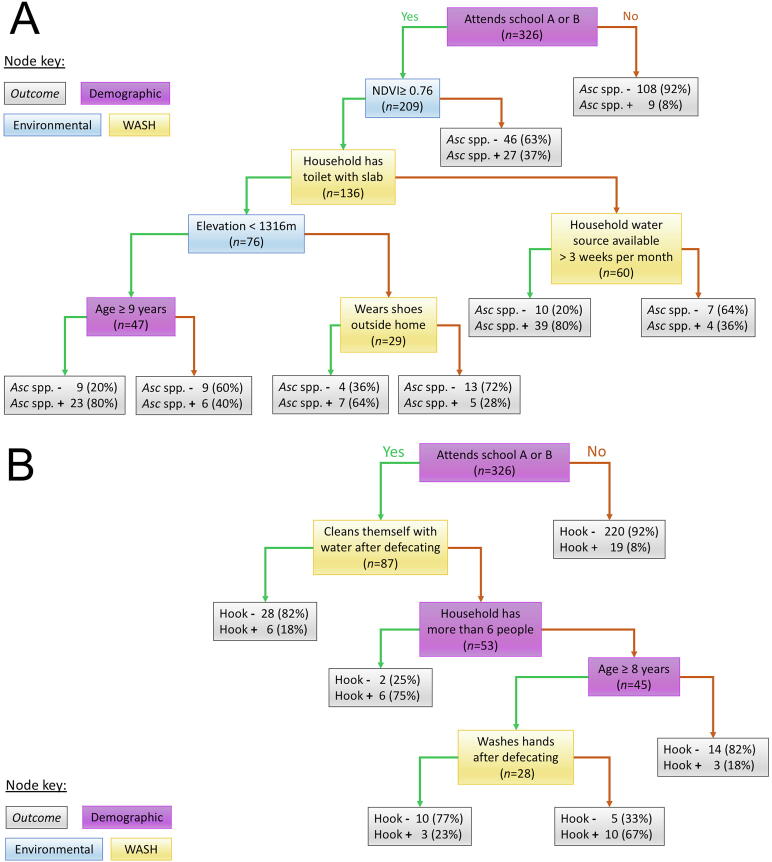
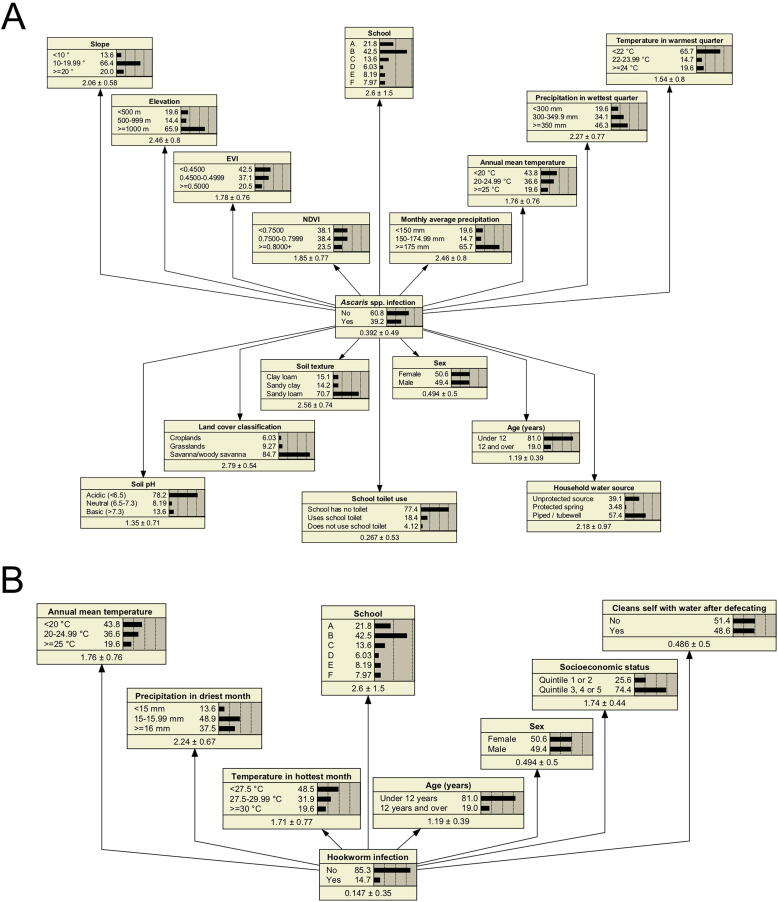
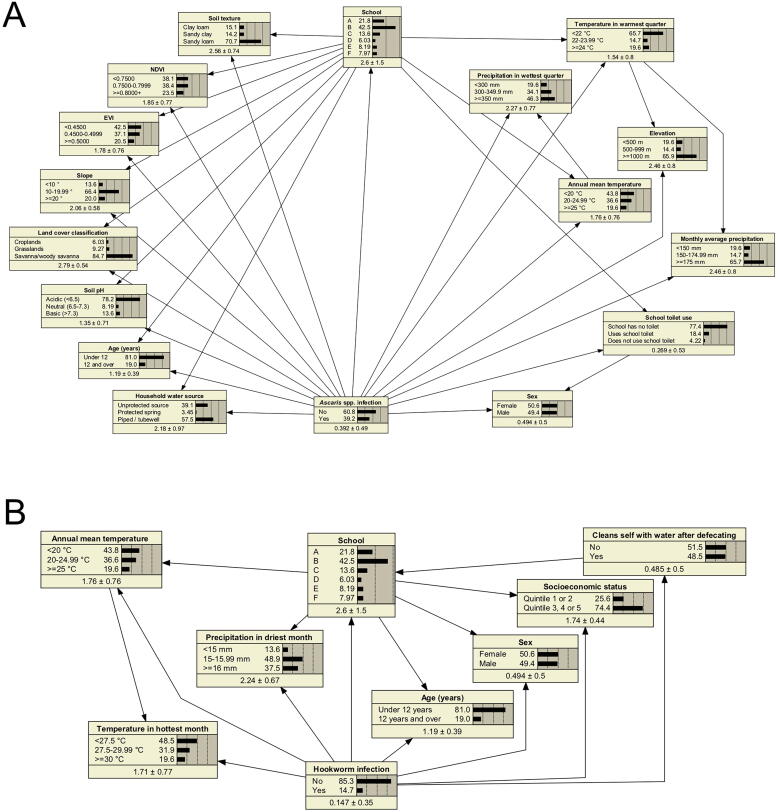
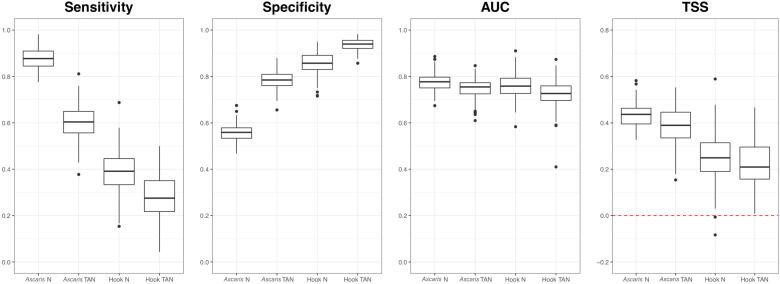
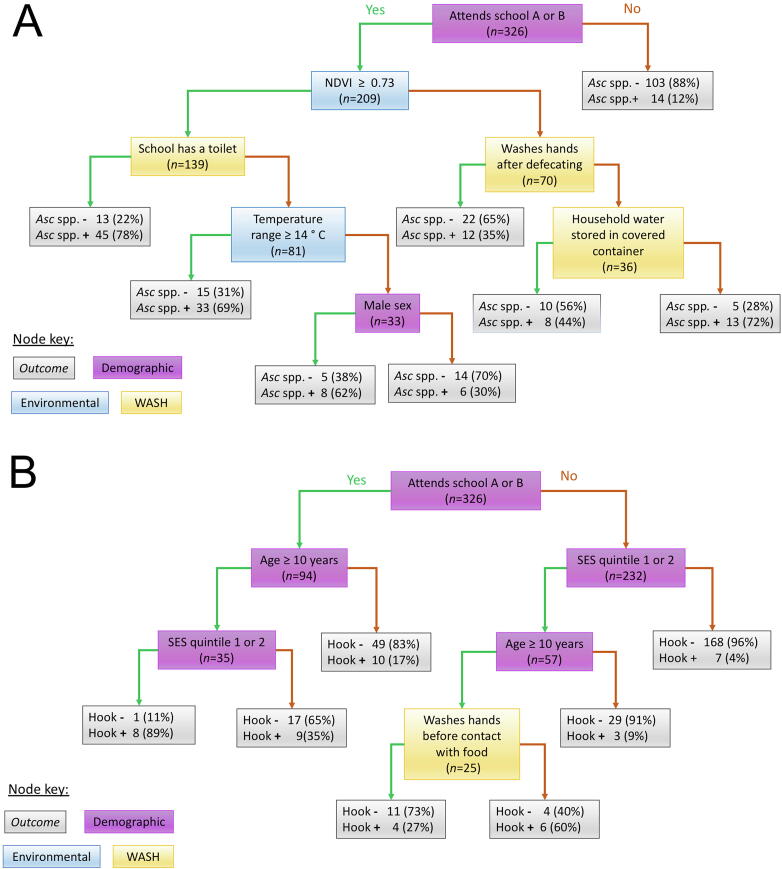
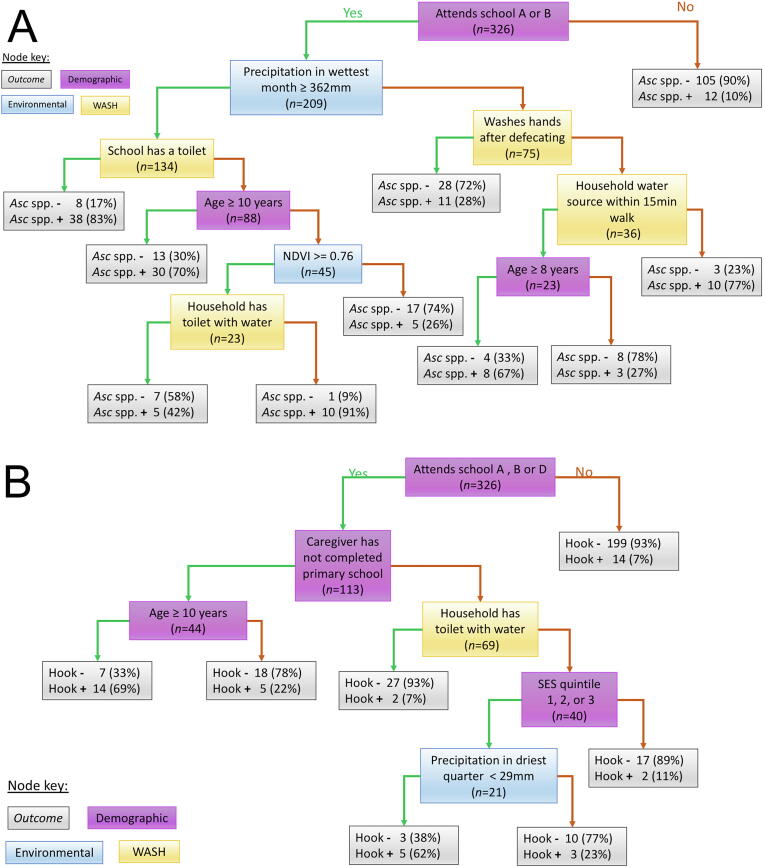
Soil-transmitted helminths (STHs) are parasitic intestinal worms that infect almost a fifth of the global population. Sustainable control of STHs requires understanding the complex interaction of factors contributing to transmission. Identifying risk factors has mainly relied on logistic regression models where the underlying assumption of independence between variables is not always satisfied. Previously demonstrated risk factors including water, sanitation and hygiene (WASH) access and behaviours, and socioeconomic status are intrinsically linked. Similarly, environmental factors including climate, soil and land attributes are often strongly correlated. Alternative methods such as recursive partitioning and Bayesian networks can handle correlated variables, but there are no published studies comparing these methods with logistic regression in the context of STH risk factor analysis. Baseline cross-sectional data from school-aged children in the (S)WASH-D for Worms study were used to compare risk factors identified from modelling the same data using three different statistical techniques. Outcomes of interest were infection with Ascaris spp. and any hookworm species (Necator americanus, Ancylostoma duodenale, and Ancylostoma ceylanicum). Mixed-effects logistic regression identified the fewest risk factors. Recursive partitioning identified the most WASH and demographic risk factors, while Bayesian networks identified the most environmental risk factors. Recursive partitioning produced classification trees that visualised potentially at-risk population sub-groups. Bayesian networks helped visualise relationships between variables and enabled interactive modelling of outcomes based on different scenarios for the predictor variables of interest. Model performance was similar across all techniques. Risk factors identified across all techniques were vegetation for Ascaris spp., and cleaning oneself with water after defecating for hookworm. This study adds to the limited body of evidence exploring alternative data modelling approaches in identifying risk factors for STH infections. Our findings suggest these approaches can provide novel insights for more robust interpretation.
土壤传播性蠕虫(STHs)是寄生性肠道蠕虫,感染了全球近五分之一的人口。可持续控制 STH 需要了解导致传播的各种因素的复杂相互作用。确定风险因素主要依赖于逻辑回归模型,但变量之间的独立性假设并不总是成立。以前证明的风险因素,包括水、环境卫生和个人卫生(WASH)的获取和行为,以及社会经济地位,本质上是相互关联的。同样,环境因素,包括气候、土壤和土地属性,通常也有很强的相关性。替代方法,如递归分区和贝叶斯网络,可以处理相关变量,但在 STH 风险因素分析的背景下,没有发表的研究比较这些方法与逻辑回归。利用(S)WASH-D for Worms 研究中在校儿童的基线横断面数据,比较了使用三种不同统计技术对同一数据进行建模所确定的风险因素。感兴趣的结果是感染蛔虫属和任何钩虫种(美洲钩口线虫、十二指肠钩口线虫和犬钩口线虫)。混合效应逻辑回归确定了最少的风险因素。递归分区确定了最多的 WASH 和人口统计学风险因素,而贝叶斯网络则确定了最多的环境风险因素。递归分区生成了可视化潜在高危人群亚组的分类树。贝叶斯网络有助于可视化变量之间的关系,并能够根据感兴趣的预测变量的不同情景进行交互式建模。所有技术的模型性能相似。所有技术都确定了与蛔虫属相关的风险因素是植被,以及在排便后用水清洗自己是钩虫的风险因素。这项研究增加了探索替代数据建模方法在确定 STH 感染风险因素方面的有限证据。我们的研究结果表明,这些方法可以为更稳健的解释提供新的见解。