Ávila-Gálvez María Ángeles, Giménez-Bastida Juan Antonio, González-Sarrías Antonio, Espín Juan Carlos
Laboratory of Food and Health, Research Group on Quality, Safety and Bioactivity of Plant Foods, Department Food Science and Technology, Campus de Espinardo, CEBAS-CSIC, P.O. Box 164, 30100 Murcia, Spain.
Antioxidants (Basel). 2021 Mar 11;10(3):435. doi: 10.3390/antiox10030435.
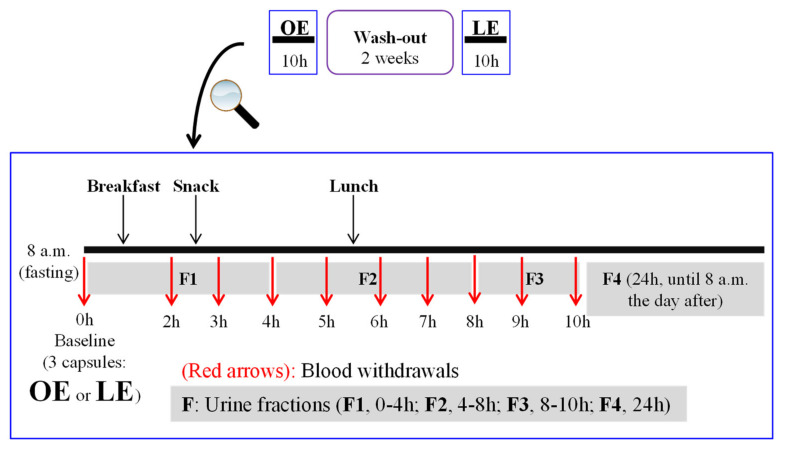
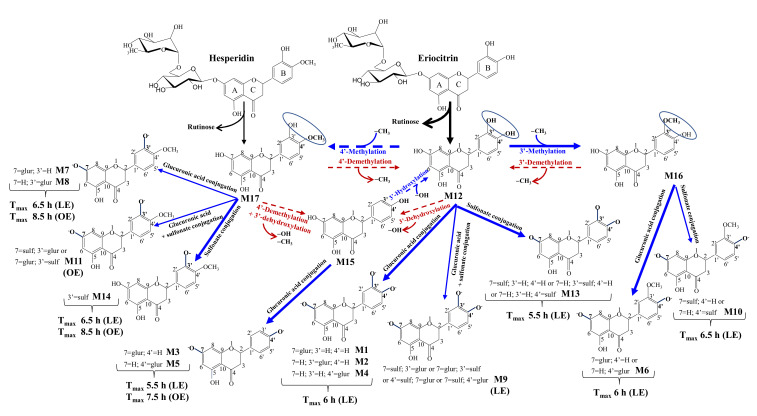
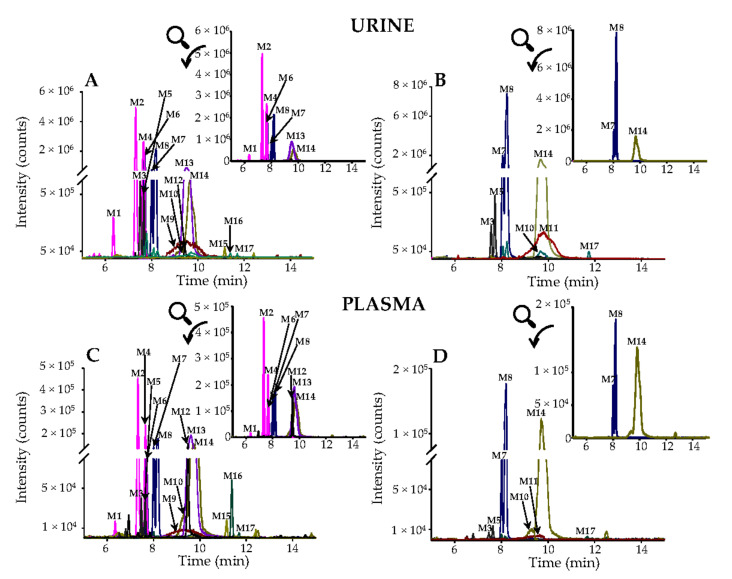
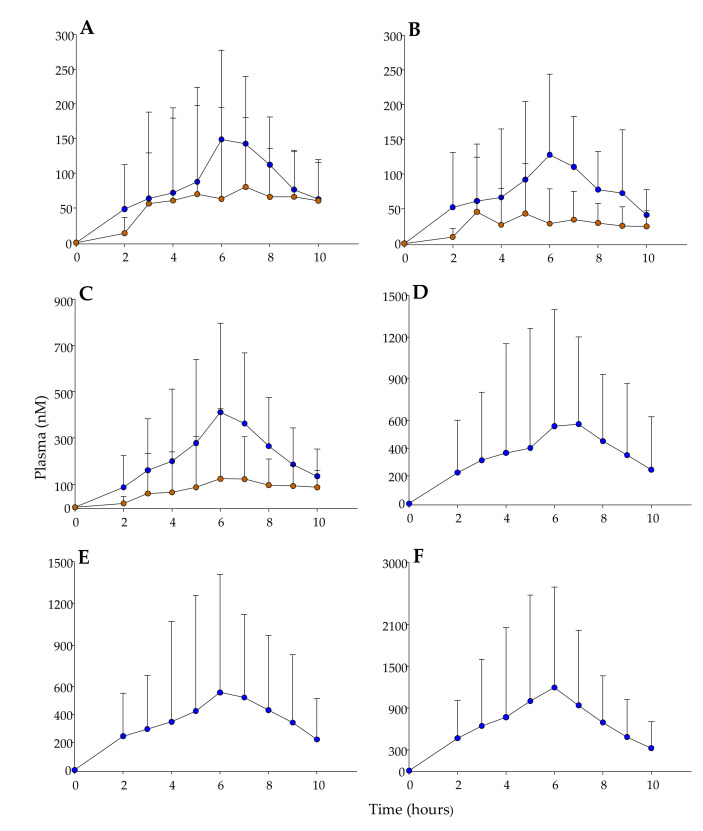
The intake of hesperidin-rich sources, mostly found in orange juice, can decrease cardiometabolic risk, potentially linked to the gut microbial phase-II hesperetin derivatives. However, the low hesperidin solubility hampers its bioavailability and microbial metabolism, yielding a high inter-individual variability (high vs. low-producers) that prevents consistent health-related evidence. Contrarily, the human metabolism of (lemon) eriocitrin is hardly known. We hypothesize that the higher solubility of (lemon) eriocitrin vs. (orange) hesperidin might yield more bioavailable metabolites than hesperidin. A randomized-crossover human pharmacokinetic study ( = 16) compared the bioavailability and metabolism of flavanones from lemon and orange extracts and postprandial changes in oxidative, inflammatory, and metabolic markers after a high-fat-high-sugars meal. A total of 17 phase-II flavanone-derived metabolites were identified. No significant biomarker changes were observed. Plasma and urinary concentrations of all metabolites, including hesperetin metabolites, were higher after lemon extract intake. Total plasma metabolites showed significantly mean lower T (6.0 ± 0.4 vs. 8.0 ± 0.5 h) and higher C and AUC values after lemon extract intake. We provide new insights on hesperetin-eriodictyol interconversion and naringenin formation from hesperidin in humans. Our results suggest that regular consumption of a soluble and eco-friendly eriocitrin-rich lemon extract could provide a circulating concentration metabolites threshold to exert health benefits, even in the so-called low-producers.
富含橙皮苷的食物来源主要存在于橙汁中,摄入此类食物可降低心脏代谢风险,这可能与肠道微生物产生的II期橙皮素衍生物有关。然而,橙皮苷的低溶解度阻碍了其生物利用度和微生物代谢,导致个体间差异很大(高产量者与低产量者),从而无法获得一致的与健康相关的证据。相反,(柠檬)圣草枸橼苷的人体代谢情况却鲜为人知。我们推测,(柠檬)圣草枸橼苷比(橙子)橙皮苷具有更高的溶解度,可能会产生比橙皮苷更具生物利用度的代谢物。一项随机交叉人体药代动力学研究(n = 16)比较了柠檬和橙子提取物中黄酮类化合物的生物利用度和代谢情况,以及高脂高糖餐后氧化、炎症和代谢标志物的餐后变化。共鉴定出17种II期黄酮类化合物衍生的代谢物。未观察到生物标志物有显著变化。摄入柠檬提取物后,包括橙皮素代谢物在内的所有代谢物的血浆和尿液浓度均较高。摄入柠檬提取物后,总血浆代谢物的平均Tmax显著降低(6.0±0.4 vs. 8.0±0.5小时),Cmax和AUC值更高。我们为人体中橙皮素 - 二氢黄酮间的相互转化以及橙皮苷形成柚皮素提供了新的见解。我们的研究结果表明,经常食用可溶性且环保的富含圣草枸橼苷的柠檬提取物,即使对于所谓的低产量者,也可能提供一个能发挥健康益处的循环浓度代谢物阈值。