Department of Pharmaceutical Sciences, North South University, Dhaka 1229, Bangladesh.
Department of Pharmaceutics, College of Pharmacy, King Saud University, Riyadh 11451, Saudi Arabia.
Molecules. 2021 Mar 7;26(5):1457. doi: 10.3390/molecules26051457.
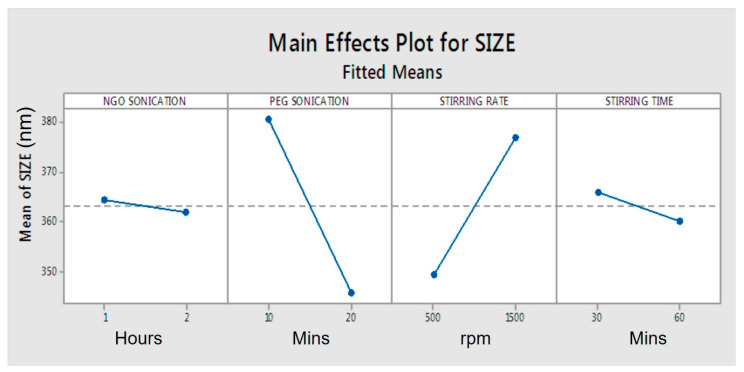
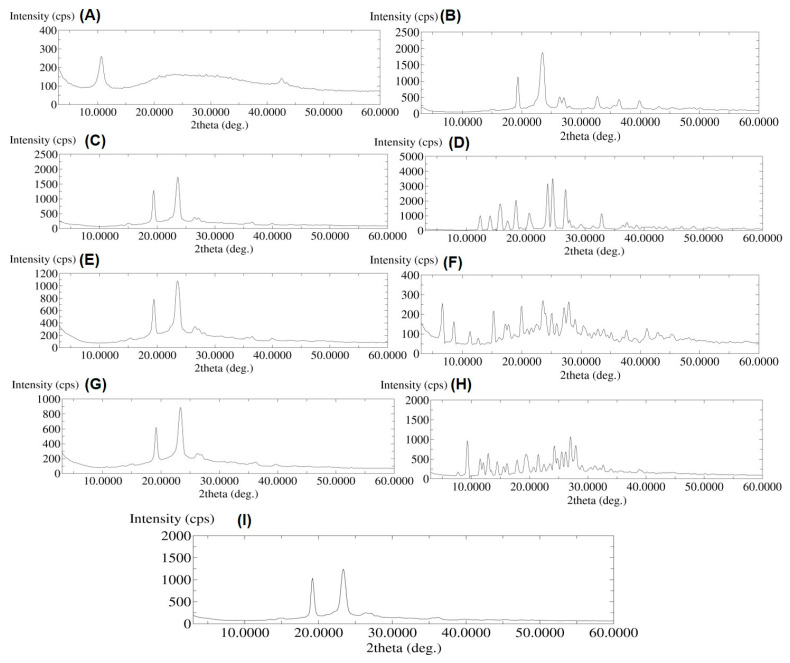
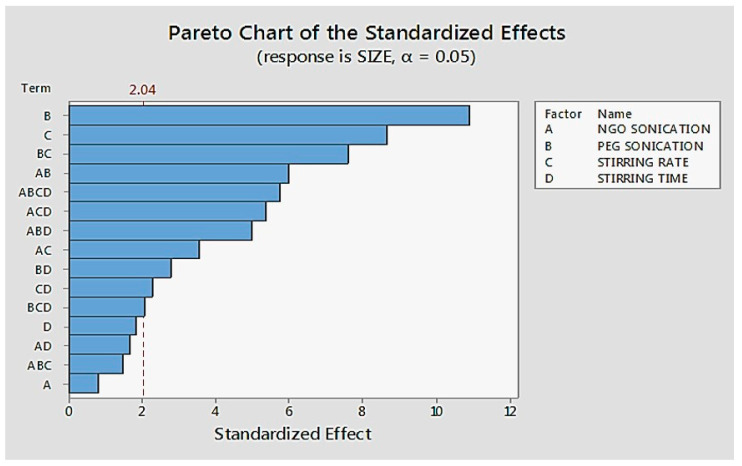
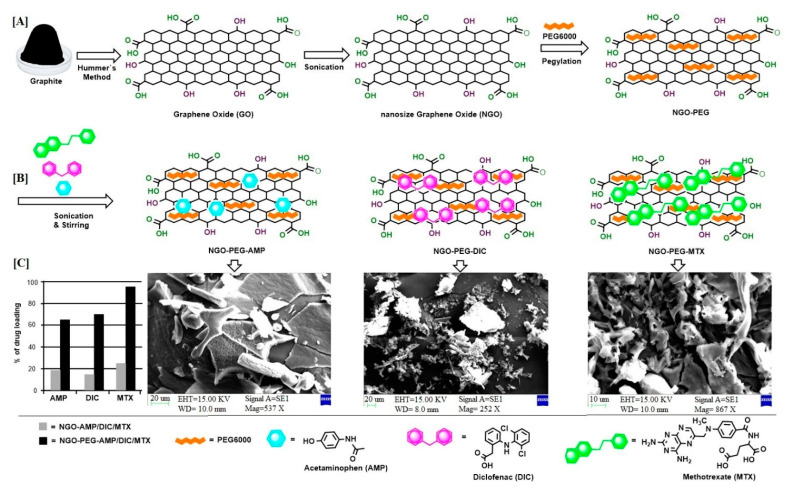
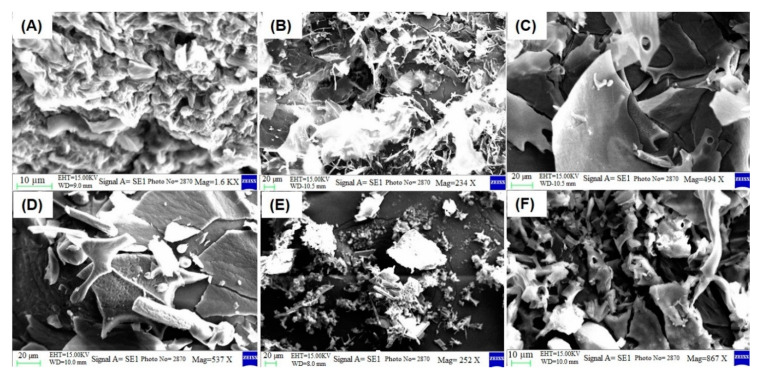
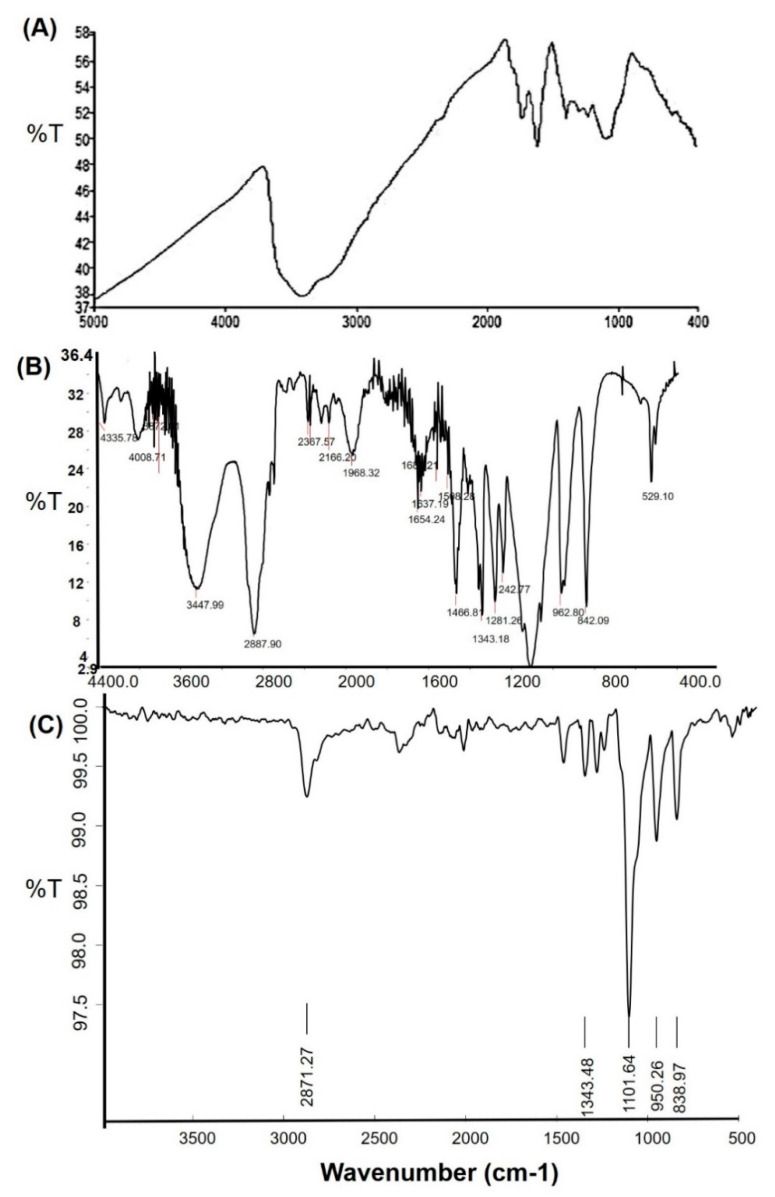
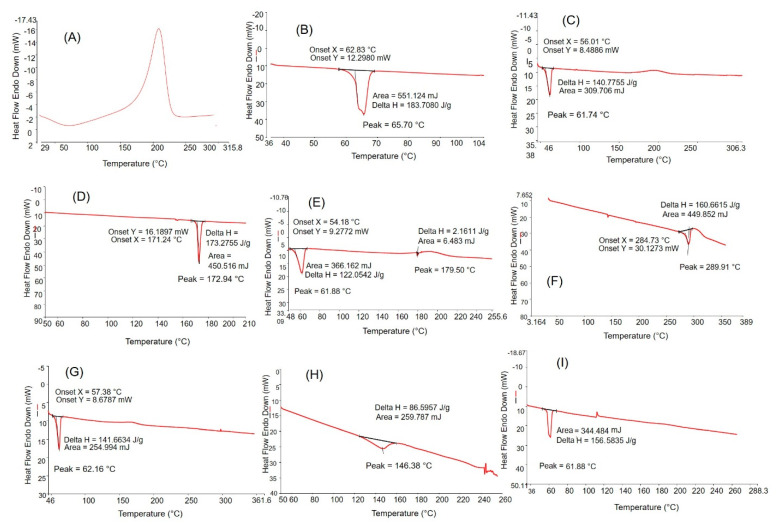
Graphene oxide (GO), due to its 2D planar structure and favorable physical and chemical properties, has been used in different fields including drug delivery. This study aimed to investigate the impact of different process parameters on the average size of drug-loaded PEGylated nano graphene oxide (NGO-PEG) particles using design of experiment (DoE) and the loading of drugs with different molecular structures on an NGO-PEG-based delivery system. GO was prepared from graphite, processed using a sonication method, and functionalized using PEG 6000. Acetaminophen (AMP), diclofenac (DIC), and methotrexate (MTX) were loaded onto NGO-PEG particles. Drug-loaded NGO-PEG was then characterized using dynamic light scattering (DLS), Fourier transform infrared (FTIR), scanning electron microscopy (SEM), differential scanning calorimetry (DSC), XRD. The DLS data showed that the drug-loaded NGO-PEG suspensions were in the size range of 200 nm-1.3 µm. The sonication time and the stirring rate were found to be the major process parameters which affected the average size of the drug-loaded NGO-PEG. FTIR, DSC, XRD, and SEM demonstrated that the functionalization or coating of the NGO occurred through physical interaction using PEG 6000. Methotrexate (MTX), with the highest number of aromatic rings, showed the highest loading efficiency of 95.6% compared to drugs with fewer aromatic rings (diclofenac (DIC) 70.5% and acetaminophen (AMP) 65.5%). This study suggests that GO-based nano delivery systems can be used to deliver drugs with multiple aromatic rings with a low water solubility and targeted delivery (e.g., cancer).
氧化石墨烯(GO)具有 2D 平面结构和优异的物理化学性质,已应用于包括药物输送在内的不同领域。本研究旨在通过实验设计(DoE)研究不同工艺参数对载药聚乙二醇化纳米氧化石墨烯(NGO-PEG)颗粒平均粒径的影响,以及不同分子结构的药物在基于 NGO-PEG 的递药系统中的载药量。GO 由石墨制备,经超声处理,并用 PEG 6000 功能化。将对乙酰氨基酚(AMP)、双氯芬酸(DIC)和甲氨蝶呤(MTX)载入 NGO-PEG 颗粒。然后用动态光散射(DLS)、傅里叶变换红外(FTIR)、扫描电子显微镜(SEM)、差示扫描量热法(DSC)、X 射线衍射(XRD)对载药 NGO-PEG 进行表征。DLS 数据显示,载药 NGO-PEG 悬浮液的粒径在 200nm-1.3μm 之间。研究发现,超声时间和搅拌速率是影响载药 NGO-PEG 平均粒径的主要工艺参数。FTIR、DSC、XRD 和 SEM 表明,NGO 的功能化或涂层是通过 PEG 6000 的物理相互作用实现的。甲氨蝶呤(MTX)具有最多的芳环,其载药效率最高,达 95.6%,而芳环较少的药物(双氯芬酸(DIC)70.5%和对乙酰氨基酚(AMP)65.5%)则较低。本研究表明,基于 GO 的纳米递药系统可用于递药具有多个芳环、低水溶性和靶向性(如癌症)的药物。