Biology Department, Faculty of Science, University of Porto (FCUP), 4169-007 Porto, Portugal.
LAQV-REQUIMTE, Biology Department, Faculty of Science (FCUP), University of Porto, 4169-007 Porto, Portugal.
Molecules. 2021 Mar 8;26(5):1461. doi: 10.3390/molecules26051461.
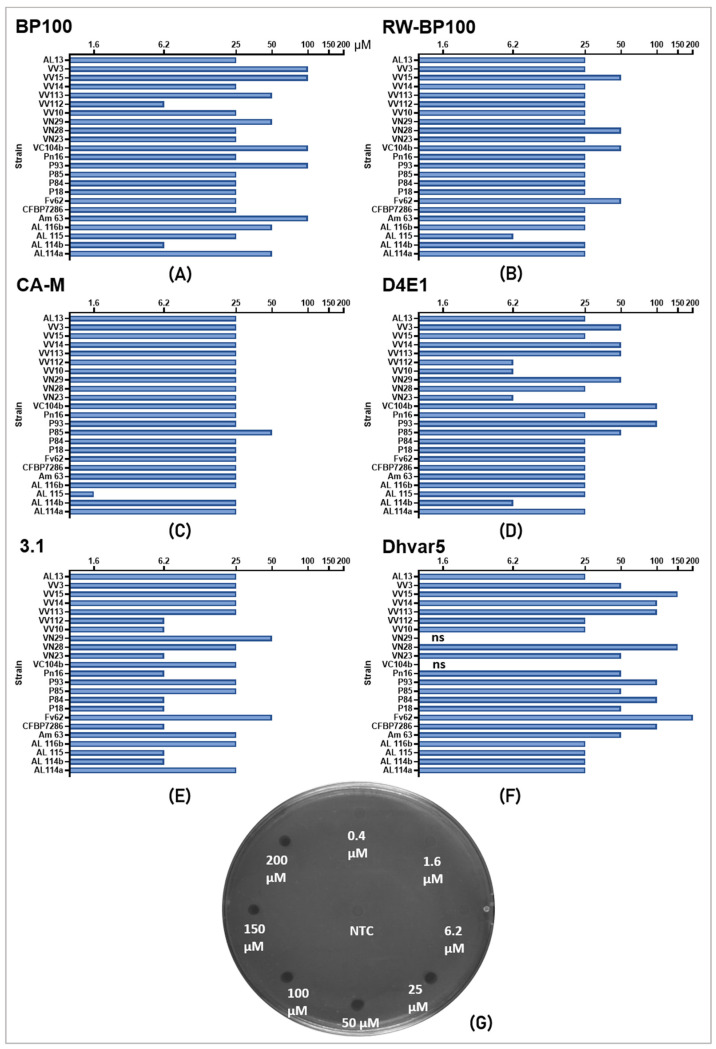
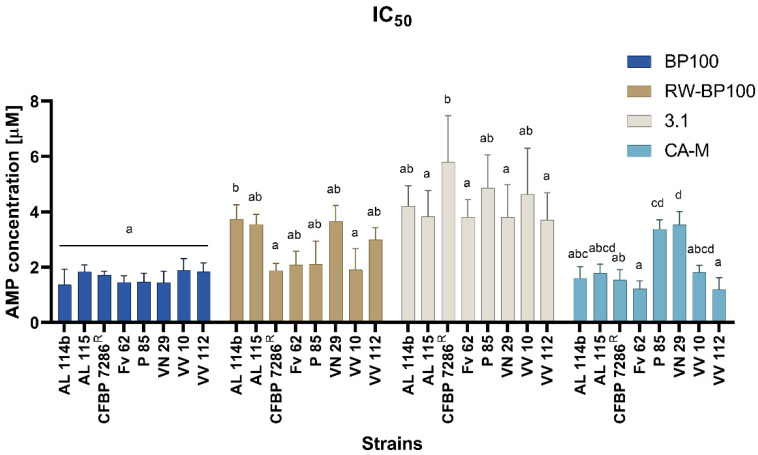
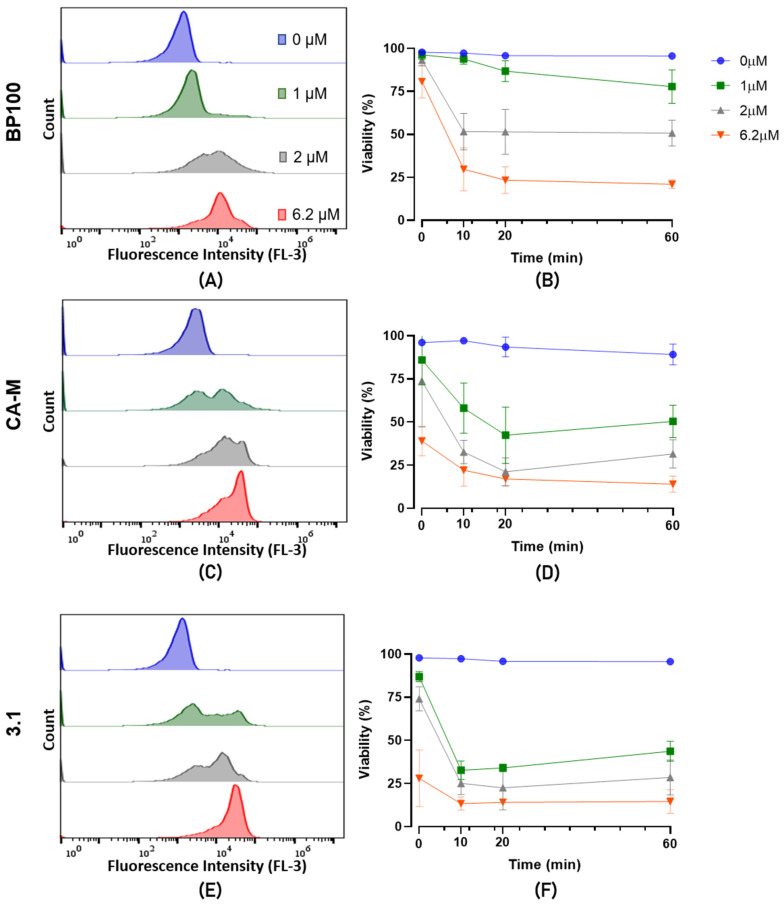
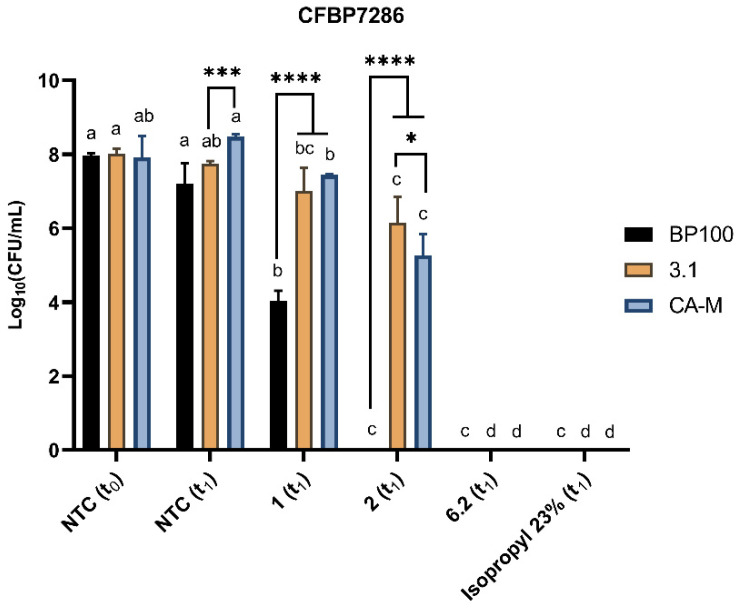
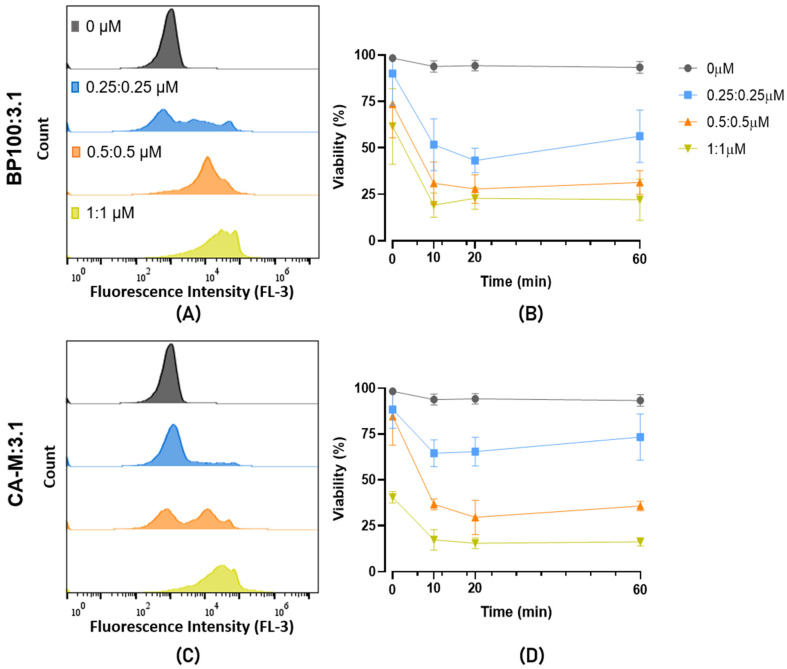
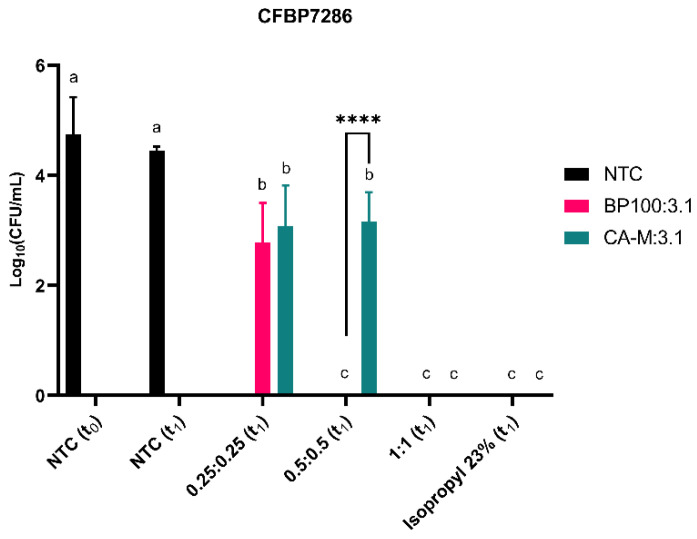
pv. (Psa) is the pathogenic agent responsible for the bacterial canker of kiwifruit (BCK) leading to major losses in kiwifruit productions. No effective treatments and measures have yet been found to control this disease. Despite antimicrobial peptides (AMPs) having been successfully used for the control of several pathogenic bacteria, few studies have focused on the use of AMPs against Psa. In this study, the potential of six AMPs (BP100, RW-BP100, CA-M, 3.1, D4E1, and Dhvar-5) to control Psa was investigated. The minimal inhibitory and bactericidal concentrations (MIC and MBC) were determined and membrane damaging capacity was evaluated by flow cytometry analysis. Among the tested AMPs, the higher inhibitory and bactericidal capacity was observed for BP100 and CA-M with MIC of 3.4 and 3.4-6.2 µM, respectively and MBC 3.4-10 µM for both. Flow cytometry assays suggested a faster membrane permeation for peptide 3.1, in comparison with the other AMPs studied. Peptide mixtures were also tested, disclosing the high efficiency of BP100:3.1 at low concentration to reduce Psa viability. These results highlight the potential interest of AMP mixtures against Psa, and 3.1 as an antimicrobial molecule that can improve other treatments in synergic action.
pv. (Psa) 是导致猕猴桃细菌性溃疡病 (BCK) 的病原体,导致猕猴桃产量的重大损失。目前尚未发现有效的治疗和控制措施。尽管抗菌肽 (AMPs) 已成功用于控制几种病原菌,但很少有研究关注 AMPs 对 Psa 的作用。在这项研究中,研究了六种 AMPs (BP100、RW-BP100、CA-M、3.1、D4E1 和 Dhvar-5) 对 Psa 的控制潜力。通过流式细胞术分析测定最小抑菌和杀菌浓度 (MIC 和 MBC) 并评估膜损伤能力。在测试的 AMPs 中,BP100 和 CA-M 的抑菌和杀菌能力更高,MIC 分别为 3.4 和 3.4-6.2 μM,MBC 分别为 3.4-10 μM。流式细胞术检测表明,与研究的其他 AMP 相比,肽 3.1 具有更快的膜渗透能力。还测试了肽混合物,揭示了 BP100:3.1 在低浓度下对降低 Psa 活力的高效性。这些结果突出了 AMP 混合物对 Psa 的潜在兴趣,以及 3.1 作为一种抗菌分子,可以在协同作用中改善其他治疗方法。