Karous Olfa, Ben Haj Jilani Imtinen, Ghrabi-Gammar Zeineb
Institut National Agronomique de Tunisie (INAT), Département Agronoime et Biotechnologie Végétale, Université de Carthage, 43 Avenue Charles Nicolle, 1082 Cité Mahrajène, Tunisia.
Faculté des Lettres, Université de Manouba, des Arts et des Humanités de la Manouba, LR 18ES13 Biogéographie, Climatologie Appliquée et Dynamiques Environnementales (BiCADE), 2010 Manouba, Tunisia.
Plants (Basel). 2021 Mar 28;10(4):642. doi: 10.3390/plants10040642.
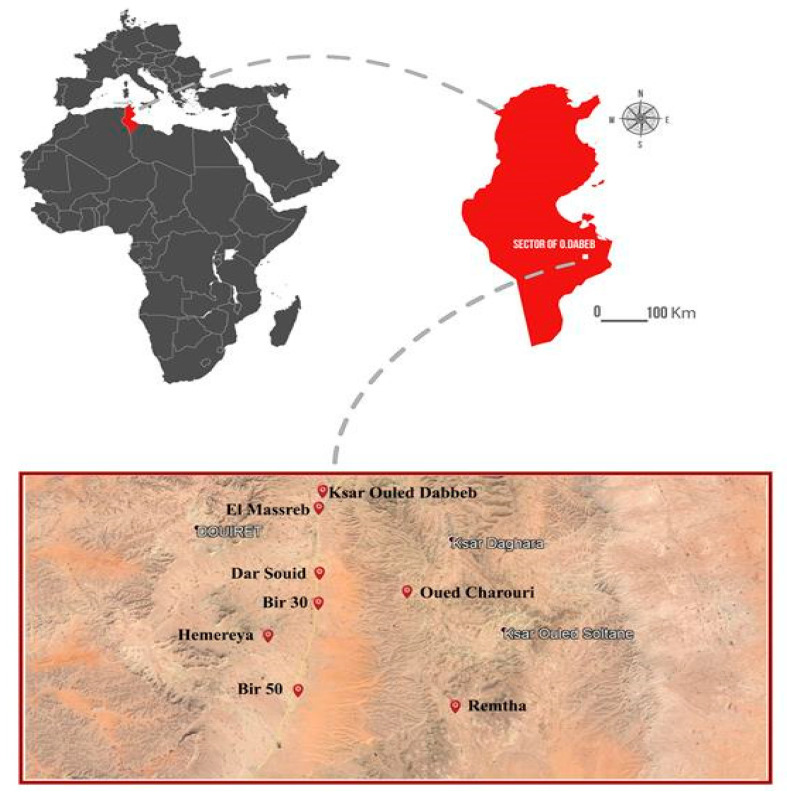
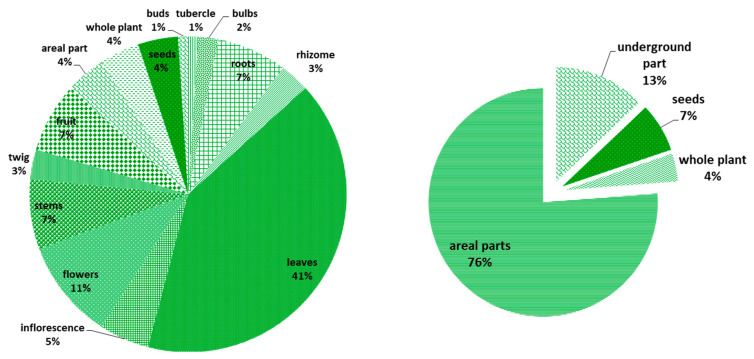
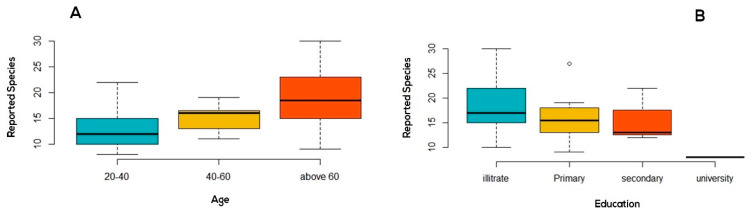
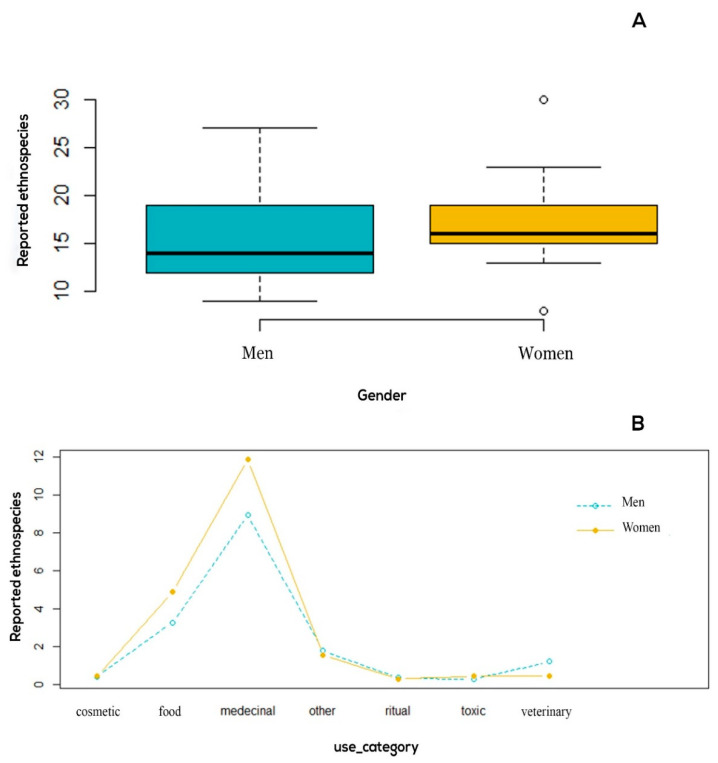
Thanks to its geographic location between two bioclimatic belts (arid and Saharan) and the ancestral nomadic roots of its inhabitants, the sector of Ouled Dabbeb (Southern Tunisia) represents a rich source of plant biodiversity and wide ranging of ethnobotanical knowledge. This work aims to (1) explore and compile the unique diversity of floristic and ethnobotanical information on different folk use of plants in this sector and (2) provide a novel insight into the degree of knowledge transmission between the current population and their semi-nomadic forefathers. Ethnobotanical interviews and vegetation inventories were undertaken during 2014-2019. Thirty informants aged from 27 to 84 were interviewed. The ethnobotanical study revealed that the local community of Ouled Dabbeb perceived the use of 70 plant species belonging to 59 genera from 31 families for therapeutic (83%), food (49%), domestic (15%), ethnoveterinary (12%), cosmetic (5%), and ritual purposes (3%). Moreover, they were knowledgeable about the toxicity of eight taxa. Nearly 73% of reported ethnospecies were freely gathered from the wild. The most commonly used plant parts were leaves (41%) followed by flowers and inflorescence (16%). We reported the use and collection of non-renewable parts (underground storage organs and roots) for 20 ethnospecies. Interestingly, a comparison with the available literature in Tunisia and neighboring countries reveals 13 new useful plants as well as 17 plants with new uses and demonstrates an important reservoir of traditional ethnobotanical heritage that is still sustained by respondents stemming from the semi-nomadic lifestyle of their ancestors (74% of cited taxa). These data could set a basis for further phytochemical and pharmacological research and conservative approach of the most relevant plant species including endemic overused and endangered taxa.
由于其位于两个生物气候带(干旱带和撒哈拉带)之间的地理位置以及其居民祖传的游牧根源,乌莱德达贝布地区(突尼斯南部)拥有丰富的植物生物多样性和广泛的民族植物学知识。这项工作旨在:(1)探索并汇编该地区关于植物不同民间用途的植物区系和民族植物学信息的独特多样性;(2)深入了解当前人口与其半游牧祖先之间知识传承的程度。在2014年至2019年期间进行了民族植物学访谈和植被清查。采访了30名年龄在27岁至84岁之间的受访者。民族植物学研究表明,乌莱德达贝布的当地社区认识到31个科59属的70种植物可用于治疗(83%)、食用(49%)、家庭用途(15%)、民族兽医用途(12%)、美容用途(5%)和仪式用途(3%)。此外,他们还了解8个分类群的毒性。近73%的报告民族植物是从野外自由采集的。最常用的植物部位是叶子(41%),其次是花和花序(16%)。我们报告了20种民族植物不可再生部位(地下贮藏器官和根)的使用和采集情况。有趣的是,与突尼斯和邻国的现有文献相比,发现了13种新的有用植物以及17种有新用途的植物,并展示了一个重要的传统民族植物学遗产库,该遗产库仍然由源于其祖先半游牧生活方式的受访者传承(74%的引用分类群)。这些数据可为进一步的植物化学和药理学研究以及对最相关植物物种(包括过度使用的特有和濒危分类群)的保护方法奠定基础。