Sicari Vincenzo, Loizzo Monica R, Sanches Silva Ana, Romeo Rosa, Spampinato Giovanni, Tundis Rosa, Leporini Mariarosaria, Musarella Carmelo M
Department of Agraria, "Mediterranea" University of Reggio Calabria, Cittadella Universitaria, Località Feo di Vito, 89122 Reggio Calabria (RC), Italy.
Department of Pharmacy, Health Science and Nutrition, University of Calabria, Via P. Bucci, Edificio Polifunzionale, 87036 Rende (CS), Italy.
Foods. 2020 Dec 24;10(1):32. doi: 10.3390/foods10010032.
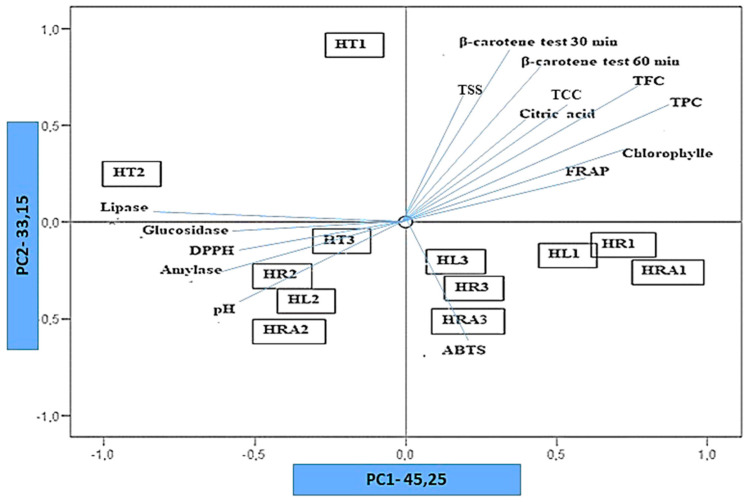
The impact of blanching on the phytochemical content and bioactivity of (HL), (HR), (HRA), and subsp. (HT) leaves was studied and compared to fresh plant materials and residual blanching water. For this purpose, total phenols, flavonoids, carotenoids, and chlorophyll contents were quantified. The antioxidant effect was investigated by using different in vitro tests (β-carotene, ferric reducing ability power (FRAP), 2,2'-Azino-bis(3-ethylbenzothiazoline-6-sulfonic acid) (ABTS) and 2,2-diphenyl-1-picrylhydrazyl (DPPH), whereas the potential inhibitory activity of key enzymes linked to obesity was screened against lipase, α-amylase, and α-glucosidase. Generally, the phytochemical content followed the trend: fresh > blanching water > blanched samples. The same trend was observed in the antioxidant activity independently of the applied test as well as in the inhibition of lipase and carbohydrates-hydrolysing enzymes. In particular, fresh (HL1) showed the lowest inhibitory concentration 50% (IC) values of 31.3 and 42.7 μg/mL, against α-glucosidase and α-amylase, respectively, whereas fresh (HRA1) showed the most promising hypolipidemic activity (IC value of 39.8 μg/mL). Collectively, these results support the health effect of these wild plants and demonstrated that blanching water should be reused in food preparation since it is a good source of bioactive compounds and its consumption should be recommended in order to increase the uptake of micronutrients.
研究了热烫对皱叶酸模(HL)、齿果酸模(HR)、巴天酸模(HRA)和戟叶酸模亚种(HT)叶片中植物化学成分和生物活性的影响,并与新鲜植物材料和剩余热烫水进行了比较。为此,对总酚、黄酮类化合物、类胡萝卜素和叶绿素含量进行了定量分析。通过不同的体外试验(β-胡萝卜素、铁还原能力(FRAP)、2,2'-联氮双(3-乙基苯并噻唑啉-6-磺酸)(ABTS)和2,2-二苯基-1-苦基肼(DPPH))研究了抗氧化作用,同时针对脂肪酶、α-淀粉酶和α-葡萄糖苷酶筛选了与肥胖相关的关键酶的潜在抑制活性。一般来说,植物化学成分遵循以下趋势:新鲜>热烫水>热烫样品。在抗氧化活性方面,无论采用何种试验,以及在脂肪酶和碳水化合物水解酶的抑制方面,都观察到了相同的趋势。特别是,新鲜的皱叶酸模(HL1)对α-葡萄糖苷酶和α-淀粉酶的半数抑制浓度(IC)值最低,分别为31.3和42.7μg/mL,而新鲜的巴天酸模(HRA1)表现出最有前景的降血脂活性(IC值为39.8μg/mL)。总的来说,这些结果支持了这些野生植物的健康功效,并表明热烫水应在食品制备中重复使用,因为它是生物活性化合物的良好来源,建议食用热烫水以增加微量营养素的摄入量。