Favier Amélia, Rocher Grégoire, Larsen Annette K, Delangle Romain, Uzan Catherine, Sabbah Michèle, Castela Mathieu, Duval Alex, Mehats Céline, Canlorbe Geoffroy
Centre de Recherche Saint-Antoine (CRSA), INSERM UMR_S_938, Cancer Biology and Therapeutics, Sorbonne University, 75012 Paris, France.
Department of Gynecological and Breast Surgery and Oncology, Pitié-Salpêtrière, Assistance Publique des Hôpitaux de Paris (AP-HP), University Hospital, 75013 Paris, France.
Cancers (Basel). 2021 Mar 6;13(5):1137. doi: 10.3390/cancers13051137.
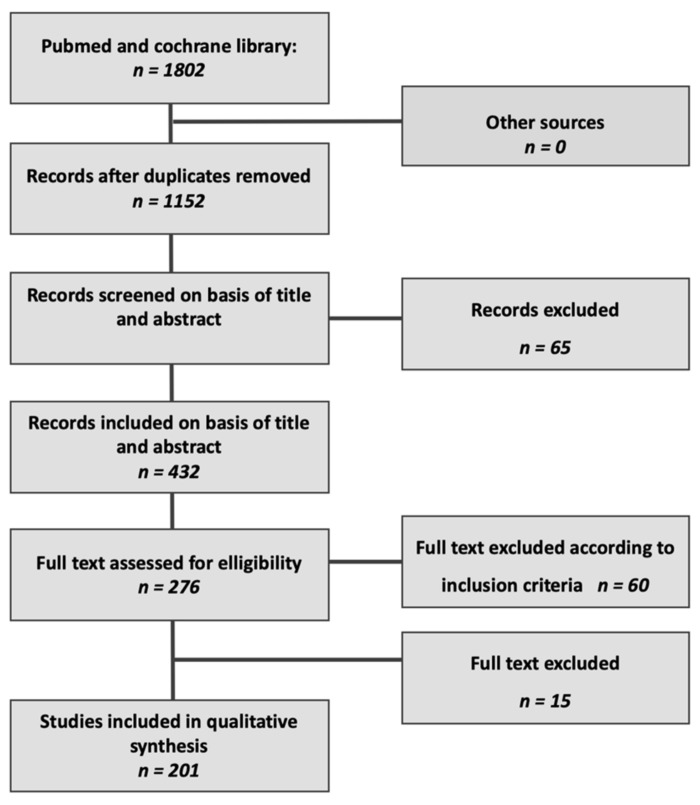
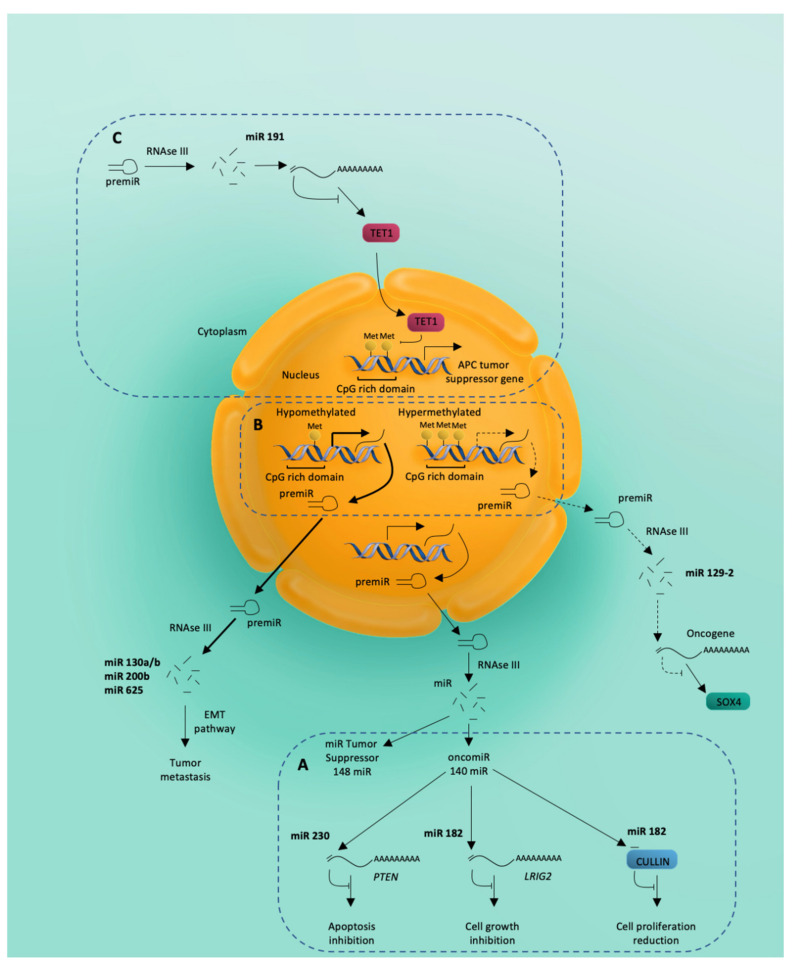
The objective of this systematic review is to summarize our current knowledge on the influence of miRNAs in the epigenetic deregulation of tumor-related genes in endometrial cancer (EC). We conducted a literature search on the role of miRNAs in the epigenetic regulation of EC applying the Preferred Reporting Items for Systematic Reviews and Meta-Analyses (PRISMA) guidelines. The following terms were used: microRNA, miRNA, miR, endometrial cancer, endometrium, epigenetic, epimutation, hypermethylation, lynch, deacetylase, DICER, novel biomarker, histone, chromatin. The miRNAs were classified and are presented according to their function (tumor suppressor or onco-miRNA), their targets (when known), their expression levels in EC tissue vs the normal surrounding tissue, and the degree of DNA methylation in miRNA loci and CpG sites. Data were collected from 201 articles, including 190 original articles, published between November 1, 2008 and September 30, 2020 identifying 313 different miRNAs implicated in epigenetic regulation of EC. Overall, we identified a total of 148 miRNAs with decreased expression in EC, 140 miRNAs with increased expression in EC, and 22 miRNAs with discordant expression levels. The literature implicated different epigenetic phenomena including altered miRNA expression levels (miR-182, -230), changes in the methylation of miRNA loci (miR-34b, -129-2, -130a/b, -152, -200b, -625) and increased/decreased methylation of target genes (miR-30d,-191). This work provides an overview of all miRNAs reported to be involved in epigenetic regulation in EC including DNA methylation and RNA-associated silencing. These findings may contribute to novel strategies in diagnosis, risk assessment, and treatments aimed at miRNAs, their target genes or DNA methylation.
本系统评价的目的是总结我们目前关于微小RNA(miRNA)对子宫内膜癌(EC)中肿瘤相关基因表观遗传失调影响的认识。我们按照系统评价和Meta分析的首选报告项目(PRISMA)指南,对miRNA在EC表观遗传调控中的作用进行了文献检索。使用了以下术语:微小RNA、miRNA、miR、子宫内膜癌、子宫内膜、表观遗传、表观突变、高甲基化、林奇综合征、去乙酰化酶、Dicer、新型生物标志物、组蛋白、染色质。根据miRNA的功能(肿瘤抑制或致癌miRNA)、靶点(已知时)、在EC组织与周围正常组织中的表达水平以及miRNA基因座和CpG位点的DNA甲基化程度对其进行分类并呈现。从201篇文章中收集数据,包括2008年11月1日至2020年9月30日发表的190篇原创文章,确定了313种不同的miRNA参与了EC的表观遗传调控。总体而言,我们共鉴定出148种在EC中表达降低的miRNA、140种在EC中表达增加的miRNA以及22种表达水平不一致的miRNA。文献涉及不同的表观遗传现象,包括miRNA表达水平改变(miR-182、-230)、miRNA基因座甲基化变化(miR-34b、-129-2、-130a/b、-152、-200b、-625)以及靶基因甲基化增加/减少(miR-30d、-191)。这项工作概述了所有据报道参与EC表观遗传调控的miRNA,包括DNA甲基化和RNA相关沉默。这些发现可能有助于制定针对miRNA、其靶基因或DNA甲基化的诊断、风险评估和治疗新策略。