Tang Yuanyue, Li Fengming, Gu Dan, Wang Wenyan, Huang Jinlin, Jiao Xinan
Key Laboratory of Prevention and Control of Biological Hazard Factors (Animal Origin) for Agri-Food Safety and Quality, Ministry of Agriculture of China, Yangzhou University, Yangzhou 225009, China.
Jiangsu Key Lab of Zoonosis/Jiangsu Co-Innovation Center for Prevention and Control of Important Animal Infectious Diseases and Zoonoses, Yangzhou University, Yangzhou 225009, China.
Antibiotics (Basel). 2021 Mar 2;10(3):246. doi: 10.3390/antibiotics10030246.
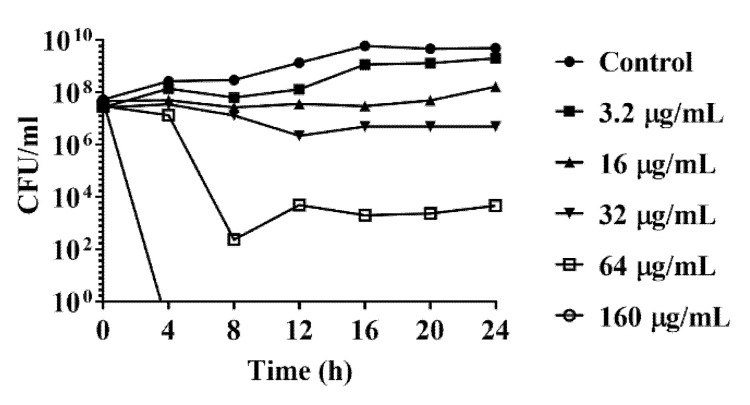
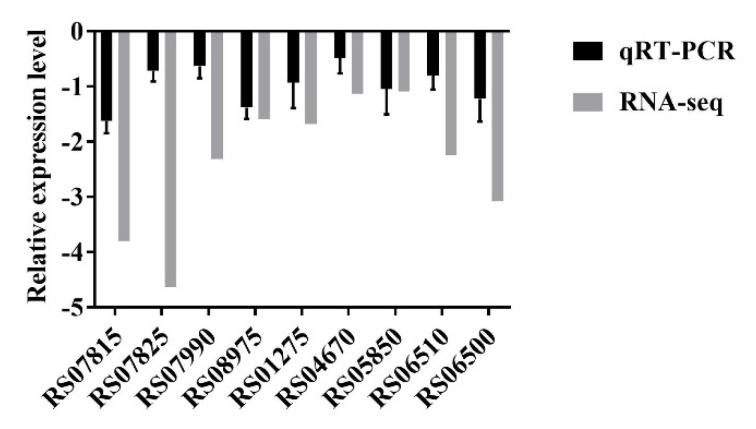
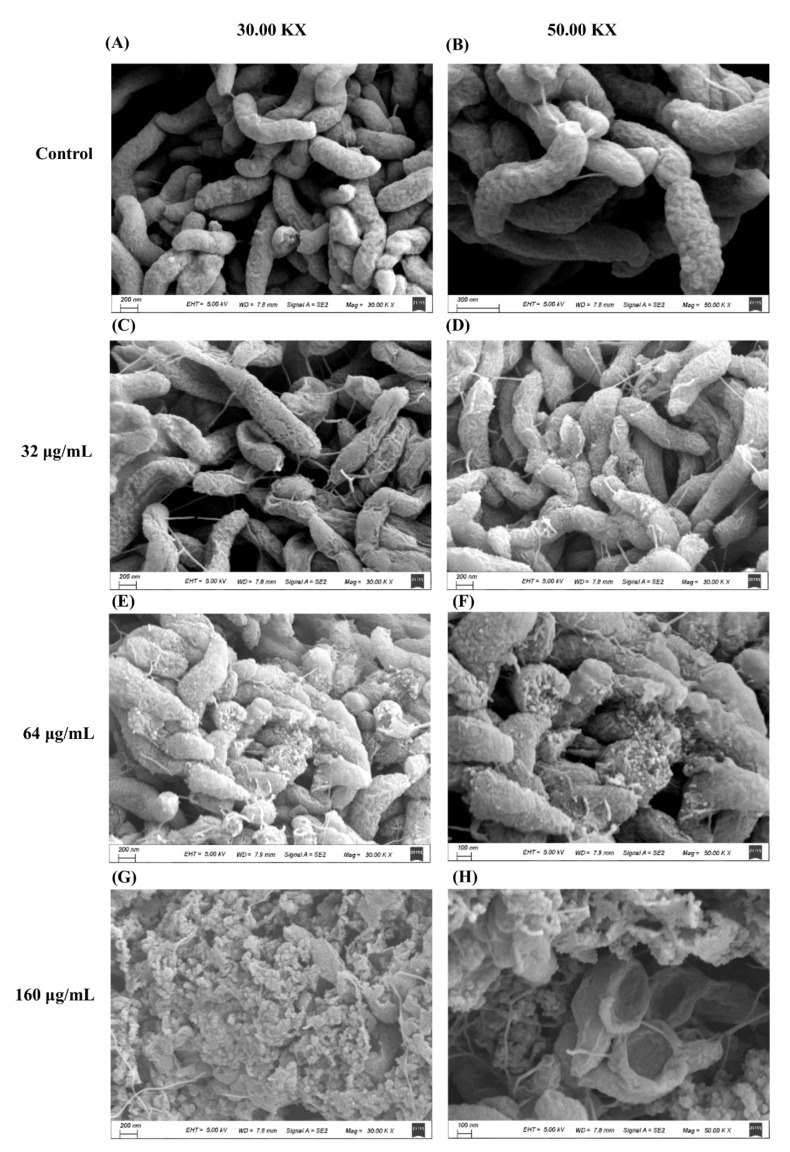
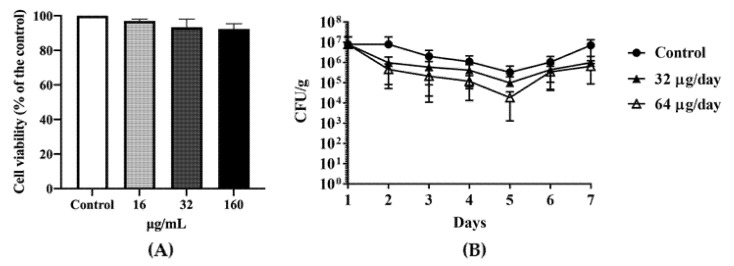
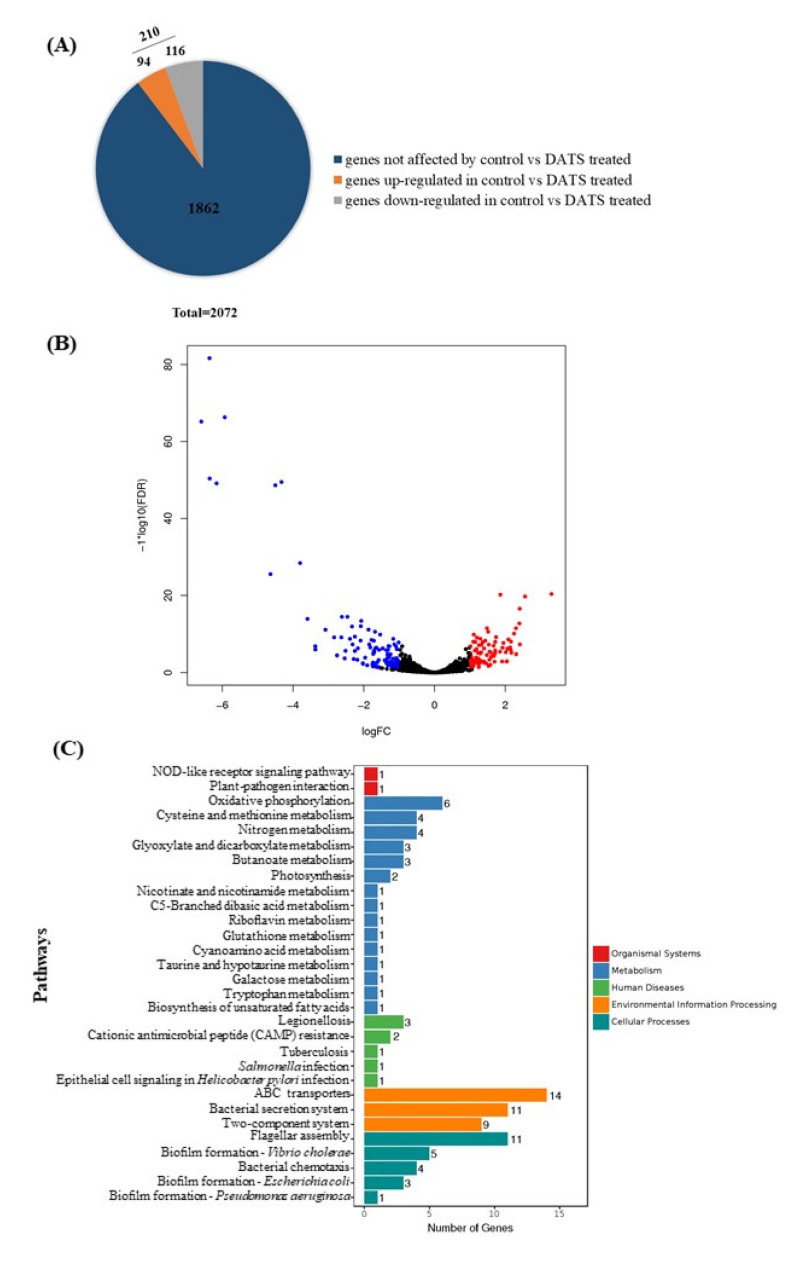
is an important foodborne pathogen causing campylobacteriosis. It can infect humans through the consumption of contaminated chicken products or via the direct handling of animals. Diallyl trisulfide (DATS) is a trisulfide compound from garlic extracts that has a potential antimicrobial effect on foodborne pathogens. This study investigated the antimicrobial activity of DATS on by evaluating the minimal inhibitory concentrations (MICs) of 81-168, and fourteen isolates from chicken carcasses. Thirteen of 14 isolates and 81-176 had MICs ≤ 32 μg/mL, while one isolate had MIC of 64 μg/mL. Scanning electron microscopy (SEM) analysis showed the disruption and shrink of bacterial cell membrane after the DATS treatment. A time-killing analysis further showed that DATS had a dose-dependent in vitro antimicrobial effect on during the 24 h treatment period. In addition, DATS also showed an antimicrobial effect in chicken through the decrease of colony count by 1.5 log CFU/g (cloacal sample) during the seven-day DATS treatment period. The transcriptional analysis of with 16 μg/mL (0.5× MIC) showed 210 differentially expression genes (DEGs), which were mainly related to the metabolism, bacterial membrane transporter system and the secretion system. Fourteen ABC transporter-related genes responsible for bacterial cell homeostasis and oxidative stress were downregulated, indicating that DATS could decrease the bacterial ability to against environmental stress. We further constructed five ABC transporter deletion mutants according to the RNA-seq analysis, and all five mutants proved less tolerant to the DATS treatment compared to the wild type by MIC test. This study elucidated the antimicrobial activity of DATS on and suggested that DATS could be used as a potential antimicrobial compound in the feed and food industry.
是一种导致弯曲杆菌病的重要食源性病原体。它可通过食用受污染的鸡肉产品或直接接触动物感染人类。二烯丙基三硫化物(DATS)是一种来自大蒜提取物的三硫化物化合物,对食源性病原体具有潜在的抗菌作用。本研究通过评估81 - 168和从鸡尸体分离出的14株弯曲杆菌的最低抑菌浓度(MIC),研究了DATS对弯曲杆菌的抗菌活性。14株弯曲杆菌分离株中的13株和81 - 176的MIC≤32μg/mL,而一株分离株的MIC为64μg/mL。扫描电子显微镜(SEM)分析显示,DATS处理后弯曲杆菌细胞膜破裂并收缩。时间杀菌分析进一步表明,在24小时处理期间,DATS对弯曲杆菌具有剂量依赖性的体外抗菌作用。此外,在为期七天的DATS处理期间,DATS还通过使鸡泄殖腔样本中的弯曲杆菌菌落数减少1.5 log CFU/g,在鸡体内显示出抗菌作用。用16μg/mL(0.5×MIC)的DATS进行转录分析显示有210个差异表达基因(DEG),主要与代谢、细菌膜转运系统和分泌系统有关。负责细菌细胞稳态和氧化应激的14个ABC转运蛋白相关基因下调,表明DATS可降低细菌抵抗环境应激的能力。我们根据RNA测序分析进一步构建了五个ABC转运蛋白缺失突变体,通过MIC试验证明所有五个突变体与野生型相比对DATS处理的耐受性更低。本研究阐明了DATS对弯曲杆菌的抗菌活性,并表明DATS可作为饲料和食品工业中潜在的抗菌化合物。