Institute of Biology and Ecology, Faculty of Science, Pavol Jozef Šafárik University in Košice, Mánesova 23, 040-01 Košice, Slovakia.
Department of Health Psychology and Methodology Research, Faculty of Medicine, Pavol Jozef Šafárik University in Košice, Tr. SNP 1, 040-01 Košice, Slovakia.
Int J Environ Res Public Health. 2021 Mar 27;18(7):3482. doi: 10.3390/ijerph18073482.
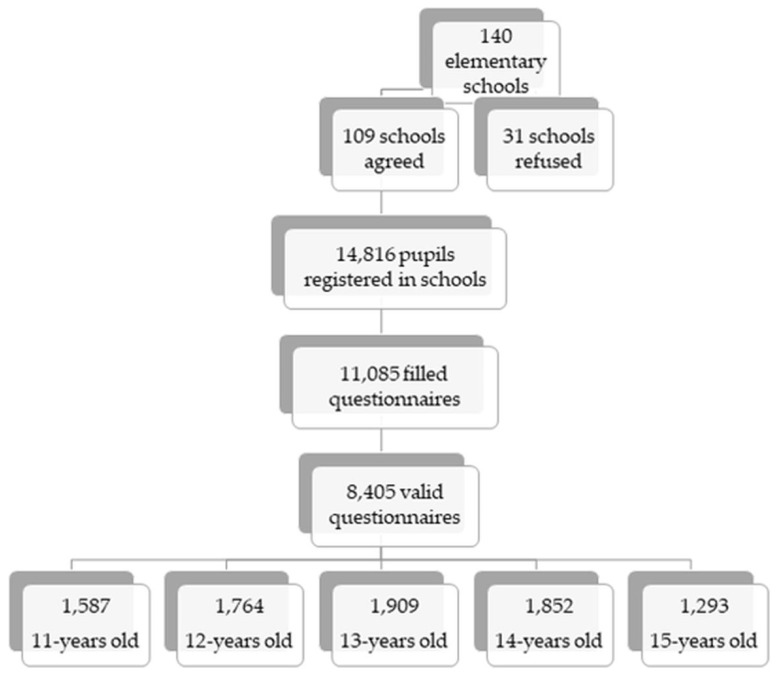
(1) Background: The aim of this study was to explore the associations between health literacy and symptoms for eating disorders among adolescents, taking into consideration age and gender and whether this association is mediated by body image. (2) Methods: We used data on 5054 adolescents (mean age = 13.9, 51.7% boys) from the Health Behaviour in School-Aged Children study conducted in 2018 in Slovakia. We used logistic regression models to examine associations between level of health literacy and symptoms for eating disorders mediated by body image. (3) Results: Adolescents with low and medium levels of health literacy had a higher occurrence of reporting two or more symptoms of eating disorders (odds ratio (OR)/95% CI: 2.25/1.78-2.84 and 1.37/1.15-1.65). Adjustment for body image reduced the significance of association between low level of health literacy and symptoms for eating disorders by 26.4%, and association between medium level of health literacy and symptoms for eating disorders by 29.7%. (4) Conclusions: Adolescents who have a low health literacy level were found to have a higher probability of having symptoms for eating disorders, especially when they perceive themselves as fat. The study refers to potential theoretical frameworks for health literacy intervention that may provide guidelines for the intervention design and materials.
(1) 背景:本研究旨在探讨健康素养与青少年饮食障碍症状之间的关联,同时考虑年龄和性别因素,以及这种关联是否受到身体意象的影响。(2) 方法:我们使用了 2018 年在斯洛伐克进行的“儿童健康行为”研究中 5054 名青少年(平均年龄=13.9 岁,51.7%为男生)的数据。我们使用逻辑回归模型来检验健康素养水平与身体意象介导的饮食障碍症状之间的关联。(3) 结果:健康素养水平较低和中等的青少年出现两种或多种饮食障碍症状的几率更高(比值比(OR)/95%置信区间:2.25/1.78-2.84 和 1.37/1.15-1.65)。调整身体意象后,健康素养水平较低与饮食障碍症状之间的关联显著性降低了 26.4%,健康素养水平中等与饮食障碍症状之间的关联显著性降低了 29.7%。(4) 结论:研究发现,健康素养水平较低的青少年出现饮食障碍症状的可能性更高,尤其是当他们认为自己肥胖时。该研究提到了健康素养干预的潜在理论框架,这些框架可能为干预设计和材料提供指导。