Ciavattone Nicholas G, Bevoor Avinash, Farfel Alex, Rehman Aasia, Ho Kenneth K Y, Rock Edwin C, Chen Yu-Chih, Luker Kathryn E, Humphries Brock A, Luker Gary D
Department of Radiology, Center for Molecular Imaging, 109 Zina Pitcher Place, A524 BSRB, Ann Arbor, MI, 48109-2200, USA.
Department of Computational and Systems Biology and UPMC Hillman Cancer Center, University of Pittsburgh, Pittsburgh, PA, USA.
Sci Rep. 2025 Feb 12;15(1):5204. doi: 10.1038/s41598-025-89882-5.
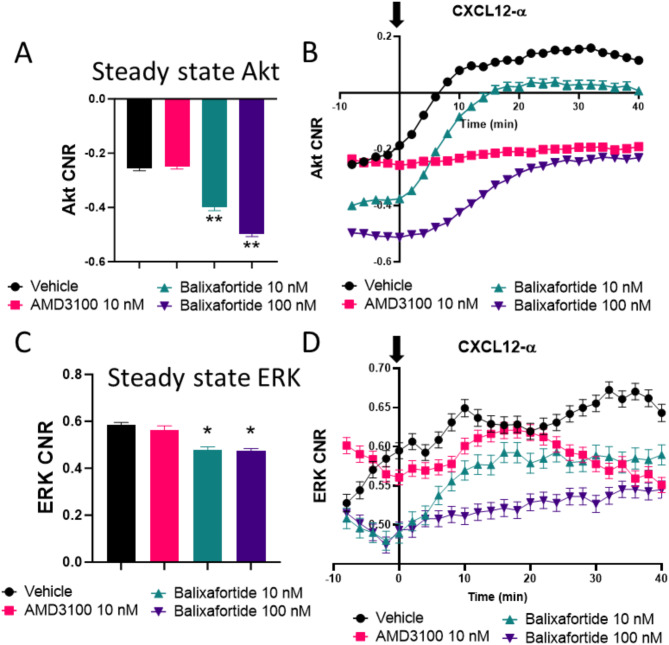
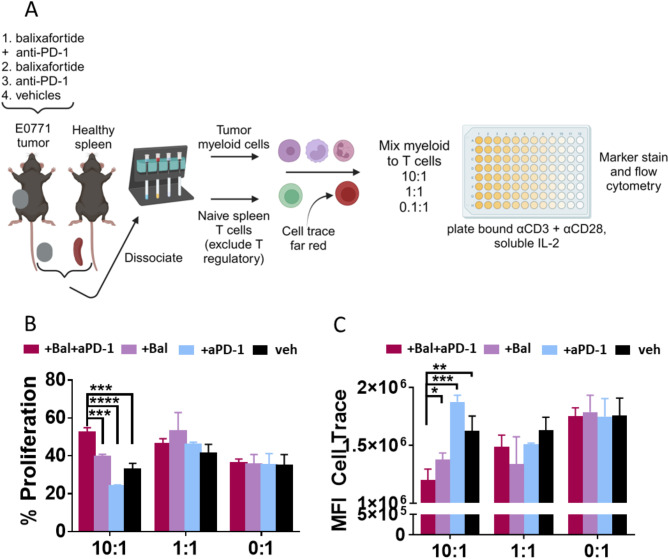
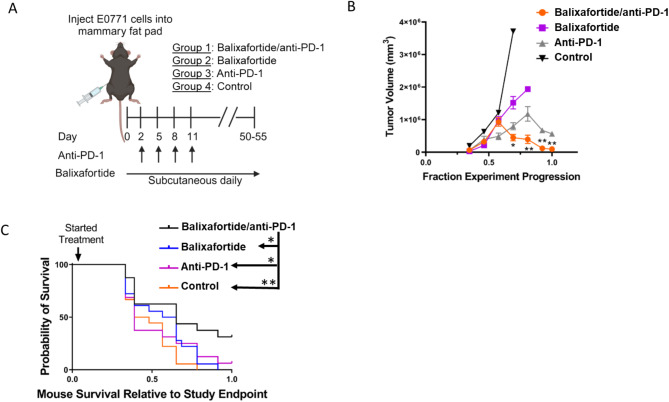
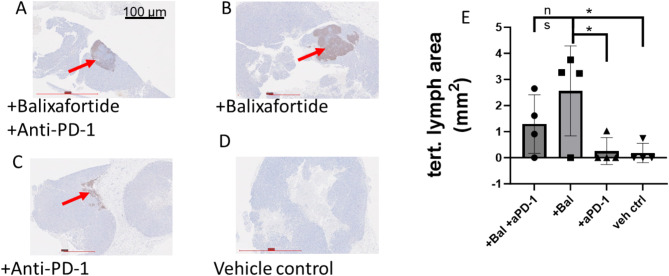
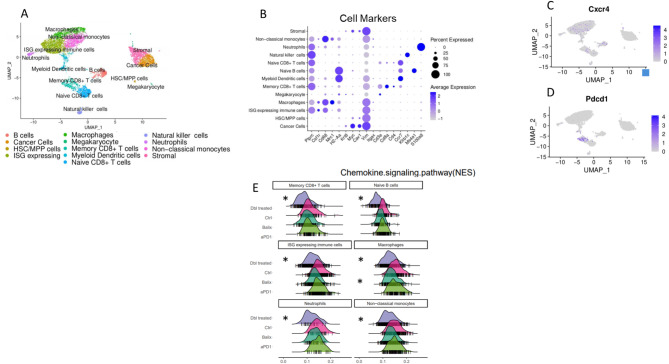
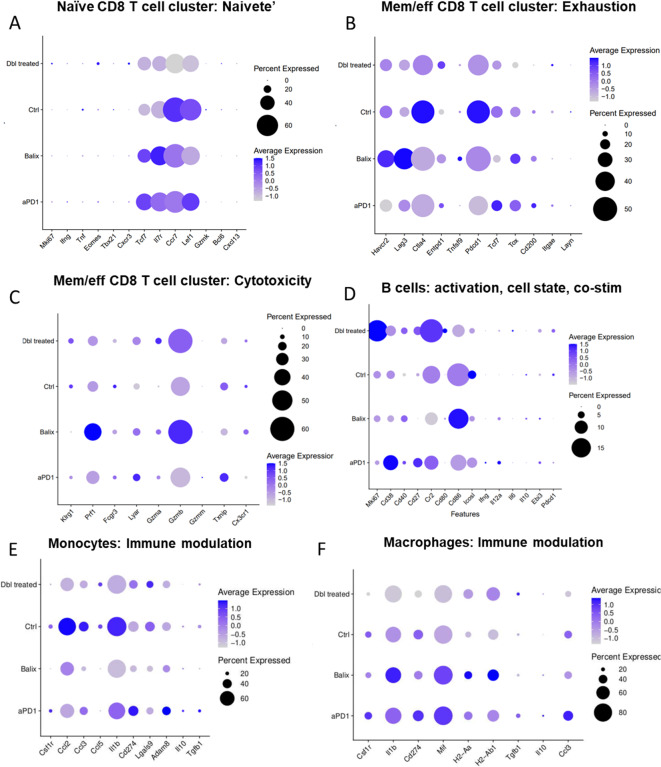
Patients with triple negative breast cancer (TNBC) show only modest response rates to immune checkpoint inhibitor immunotherapy, motivating ongoing efforts to identify approaches to boost efficacy. Using an immunocompetent mouse model of TNBC, we investigated combination therapy with an anti-PD-1 immunotherapy antibody plus balixafortide, a cyclic peptide inhibitor of CXCR4. Cell-based assays demonstrated that balixafortide functions as an inverse agonist, establishing a mode of action distinct from most compounds targeting CXCR4. Combination anti-PD-1 plus balixafortide significantly reduced growth of orthotopic tumors and extended overall survival relative to single agent therapy or vehicle. Adding balixafortide to anti-PD-1 increased numbers of tertiary lymphoid structures, a marker of local tumor immune responses associated with favorable response to immunotherapy in TNBC. Single cell RNA sequencing revealed that combination anti-PD-1 plus balixafortide reduced T cell exhaustion and increased markers of effector T cell activity. Combination therapy also reduced signatures of immunosuppressive myeloid derived suppressor cells (MDSCs) in tumors. MDSCs isolated from mice treated with anti-PD-1 plus balixafortide showed reduced inhibition of T cell proliferation following ex vivo stimulation. These studies demonstrate that combining inhibition of CXCR4 with anti-PD-1 to enhances responses to checkpoint inhibitor immunotherapy in TNBC, supporting future clinical trials.
三阴性乳腺癌(TNBC)患者对免疫检查点抑制剂免疫疗法的反应率仅为中等水平,这促使人们不断努力寻找提高疗效的方法。我们使用TNBC的免疫活性小鼠模型,研究了抗PD-1免疫疗法抗体与balixafortide(一种CXCR4环肽抑制剂)的联合治疗。基于细胞的试验表明,balixafortide起反向激动剂的作用,建立了一种与大多数靶向CXCR4的化合物不同的作用模式。与单药治疗或赋形剂相比,抗PD-1联合balixafortide显著降低了原位肿瘤的生长并延长了总生存期。在抗PD-1治疗中加入balixafortide增加了三级淋巴结构的数量,三级淋巴结构是TNBC中与免疫疗法良好反应相关的局部肿瘤免疫反应的标志物。单细胞RNA测序显示,抗PD-1联合balixafortide减少了T细胞耗竭并增加了效应T细胞活性的标志物。联合治疗还降低了肿瘤中免疫抑制性髓源性抑制细胞(MDSC)的特征。从接受抗PD-1联合balixafortide治疗的小鼠中分离出的MDSC在体外刺激后对T细胞增殖的抑制作用减弱。这些研究表明,将CXCR4抑制与抗PD-1联合使用可增强TNBC对检查点抑制剂免疫疗法的反应,为未来的临床试验提供了支持。