Canciani Elena, Sirello Riccardo, Pellegrini Gaia, Henin Dolaji, Perrotta Mariachiara, Toma Marilisa, Khomchyna Nataliya, Dellavia Claudia
Department of Biomedical, Surgical and Dental Sciences, University of Milan, Via Mangiagalli 31, 20133 Milan, Italy.
Medicina (Kaunas). 2021 Mar 18;57(3):285. doi: 10.3390/medicina57030285.
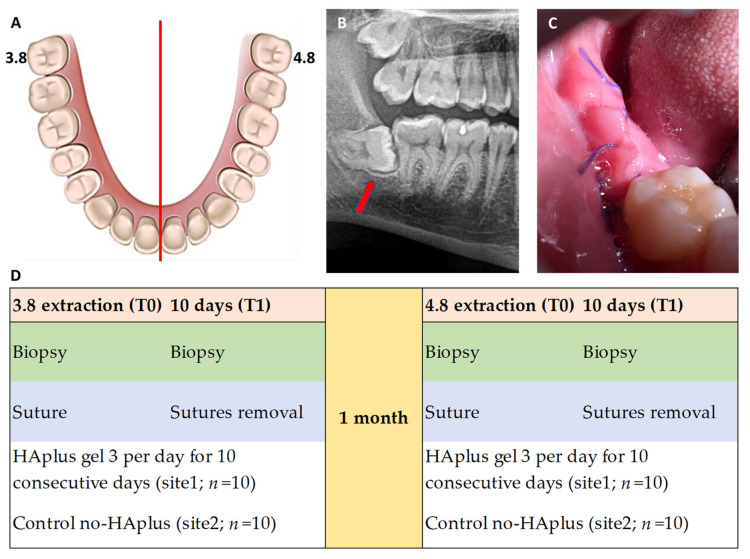
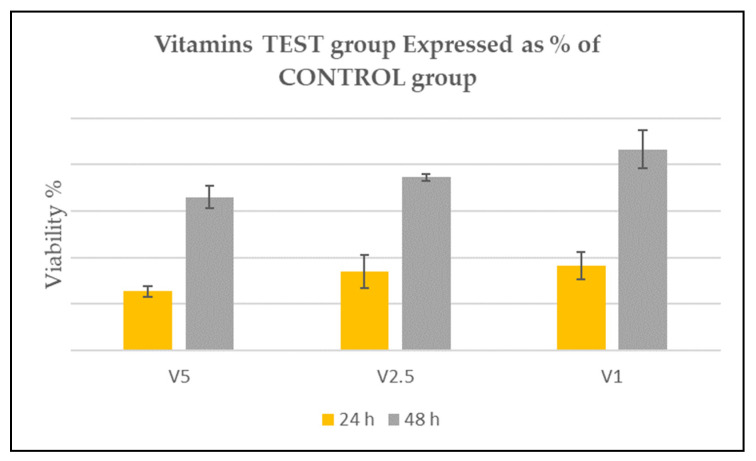
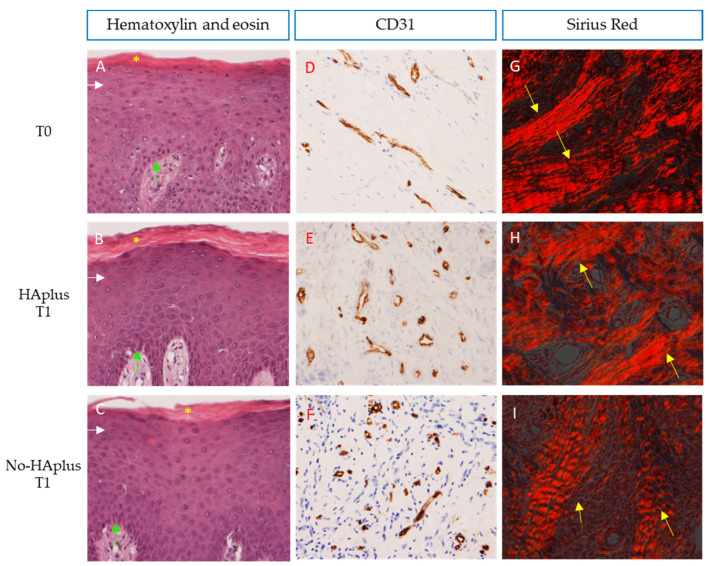
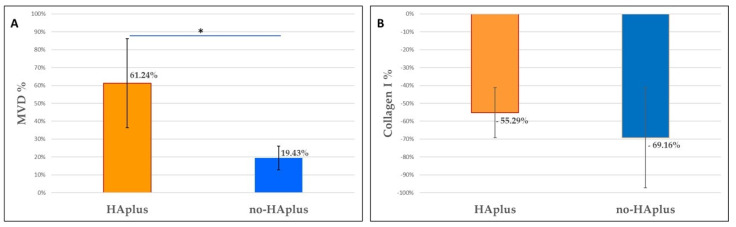
: Wound healing is a dynamic process that can be compromised in patients with chronic and metabolic conditions or unhealthy lifestyles. Numerous medical substances designed for topical use, charged with compounds that promote the healing process, have been developed to improve wound healing, especially in compromised subjects. The present study aimed to extend our understanding of the in vivo effects of a hyaluronic acid gel charged with amino acids (HAplus gel, Aminogam gel Errekappa Euroterapici spa, Milan, Italy) and study the in vitro effects of the same gel charged with additional substances in an attempt to optimize its formulation. In a randomized controlled split-mouth clinical and histological trial, HAplus gel was tested on the gingival tissue of the lower third molar post-extraction socket. The gingiva was collected at the time of extraction (T0) and ten days after the extraction (T1) to be histologically analyzed. During the second stage of the study, culture media with HAplus gel and vitamin C and E at different concentrations (TEST) were tested on human gingival fibroblasts and compared to the HAplus-enriched medium (HA-Control). Histological and immunohistochemical analysis of collected gingiva showed higher microvascular density and collagen fibers organized in closely packed and well-oriented bundles in sites treated with HAplus gel. In the in vitro study, all TEST groups showed an increased viability from 24 h to 48 h. After 24 h, the viability percentage in all experimental groups was below 100% of the HA-Control, demonstrating a mild toxicity. After 48 h from seeding, the TEST groups' viability grew significantly compared to HA-Control. These encouraging preliminary results suggest that the use of HAplus gel enriched with vitamins C and E may be beneficial in patients with conditions that impair soft tissue healing.
伤口愈合是一个动态过程,在患有慢性疾病、代谢疾病或生活方式不健康的患者中可能会受到影响。为了改善伤口愈合,特别是在身体状况不佳的患者中,人们已经开发了许多用于局部使用的医用物质,这些物质含有促进愈合过程的化合物。本研究旨在加深我们对含有氨基酸的透明质酸凝胶(HAplus凝胶,Aminogam凝胶,Errekappa Euroterapici spa,米兰,意大利)体内作用的理解,并研究添加其他物质的同一凝胶的体外作用,以优化其配方。在一项随机对照的半口临床和组织学试验中,HAplus凝胶在下颌第三磨牙拔除后的牙槽窝牙龈组织上进行了测试。在拔牙时(T0)和拔牙后十天(T1)收集牙龈进行组织学分析。在研究的第二阶段,将含有不同浓度HAplus凝胶、维生素C和维生素E的培养基(TEST)在人牙龈成纤维细胞上进行测试,并与富含HAplus的培养基(HA对照)进行比较。对收集的牙龈进行组织学和免疫组织化学分析显示,在用HAplus凝胶处理的部位,微血管密度更高,胶原纤维排列紧密且方向良好。在体外研究中,所有TEST组在24小时至48小时内活力均有所增加。24小时后,所有实验组的活力百分比均低于HA对照的100%,表明有轻度毒性。接种后48小时,TEST组的活力与HA对照相比显著增加。这些令人鼓舞的初步结果表明,使用富含维生素C和维生素E的HAplus凝胶可能对软组织愈合受损的患者有益。