Al Riachy Reem, Strub Caroline, Durand Noël, Guibert Benjamin, Guichard Hugues, Constancias Florentin, Chochois Vincent, Lopez-Lauri Félicie, Fontana Angélique, Schorr-Galindo Sabine
Qualisud, Univ Montpellier, CIRAD, Univ d'Avignon, Institut Agro, IRD, Univ de La Réunion, F-34398 Montpellier, France.
CIRAD, UMR Qualisud, F-34398 Montpellier, France.
J Fungi (Basel). 2021 Mar 24;7(4):244. doi: 10.3390/jof7040244.
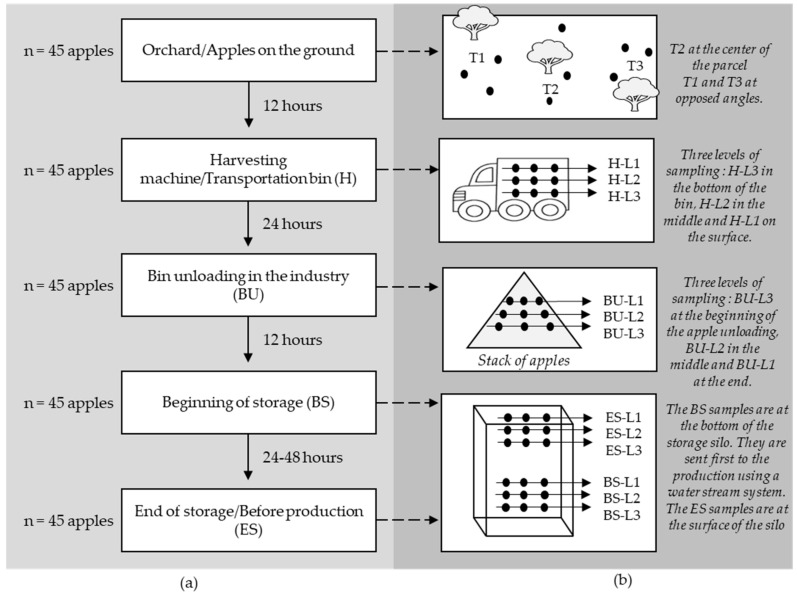
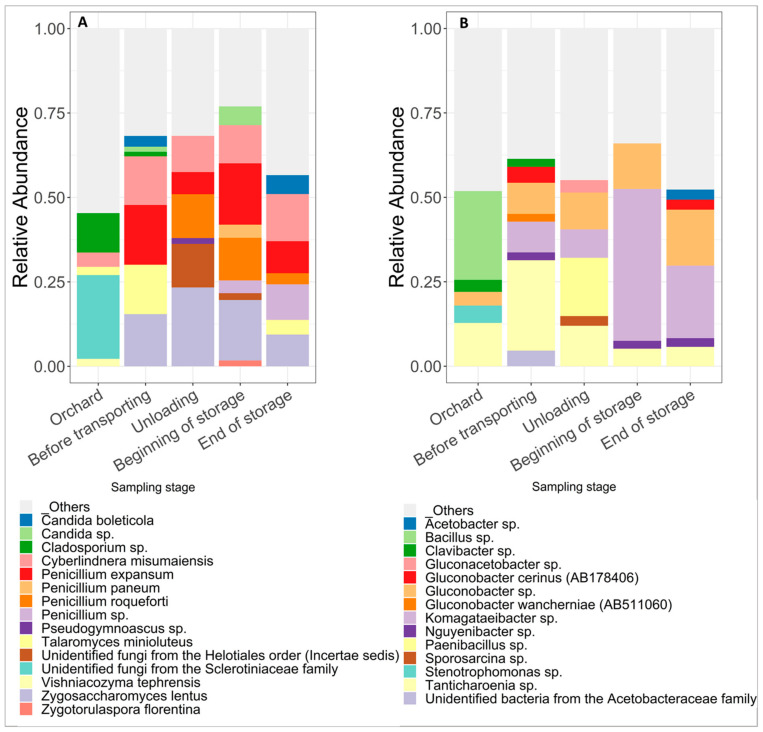
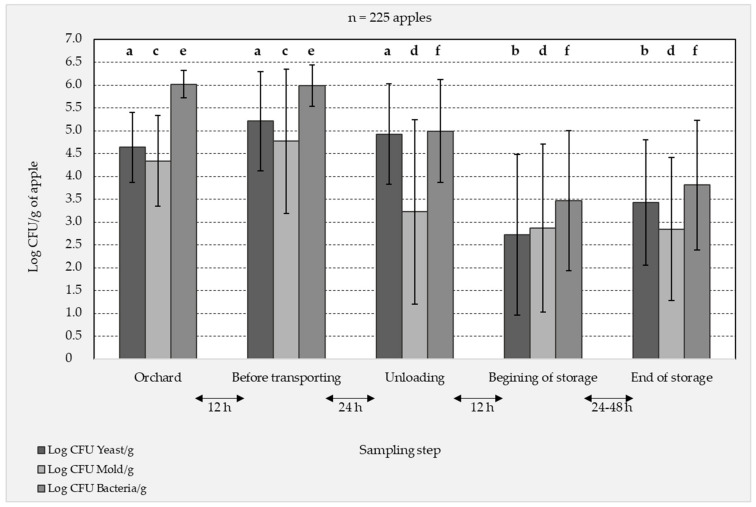
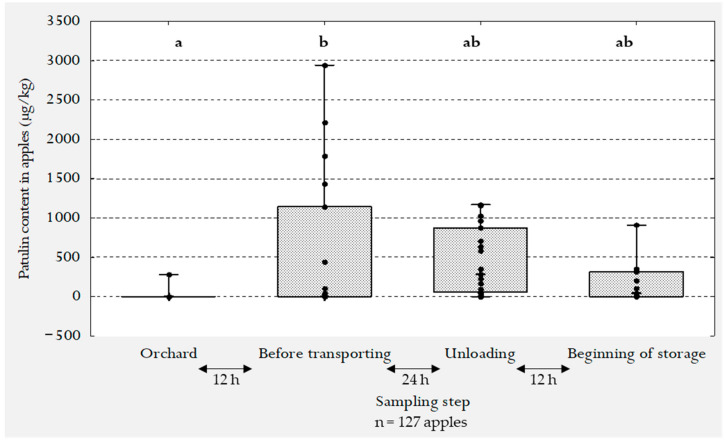
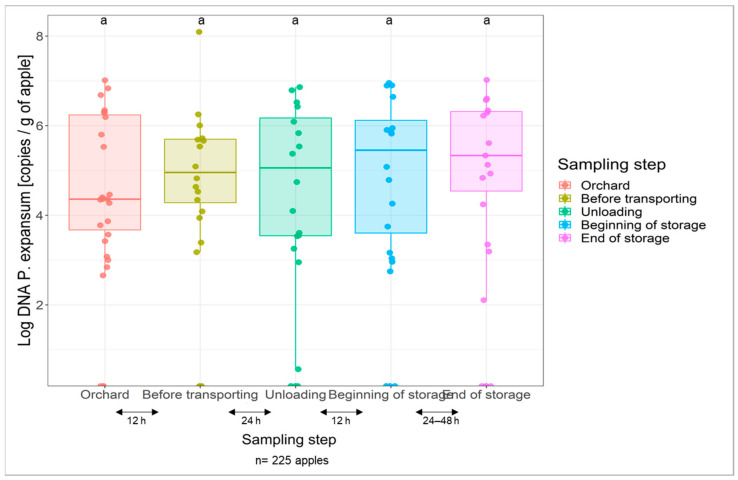
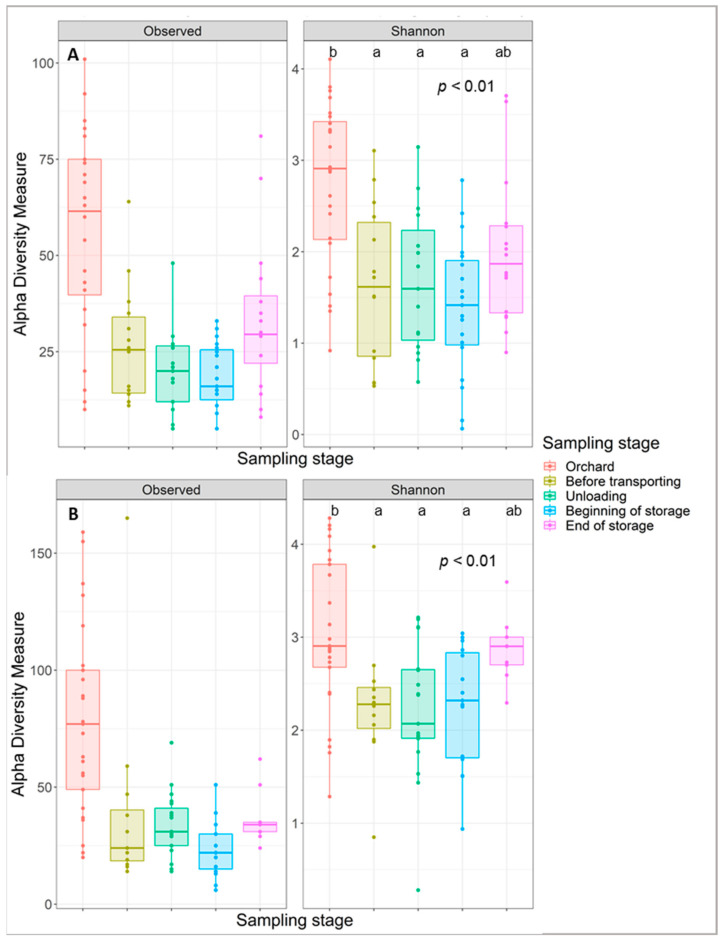
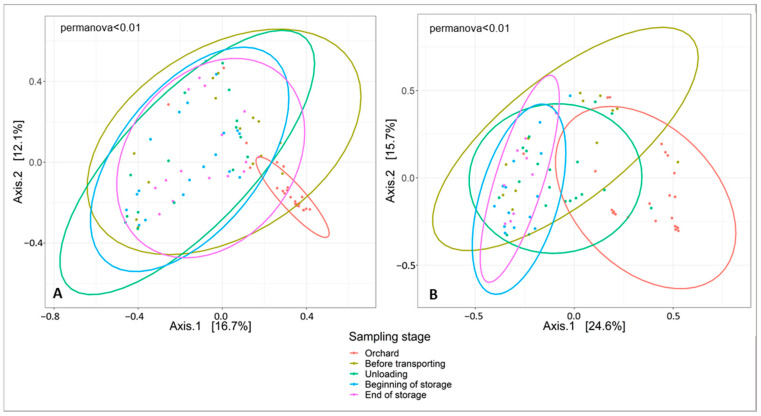
Patulin is a secondary metabolite produced primarily by the fungus , responsible for the blue mold disease on apples. It is found in apple products including apple cider when apple juice is added after fermentation. In the present study, two hundred and twenty-five cider-apples of the variety "Bedan", cultivated in Brittany in France, were sampled from the orchard during harvesting until the storage step, right before processing. The patulin analysis on these samples reported a low contamination at the orchard and a significantly higher-level of contamination in the cider-apples starting from the transporting bin. The percentage of positive samples increased from 6% to 47% after 12 h in the harvesting bin before transporting and reached 95% after 24 h of transporting, decreasing then to 69% at the end of the storage. was quantified on the surface of apples using real-time PCR and was observed to be mostly consistent between the harvest and post-harvest steps. It was detected on average, on the surface of 85% of all sampled apples with a mean value around 2.35 × 10 DNA/g of apple. Moreover, the changes in the fungal and bacterial epiphytic microbiota in the different steps were studied using a metabarcoding approach. The alpha and beta diversity analysis revealed the presence of unique and more diverse bacterial and fungal communities on the surface of apples picked from the orchard compared to the rest of the sampling steps. Potential indigenous biological control agents were identified on the surface of sampled apples. Future perspective includes developing actions of prevention and control of the contamination by during the harvest and along the various critical post-harvest stages before transformation in a sustainable development concern.
展青霉素是一种主要由真菌产生的次生代谢产物,它会导致苹果上出现青霉病。在发酵后添加苹果汁的苹果产品(包括苹果酒)中都能发现展青霉素。在本研究中,从法国布列塔尼种植的225个“贝丹”品种的酿酒苹果中取样,从果园收获期直至储存阶段,就在加工前。对这些样品的展青霉素分析表明,果园中的污染程度较低,而从运输箱开始,酿酒苹果中的污染水平显著升高。在运输前的收获箱中放置12小时后,阳性样品的百分比从6%增加到47%,运输24小时后达到95%,然后在储存结束时降至69%。使用实时PCR对苹果表面的展青霉素进行了定量分析,结果发现收获和收获后阶段的情况基本一致。平均而言,在所有采样苹果的85%表面检测到展青霉素,平均值约为2.35×10 DNA/克苹果。此外,还使用元条形码方法研究了不同阶段附生真菌和细菌微生物群的变化。α和β多样性分析表明,与其他采样阶段相比,从果园采摘的苹果表面存在独特且更多样化的细菌和真菌群落。在采样苹果表面鉴定出了潜在的本土生物防治剂。未来的展望包括在收获期间以及在可持续发展的关注下,在加工前的各个关键收获后阶段制定预防和控制展青霉素污染的措施。