Institut Agro, INRAE, IRHS, SFR QUASAV, University of Angers, F-49000 Angers, France.
Shanghai Center for Plant Stress Biology and CAS Center for Excellence in Molecular Plant Sciences, Chinese Academy of Sciences, Shanghai 200032, China.
Genes (Basel). 2021 Mar 23;12(3):457. doi: 10.3390/genes12030457.
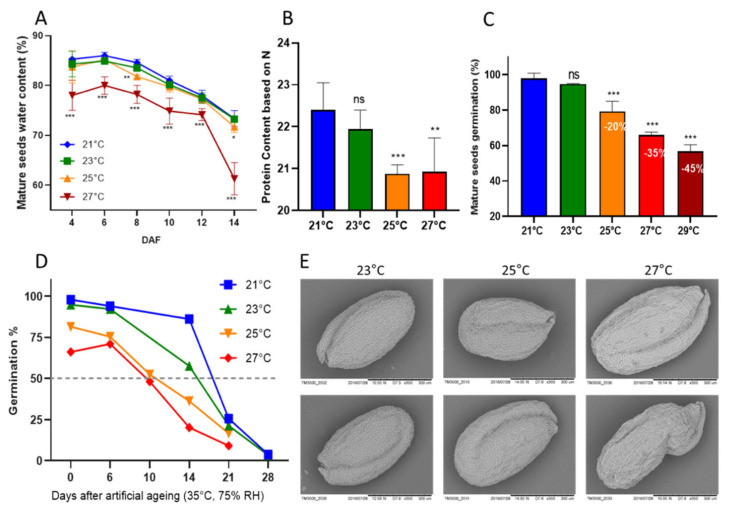
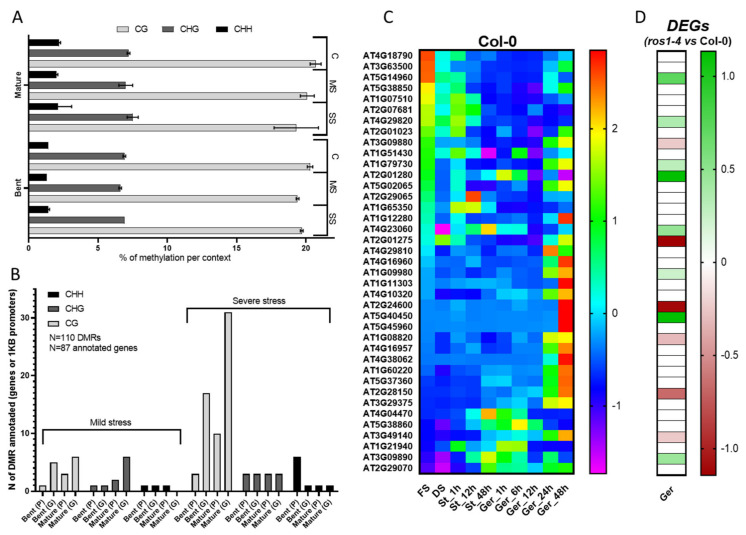
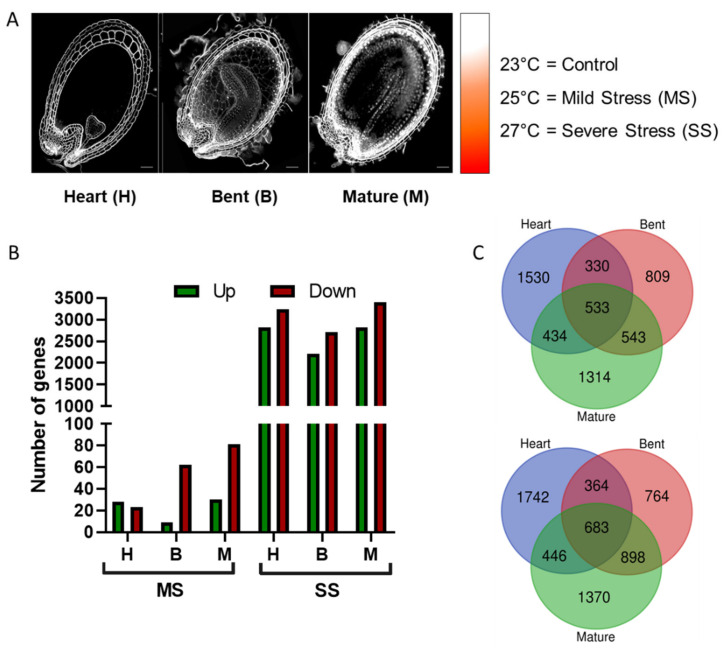
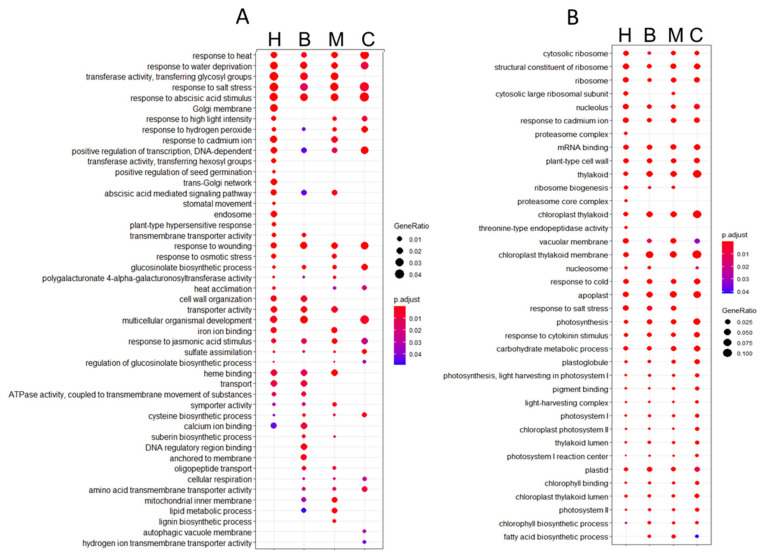
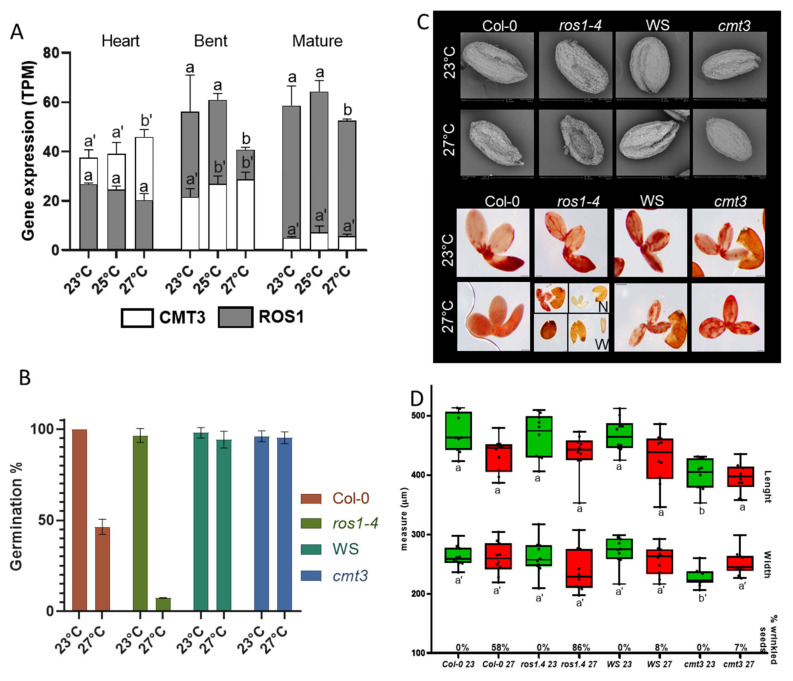
Seed development needs the coordination of multiple molecular mechanisms to promote correct tissue development, seed filling, and the acquisition of germination capacity, desiccation tolerance, longevity, and dormancy. Heat stress can negatively impact these processes and upon the increase of global mean temperatures, global food security is threatened. Here, we explored the impact of heat stress on seed physiology, morphology, gene expression, and methylation on three stages of seed development. Notably, Arabidopsis Col-0 plants under heat stress presented a decrease in germination capacity as well as a decrease in longevity. We observed that upon mild stress, gene expression and DNA methylation were moderately affected. Nevertheless, upon severe heat stress during seed development, gene expression was intensively modified, promoting heat stress response mechanisms including the activation of the ABA pathway. By analyzing candidate epigenetic markers using the mutants' physiological assays, we observed that the lack of DNA demethylation by the gene impaired seed germination by affecting germination-related gene expression. On the other hand, we also observed that upon severe stress, a large proportion of differentially methylated regions (DMRs) were located in the promoters and gene sequences of germination-related genes. To conclude, our results indicate that DNA (de)methylation could be a key regulatory process to ensure proper seed germination of seeds produced under heat stress.
种子发育需要多种分子机制的协调,以促进正确的组织发育、种子填充以及获得发芽能力、耐旱性、寿命和休眠能力。热应激会对这些过程产生负面影响,而随着全球平均气温的升高,全球粮食安全受到威胁。在这里,我们研究了热应激对种子生理学、形态学、基因表达和甲基化在种子发育三个阶段的影响。值得注意的是,在热应激下,拟南芥 Col-0 植物的发芽能力和寿命都降低了。我们观察到,在轻度胁迫下,基因表达和 DNA 甲基化受到适度影响。然而,在种子发育过程中的严重热应激下,基因表达被强烈修饰,促进了热应激反应机制,包括 ABA 途径的激活。通过分析使用突变体生理测定的候选表观遗传标记,我们观察到缺乏基因的 DNA 去甲基化通过影响与发芽相关的基因表达来损害种子发芽。另一方面,我们还观察到,在严重胁迫下,大量差异甲基化区域 (DMR) 位于与发芽相关的基因的启动子和基因序列中。总之,我们的结果表明,DNA(去)甲基化可能是确保在热应激下产生的种子正确发芽的关键调节过程。