Daly Jack W, Keely Stephen J, Gahan Cormac G M
Alimentary Pharmabiotic Centre Microbiome Ireland, University College Cork, T12 YT20 Cork, Ireland.
School of Microbiology, University College Cork, T12 YN60 Cork, Ireland.
Microorganisms. 2021 Mar 31;9(4):732. doi: 10.3390/microorganisms9040732.
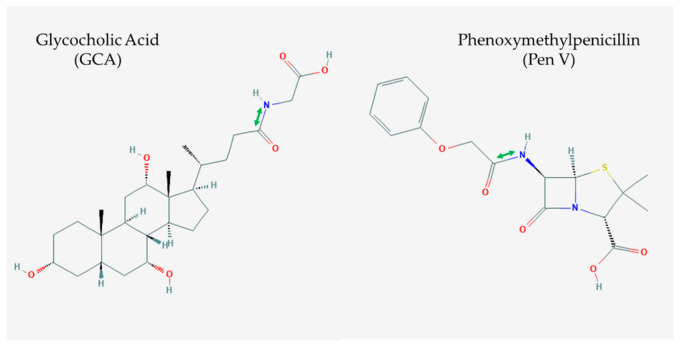
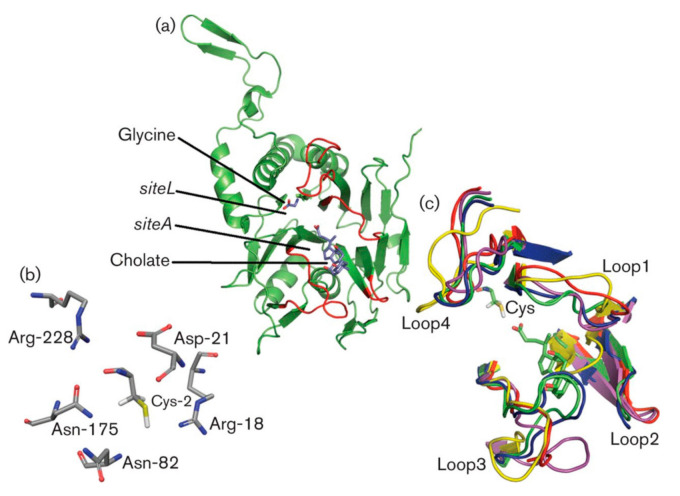
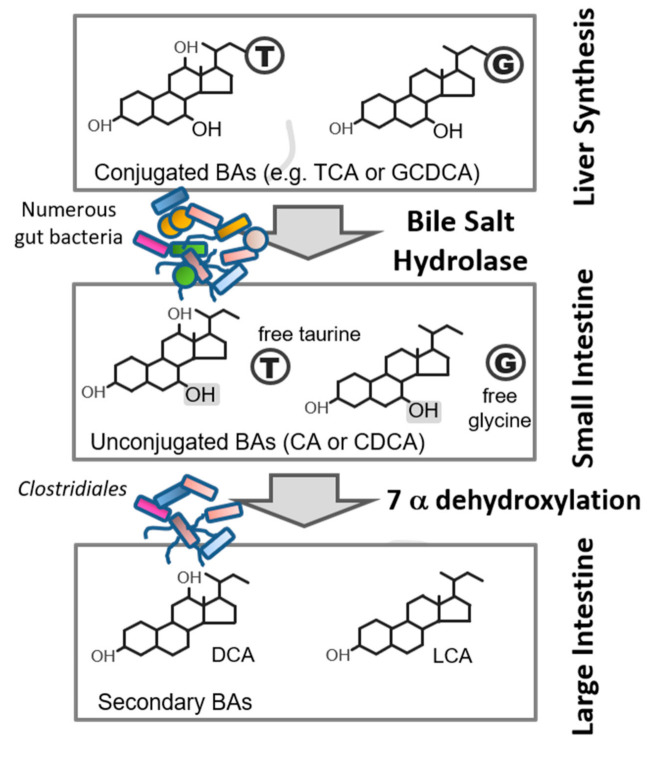
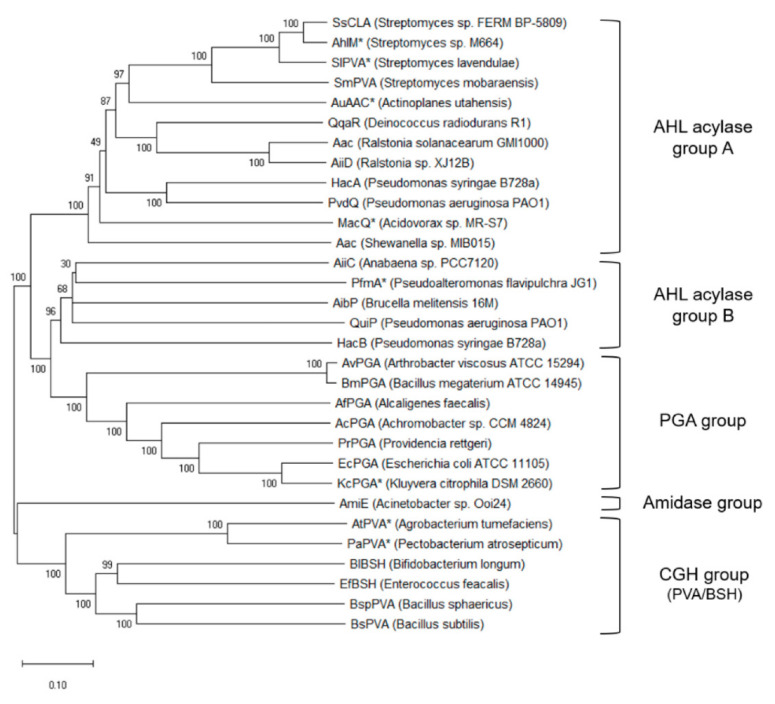
Bile salt hydrolase (BSH) and penicillin V acylase (PVA) are related enzymes that are classified as choloylglycine hydrolases (CGH). BSH enzymes have attracted significant interest for their ability to modulate the composition of the bile acid pool, alter bile acid signaling events mediated by the host bile acid receptors FXR and TGR5 and influence cholesterol homeostasis in the host, while PVA enzymes have been widely utilised in an industrial capacity in the production of semi-synthetic antibiotics. The similarities between BSH and PVA enzymes suggest common evolution of these enzymes and shared mechanisms for substrate binding and catalysis. Here, we compare BSH and PVA through analysis of the distribution, phylogeny and biochemistry of these microbial enzymes. The development of new annotation approaches based upon functional enzyme analyses and the potential implications of BSH enzymes for host health are discussed.
胆汁盐水解酶(BSH)和青霉素V酰基转移酶(PVA)是相关酶,被归类为胆酰甘氨酸水解酶(CGH)。BSH酶因其调节胆汁酸池组成、改变宿主胆汁酸受体FXR和TGR5介导的胆汁酸信号转导事件以及影响宿主胆固醇稳态的能力而备受关注,而PVA酶已在半合成抗生素生产中广泛用于工业生产。BSH和PVA酶之间的相似性表明这些酶具有共同的进化以及底物结合和催化的共同机制。在此,我们通过分析这些微生物酶的分布、系统发育和生物化学来比较BSH和PVA。讨论了基于功能酶分析的新注释方法的发展以及BSH酶对宿主健康的潜在影响。