The State Key Laboratory Breeding Base of Basic Science of Stomatology (Hubei-MOST) & Key Laboratory of Oral Biomedicine Ministry of Education, School and Hospital of Stomatology, Wuhan University, Wuhan 430079, China.
Molecules. 2021 Mar 12;26(6):1580. doi: 10.3390/molecules26061580.
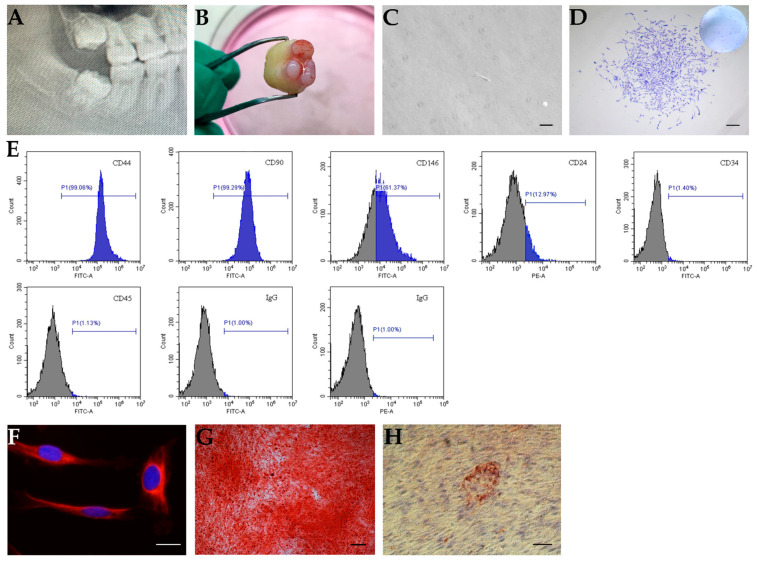
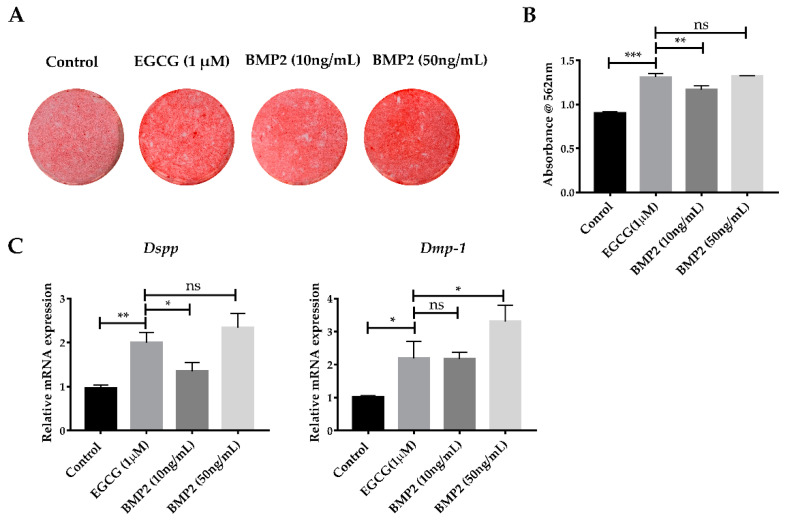
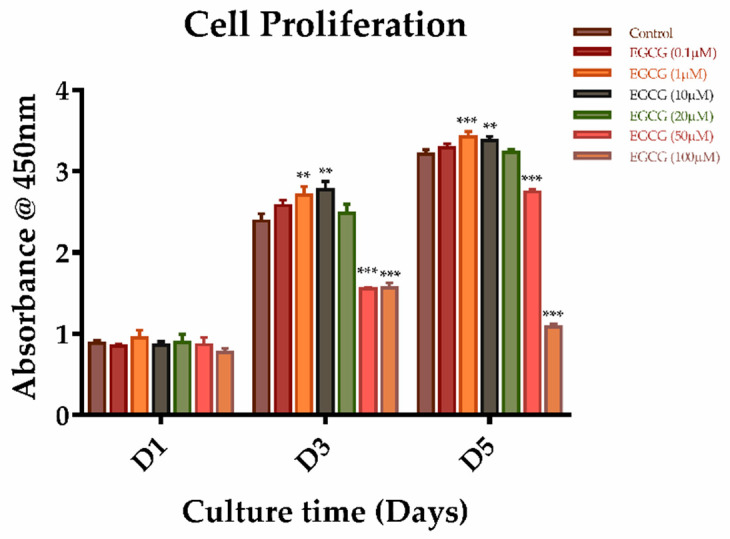
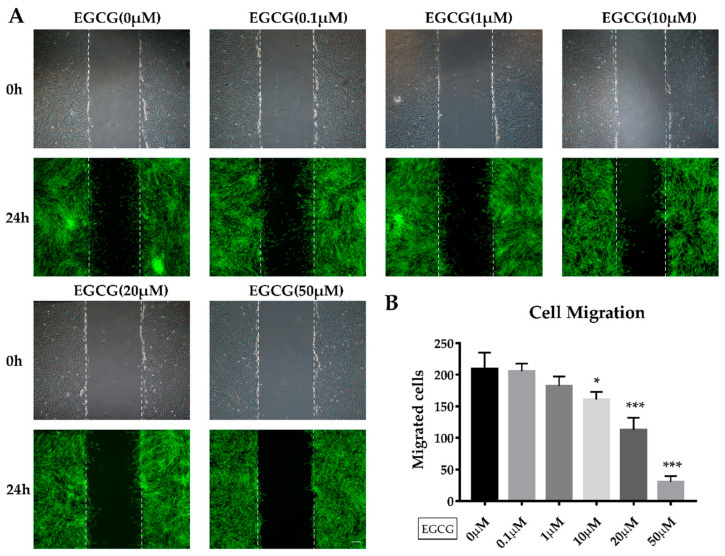
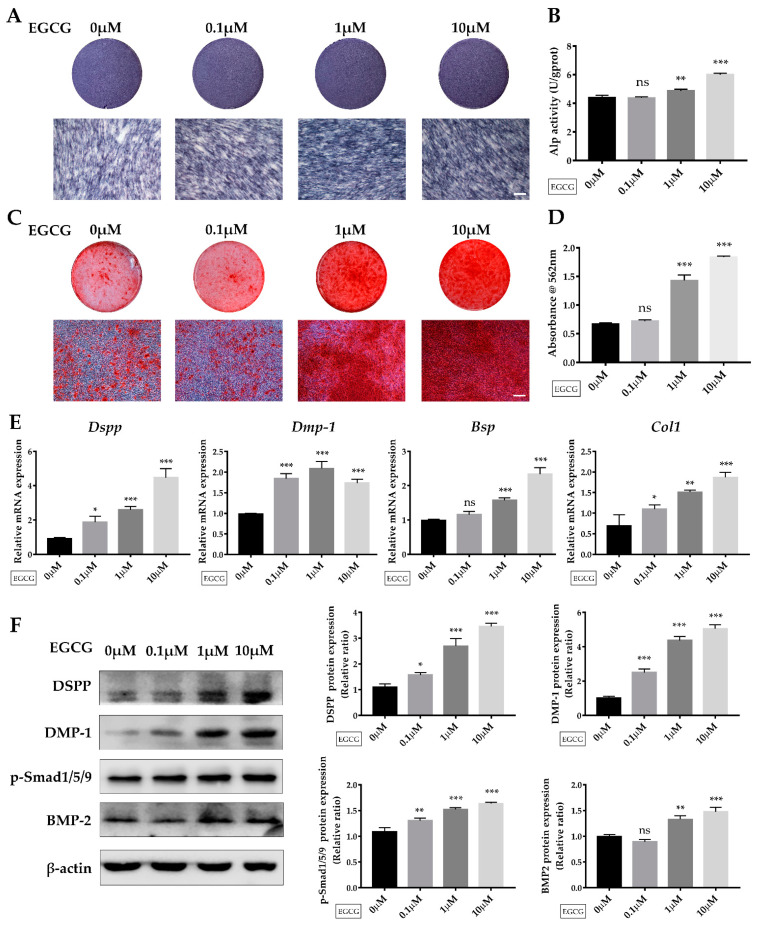
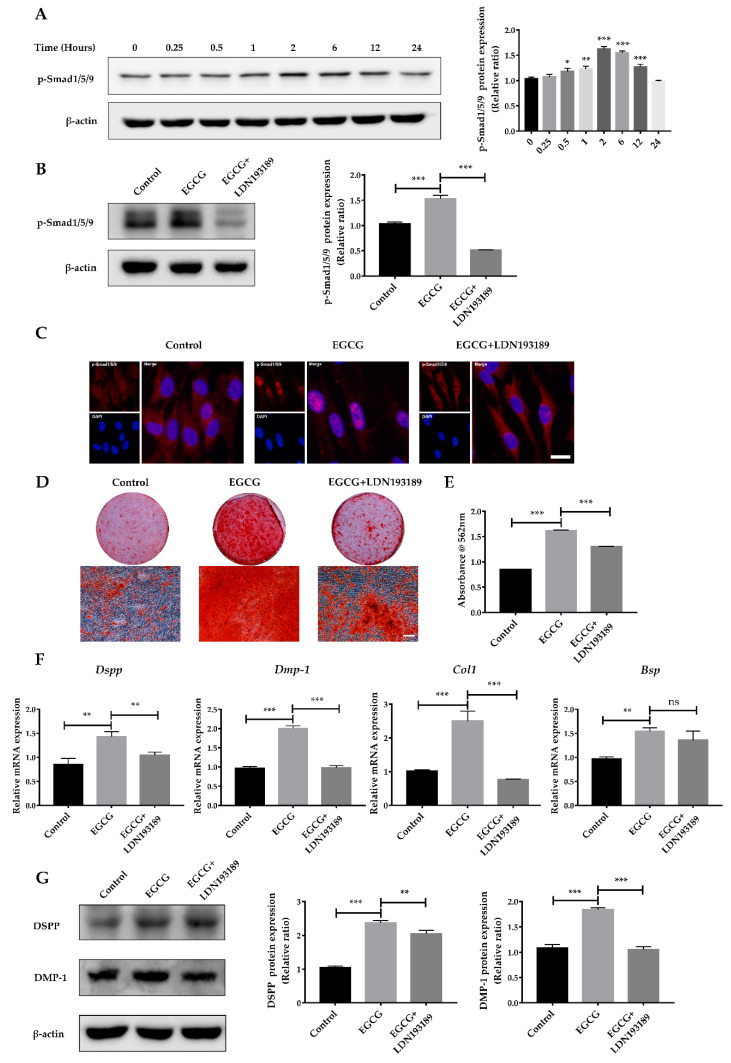
Stem cells from apical papilla (SCAPs) are desirable sources of dentin regeneration. Epigallocatechin-3-gallate (EGCG), a natural component of green tea, shows potential in promoting the osteogenic differentiation of bone mesenchymal stem cells. However, whether EGCG regulates the odontogenic differentiation of SCAPs and how this occurs remain unknown. SCAPs from immature human third molars (16-20 years, = 5) were treated with a medium containing different concentrations of EGCG or bone morphogenic protein 2 (BMP2), with or without LDN193189 (an inhibitor of the canonical BMP pathway). Cell proliferation and migration were analyzed using a CCK-8 assay and wound-healing assay, respectively. Osteo-/odontogenic differentiation was evaluated via alkaline phosphatase staining, alizarin red S staining, and the expression of osteo-/odontogenic markers using qPCR and Western blotting. We found that EGCG (1 or 10 μM) promoted the proliferation of SCAPs, increased alkaline phosphatase activity and mineral deposition, and upregulated the expression of osteo-/odontogenic markers including dentin sialophosphoprotein (), dentin matrix protein-1 (), bone sialoprotein (), and Type I collagen (), along with the elevated expression of BMP2 and phosphorylation level of Smad1/5/9 ( < 0.01). EGCG at concentrations below 10 μM had no significant influence on cell migration. Moreover, EGCG-induced osteo-/odontogenic differentiation was significantly attenuated via LDN193189 treatment ( < 0.01). Furthermore, EGCG showed the ability to promote mineralization comparable with that of recombinant BMP2. Our study demonstrated that EGCG promotes the osteo-/odontogenic differentiation of SCAPs through the BMP-Smad signaling pathway.
牙髓顶端细胞(SCAP)是牙本质再生的理想来源。表没食子儿茶素没食子酸酯(EGCG)是绿茶的一种天然成分,具有促进骨髓间充质干细胞成骨分化的潜力。然而,EGCG 是否调节 SCAP 的成牙分化,以及如何发生这种调节,目前尚不清楚。从 16-20 岁的未成熟人第三磨牙(n = 5)中分离的 SCAP 用含有不同浓度 EGCG 或骨形态发生蛋白 2(BMP2)的培养基处理,有或没有 LDN193189(BMP 途径的经典抑制剂)。使用 CCK-8 测定法和划痕愈合测定法分别分析细胞增殖和迁移。通过碱性磷酸酶染色、茜素红 S 染色以及使用 qPCR 和 Western blot 检测成骨/成牙标志物的表达来评估成骨/成牙分化。我们发现,EGCG(1 或 10 μM)促进了 SCAP 的增殖,增加了碱性磷酸酶活性和矿化沉积,并上调了成骨/成牙标志物的表达,包括牙本质涎磷蛋白()、牙本质基质蛋白 1()、骨涎蛋白()和 I 型胶原(),同时 BMP2 的表达和 Smad1/5/9 的磷酸化水平也升高(<0.01)。浓度低于 10 μM 的 EGCG 对细胞迁移没有显著影响。此外,通过 LDN193189 处理,EGCG 诱导的成骨/成牙分化显著减弱(<0.01)。此外,EGCG 表现出与重组 BMP2 相当的促进矿化能力。我们的研究表明,EGCG 通过 BMP-Smad 信号通路促进 SCAP 的成骨/成牙分化。