Abedi Niloufar, Sajadi-Javan Zahra Sadat, Kouhi Monireh, Ansari Legha, Khademi Abbasali, Ramakrishna Seeram
Dental Materials Research Center, Dental Research Institute, School of Dentistry, Isfahan University of Medical Sciences, Isfahan 81746-73461, Iran.
Nosocomial Infection Research Center, Isfahan University of Medical Sciences, Isfahan 81746-73461, Iran.
Antioxidants (Basel). 2023 Feb 27;12(3):594. doi: 10.3390/antiox12030594.
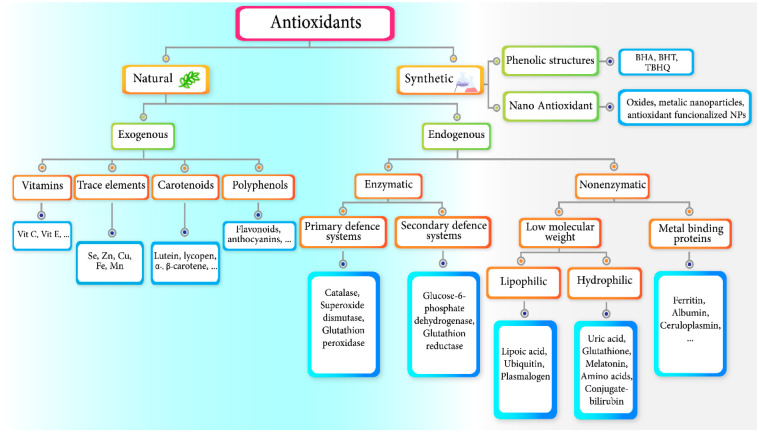
Oral and maxillofacial tissue defects caused by trauma, tumor reactions, congenital anomalies, ischemic diseases, infectious diseases, surgical resection, and odontogenic cysts present a formidable challenge for reconstruction. Tissue regeneration using functional biomaterials and cell therapy strategies has raised great concerns in the treatment of damaged tissue during the past few decades. However, during biomaterials implantation and cell transplantation, the production of excessive reactive oxygen species (ROS) may hinder tissue repair as it commonly causes severe tissue injuries leading to the cell damage. These products exist in form of oxidant molecules such as hydrogen peroxide, superoxide ions, hydroxyl radicals, and nitrogen oxide. These days, many scientists have focused on the application of ROS-scavenging components in the body during the tissue regeneration process. One of these scavenging components is antioxidants, which are beneficial materials for the treatment of damaged tissues and keeping tissues safe against free radicals. Antioxidants are divided into natural and synthetic sources. In the current review article, different antioxidant sources and their mechanism of action are discussed. The applications of antioxidants in the regeneration of oral and maxillofacial tissues, including hard tissues of cranial, alveolar bone, dental tissue, oral soft tissue (dental pulp, periodontal soft tissue), facial nerve, and cartilage tissues, are also highlighted in the following parts.
由创伤、肿瘤反应、先天性畸形、缺血性疾病、感染性疾病、手术切除以及牙源性囊肿引起的口腔颌面部组织缺损,给重建带来了巨大挑战。在过去几十年中,使用功能性生物材料和细胞治疗策略进行组织再生在受损组织治疗方面引起了极大关注。然而,在生物材料植入和细胞移植过程中,过量活性氧(ROS)的产生可能会阻碍组织修复,因为它通常会导致严重的组织损伤进而造成细胞损害。这些产物以氧化剂分子的形式存在,如过氧化氢、超氧离子、羟基自由基和一氧化氮。如今,许多科学家专注于在组织再生过程中应用体内ROS清除成分。其中一种清除成分是抗氧化剂,它是治疗受损组织以及保护组织免受自由基侵害的有益物质。抗氧化剂分为天然来源和合成来源。在当前这篇综述文章中,将讨论不同的抗氧化剂来源及其作用机制。接下来的部分还将重点介绍抗氧化剂在口腔颌面部组织再生中的应用,包括颅骨硬组织、牙槽骨、牙组织、口腔软组织(牙髓、牙周软组织)、面神经和软骨组织。