Peritore Alessio Filippo, D'Amico Ramona, Cordaro Marika, Siracusa Rosalba, Fusco Roberta, Gugliandolo Enrico, Genovese Tiziana, Crupi Rosalia, Di Paola Rosanna, Cuzzocrea Salvatore, Impellizzeri Daniela
Department of Chemical, Biological, Pharmaceutical, and Environmental Science, University of Messina, 98166 Messina, Italy.
Department of Biomedical and Dental Sciences and Morphofunctional Imaging, University of Messina, 98166 Messina, Italy.
Antioxidants (Basel). 2021 Mar 16;10(3):464. doi: 10.3390/antiox10030464.
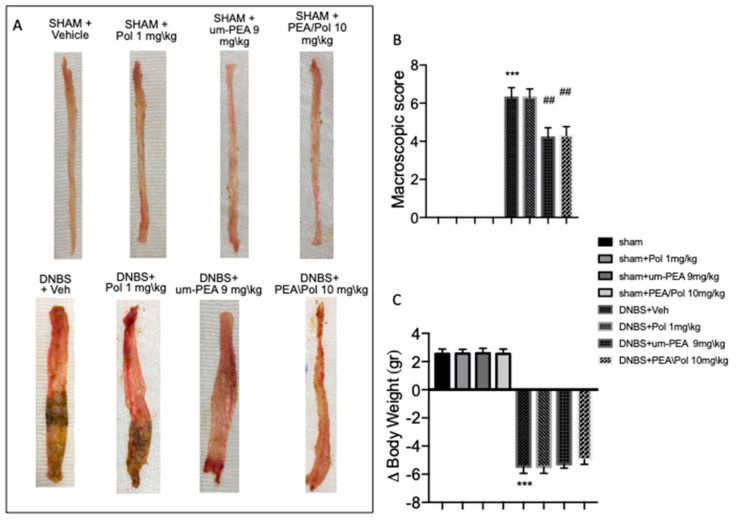
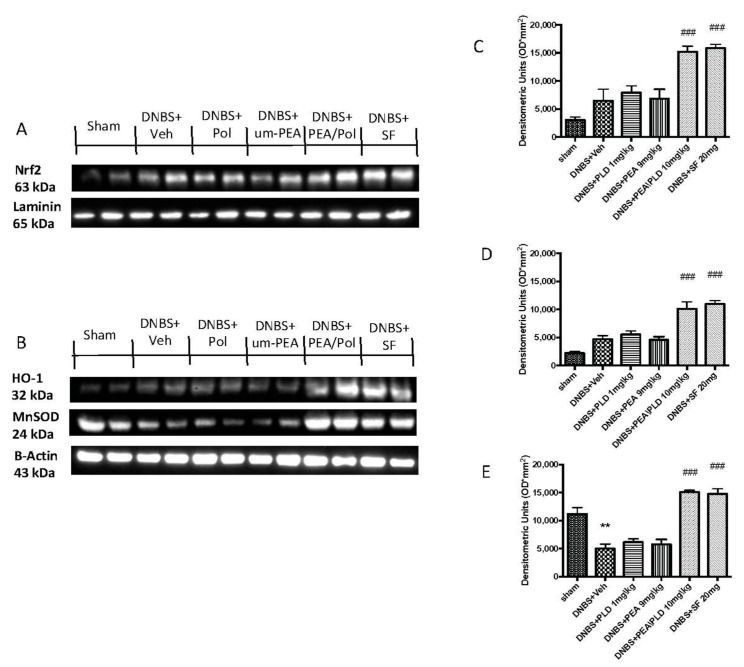
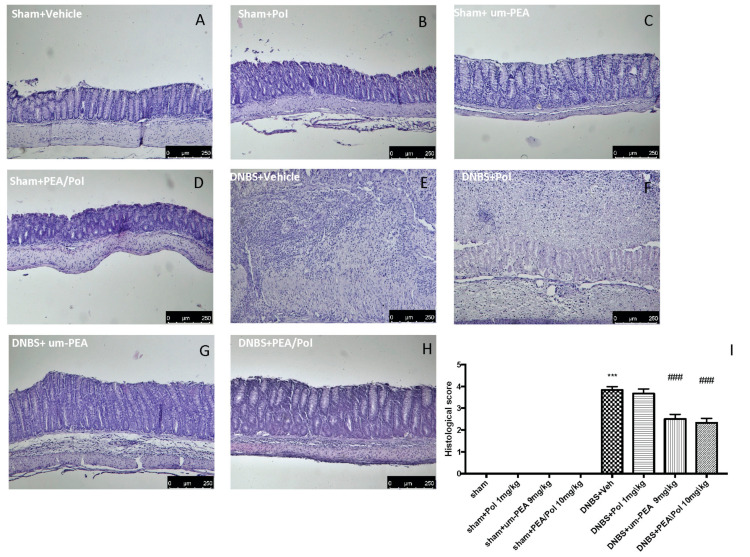
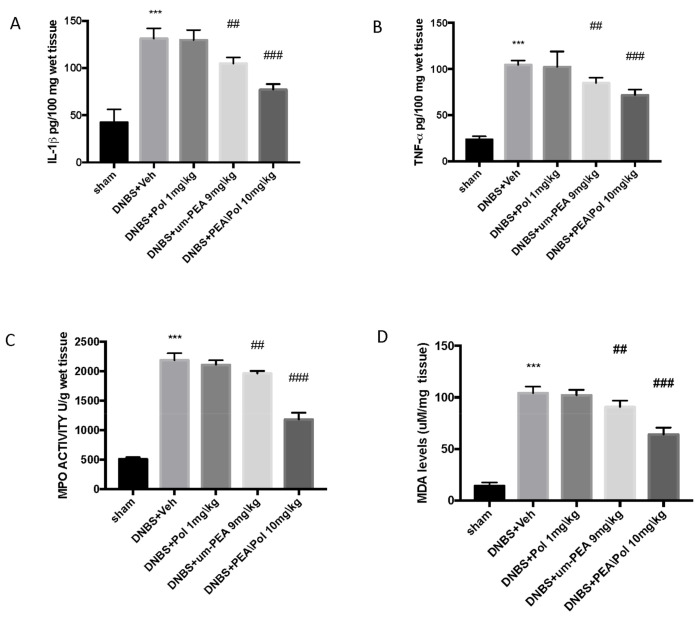
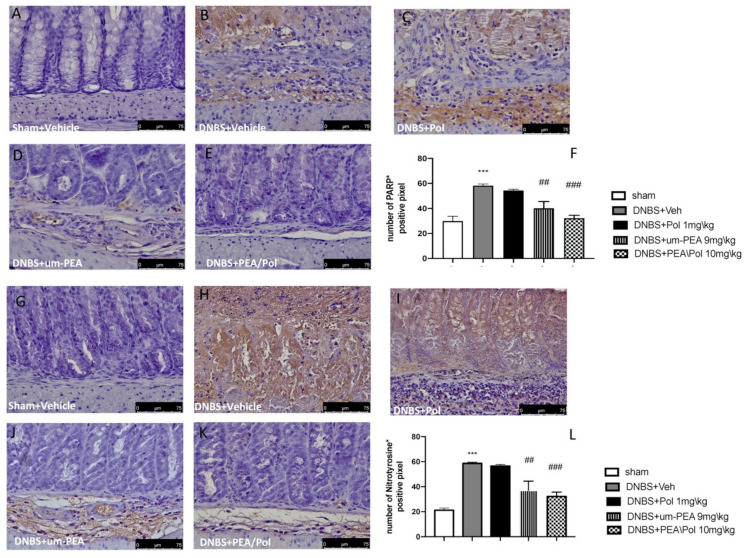
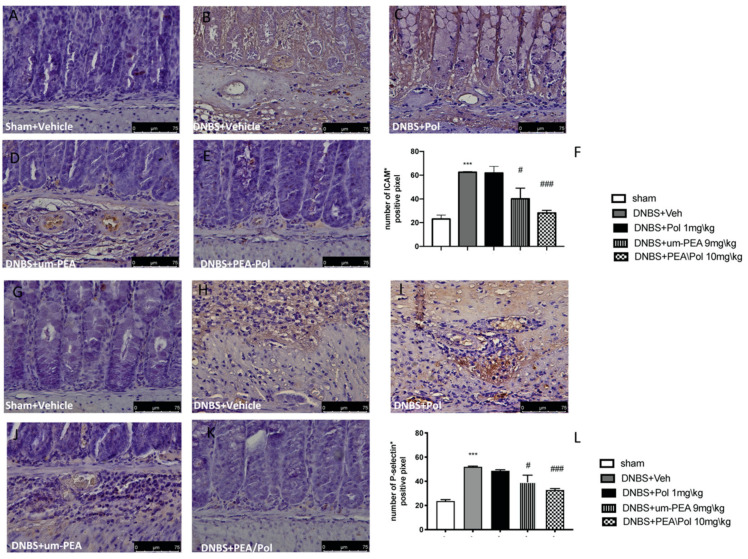
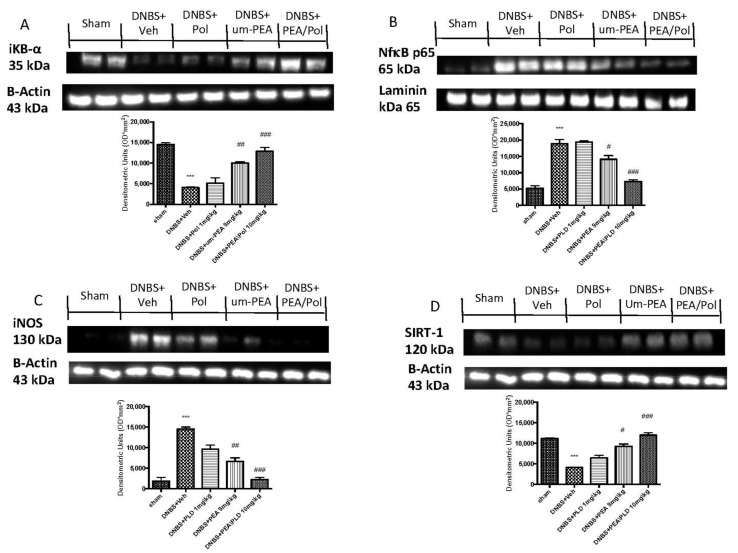
Palmitoylethanolamide (PEA) has well-known anti-inflammatory effects. However, PEA does not possess an antioxidant ability. A comicronized formulation of ultramicronized PEA (um-PEA) and polydatin (Pol) PEA/Pol, a biological precursor of resveratrol with antioxidant activity, could have protective effects on oxidative stress produced by inflammatory processes. We evaluated the effects of a comicronized PEA/Pol 10 mg/kg (9 mg of um-PEA+1 mg of polydatin) in a model of Dinitrobenzene sulfonic acid (DNBS)-induced colitis. Ulcerative colitis was induced in mice by intrarectally injection of DNBS (4 mg in 100 µL of 50% ethanol per mouse). Macroscopic and histologic colon alterations and marked clinical signs were observed four days after DNBS and elevated cytokine production. The myeloperoxidase (MPO) activity assessed for neutrophil infiltration was associated with ICAM-1 and P-selectin adhesion controls in colons. Oxidative stress was detected with increased poly ADP-ribose polymerase (PARP) and nitrotyrosine positive staining and malondialdehyde (MDA) levels in inflamed colons. Macroscopic and histologic alterations minimized by oral PEA/Pol, as well as neutrophil infiltration, inflammatory cytokine release, MDA, nitrotyrosine, PARP and ICAM-1, and P-selectin expressions. The mechanism of action of PEA/Pol could be related to the sirtuin 1/nuclear factor erythroid 2-related factor 2 (SIRT-1/Nrf2) pathway and nuclear factor (NF)-κB. PEA/Pol administration inhibited NF-κB and increased SIRT-1/Nrf2 expressions. Our results show that PEA/Pol is capable of decreasing inflammatory bowel disease (IBD) DNBS-induced in mice.
棕榈酰乙醇胺(PEA)具有众所周知的抗炎作用。然而,PEA不具备抗氧化能力。超微细化PEA(um-PEA)与白藜芦醇的生物前体、具有抗氧化活性的虎杖苷(Pol)的微粉化制剂PEA/Pol,可能对炎症过程产生的氧化应激具有保护作用。我们评估了微粉化PEA/Pol 10毫克/千克(9毫克um-PEA + 1毫克虎杖苷)在二硝基苯磺酸(DNBS)诱导的结肠炎模型中的作用。通过给小鼠直肠内注射DNBS(每只小鼠在100微升50%乙醇中含4毫克)诱导溃疡性结肠炎。在DNBS注射四天后观察到宏观和组织学上的结肠改变以及明显的临床症状,并且细胞因子产生增加。评估中性粒细胞浸润的髓过氧化物酶(MPO)活性与结肠中的细胞间黏附分子-1(ICAM-1)和P-选择素黏附对照相关。在发炎的结肠中检测到氧化应激增加,表现为多聚ADP-核糖聚合酶(PARP)和硝基酪氨酸阳性染色以及丙二醛(MDA)水平升高。口服PEA/Pol可使宏观和组织学改变最小化,同时减少中性粒细胞浸润、炎性细胞因子释放、MDA、硝基酪氨酸、PARP以及ICAM-1和P-选择素的表达。PEA/Pol的作用机制可能与沉默调节蛋白1/核因子红细胞2相关因子2(SIRT-1/Nrf2)途径和核因子(NF)-κB有关。给予PEA/Pol可抑制NF-κB并增加SIRT-1/Nrf2的表达。我们的结果表明,PEA/Pol能够减轻小鼠中DNBS诱导的炎症性肠病(IBD)。