Fendt Markus, Gonzalez-Guerrero Claudia Paulina, Kahl Evelyn
Institute for Pharmacology and Toxicology, Medical Faculty, Otto-von-Guericke University Magdeburg, 39120 Magdeburg, Germany.
Center for Behavioral Brain Sciences, Otto-von-Guericke University Magdeburg, 39120 Magdeburg, Germany.
Brain Sci. 2021 Mar 26;11(4):423. doi: 10.3390/brainsci11040423.
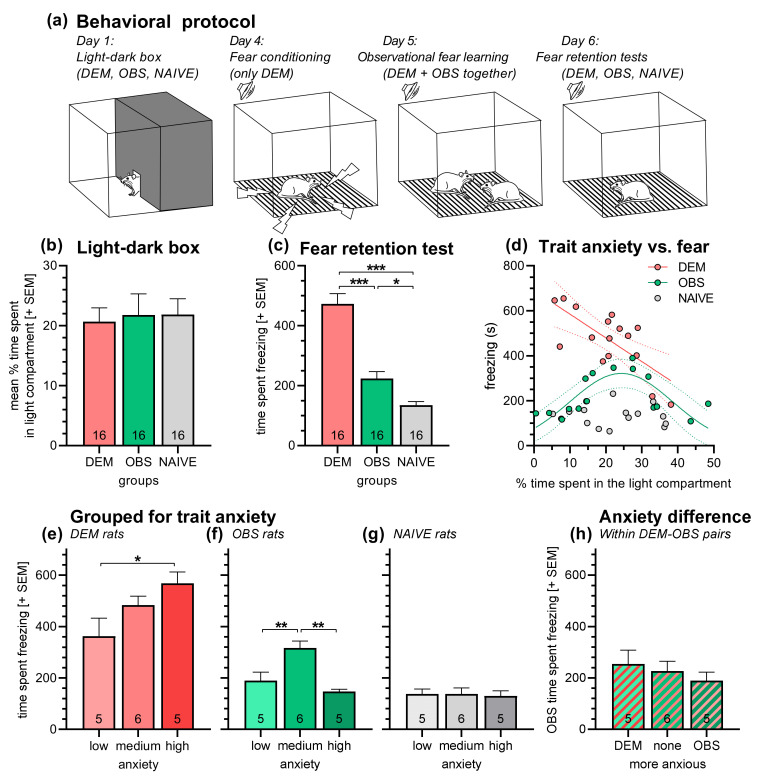
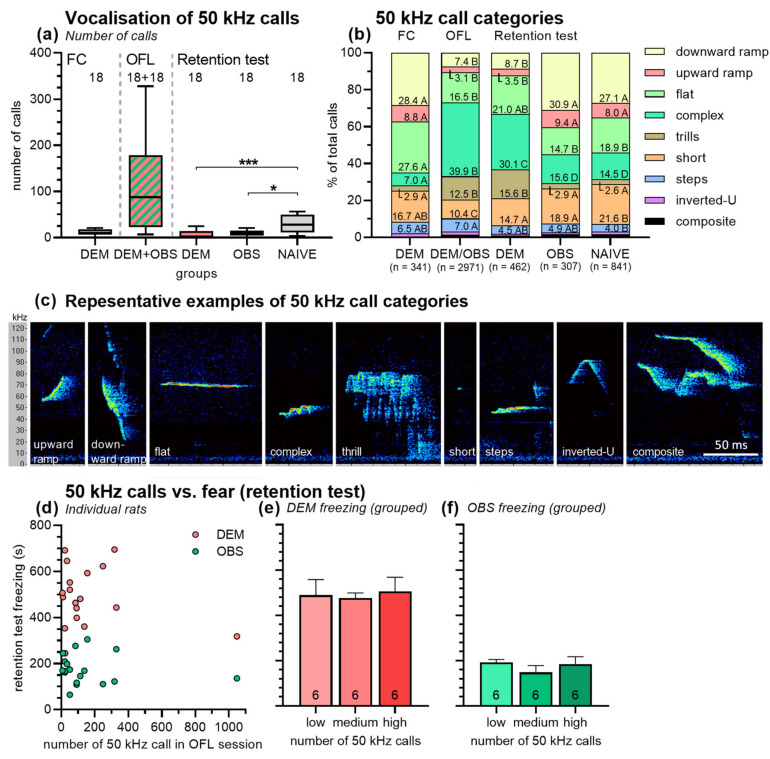
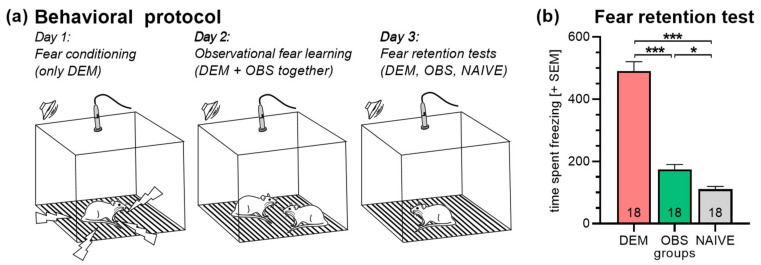
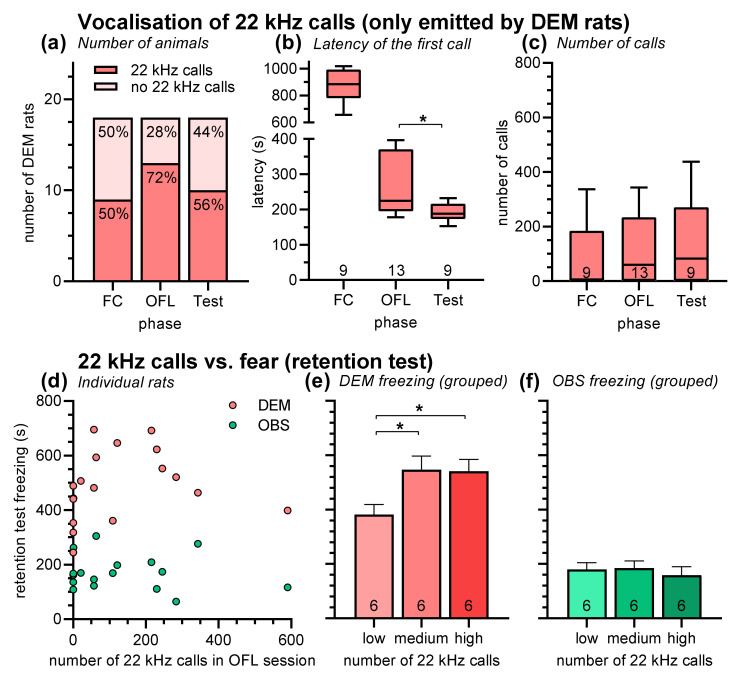
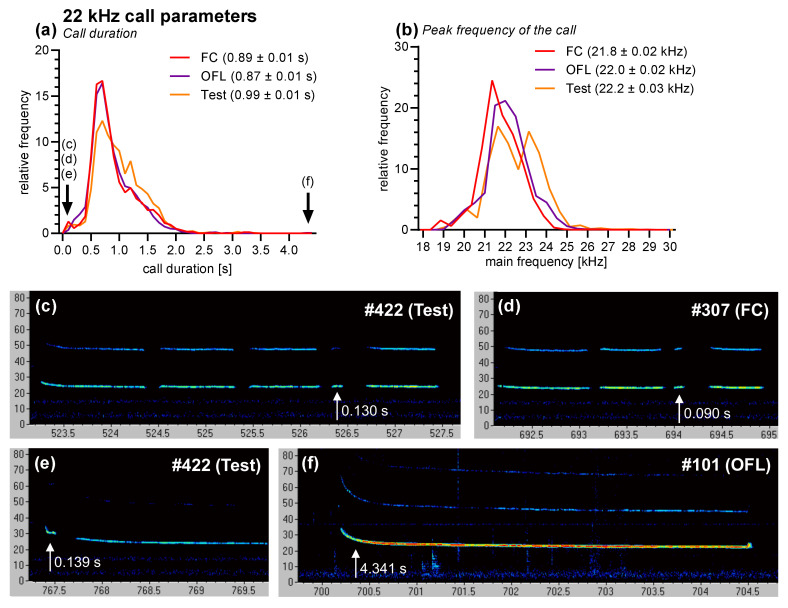
Rats can acquire fear by observing conspecifics that express fear in the presence of conditioned fear stimuli. This process is called observational fear learning and is based on the social transmission of the demonstrator rat's emotion and the induction of an empathy-like or anxiety state in the observer. The aim of the present study was to investigate the role of trait anxiety and ultrasonic vocalization in observational fear learning. Two experiments with male Wistar rats were performed. In the first experiment, trait anxiety was assessed in a light-dark box test before the rats were submitted to the observational fear learning procedure. In the second experiment, ultrasonic vocalization was recorded throughout the whole observational fear learning procedure, and 22 kHz and 50 kHz calls were analyzed. The results of our study show that trait anxiety differently affects direct fear learning and observational fear learning. Direct fear learning was more pronounced with higher trait anxiety, while observational fear learning was the best with a medium-level of trait anxiety. There were no indications in the present study that ultrasonic vocalization, especially emission of 22 kHz calls, but also 50 kHz calls, are critical for observational fear learning.
大鼠可以通过观察在条件性恐惧刺激出现时表现出恐惧的同种个体来习得恐惧。这个过程被称为观察性恐惧学习,它基于示范大鼠情绪的社会传递以及在观察者中诱发类似共情或焦虑的状态。本研究的目的是调查特质焦虑和超声波发声在观察性恐惧学习中的作用。对雄性Wistar大鼠进行了两项实验。在第一个实验中,在大鼠接受观察性恐惧学习程序之前,在明暗箱试验中评估特质焦虑。在第二个实验中,在整个观察性恐惧学习程序中记录超声波发声,并分析22千赫兹和50千赫兹的叫声。我们的研究结果表明,特质焦虑对直接恐惧学习和观察性恐惧学习的影响不同。特质焦虑水平越高,直接恐惧学习越明显,而特质焦虑处于中等水平时,观察性恐惧学习效果最佳。本研究没有迹象表明超声波发声,尤其是22千赫兹叫声的发出,以及50千赫兹叫声,对观察性恐惧学习至关重要。