Montisci Andrea, Bertoldi Letizia F, Price Susanna, Hassager Christian, Møller Jacob, Pappalardo Federico
Department of Anesthesia and Intensive Care, Cardiothoracic Center, Istituto Clinico Sant'Ambrogio, Via Faravelli 16, 20149 Milan, Italy.
Chair of Cardiac Surgery, Postgraduate in Cardiac Surgery, University of Milan, Via Faravelli 16, 20149 Milan, Italy.
Eur Heart J Suppl. 2021 Mar 27;23(Suppl A):A15-A22. doi: 10.1093/eurheartj/suab003. eCollection 2021 Mar.
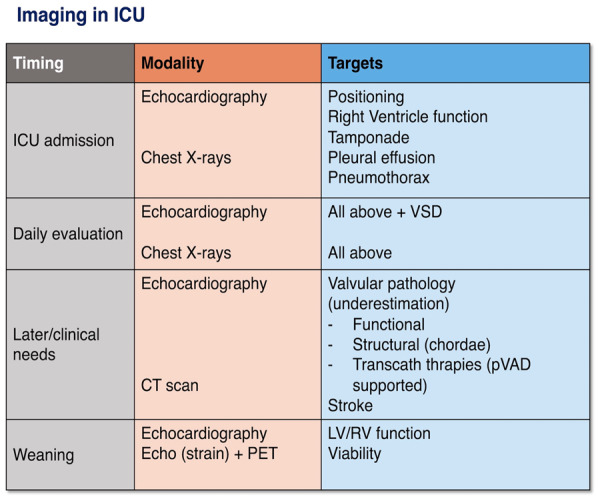
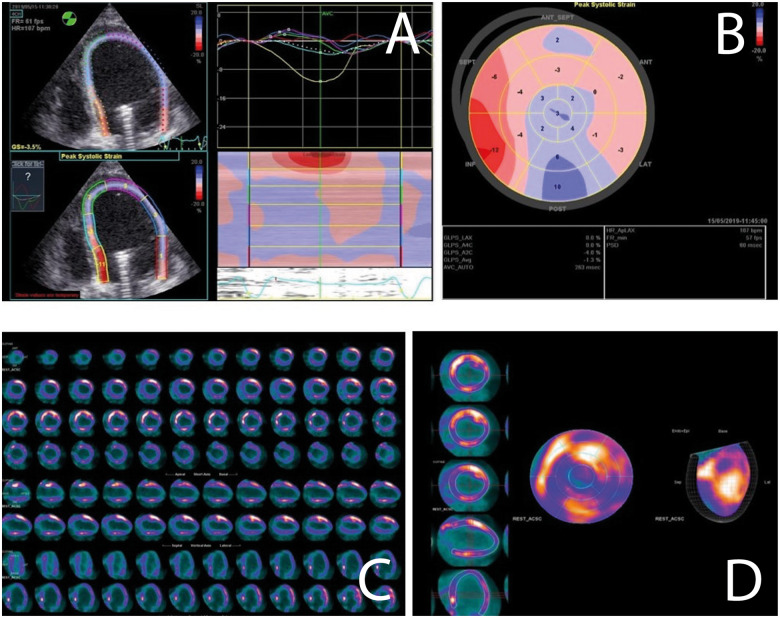
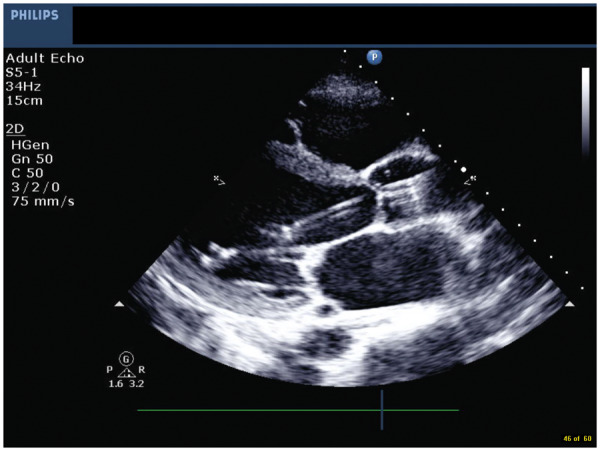
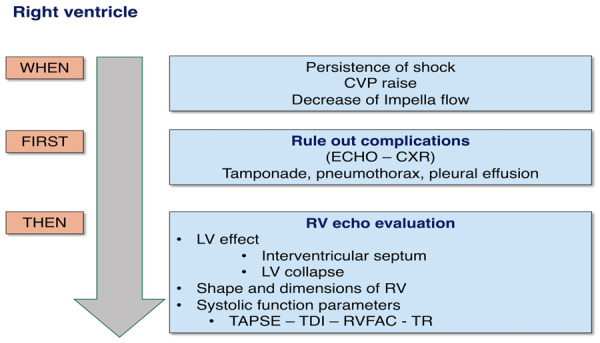
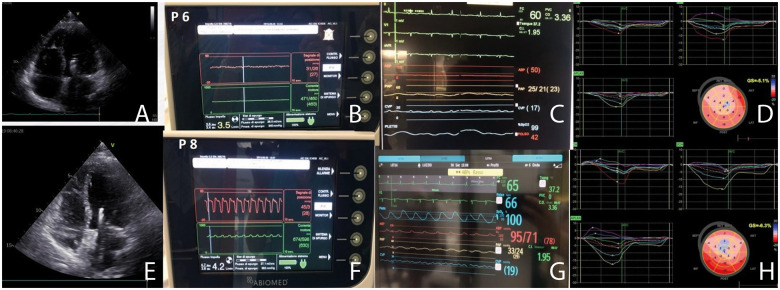
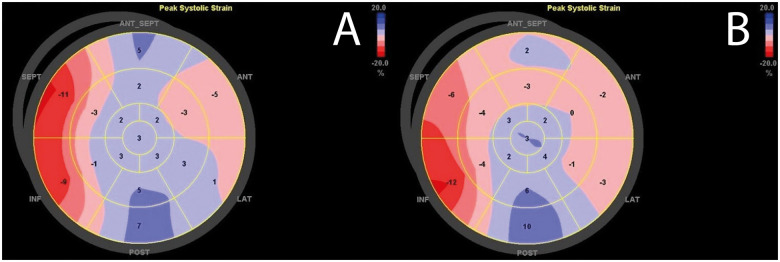
The clinical management of patients on Impella support requires multimodality monitoring and imaging. Upon intensive care unit admission, echocardiography is essential to ensure correct pump positioning/guide repositioning, to monitor acute myocardial infarction/device-related cardiac complications and to evaluate baseline left and right ventricular function. Over time, the echocardiographic assessment of myocardial viability has become an essential target for guiding mechanical circulatory support escalation and long-term strategies. The recognition and grading of any valvular dysfunction and damage in Impella patients are challenging, as the device interferes with the colour Doppler signal, and the loading conditions of the left ventricle are modified by the pump. Valvular disease in such patients is often secondary, and correct identification is pivotal for future therapeutic strategies. The emerging use of newer techniques, including speckle-tracking echocardiography, is of increasing interest in the imaging of critically ill patients.
接受Impella支持治疗的患者的临床管理需要多模式监测和成像。入住重症监护病房后,超声心动图对于确保正确的泵定位/引导重新定位、监测急性心肌梗死/与设备相关的心脏并发症以及评估基线左、右心室功能至关重要。随着时间的推移,心肌存活能力的超声心动图评估已成为指导机械循环支持升级和长期策略的重要目标。识别和分级Impella患者的任何瓣膜功能障碍和损伤具有挑战性,因为该设备会干扰彩色多普勒信号,并且泵会改变左心室的负荷情况。此类患者的瓣膜疾病通常是继发性的,正确识别对于未来的治疗策略至关重要。包括斑点追踪超声心动图在内的新技术的不断应用,在危重症患者成像方面越来越受到关注。