Zheng Susu, Liu Linxia, Xue Tongchun, Jing Chuyu, Xu Xin, Wu Yanfang, Wang Meixia, Xie Xiaoying, Zhang Boheng
Xiamen Branch, Department of Hepatic Oncology, Zhongshan Hospital, Fudan University, Xiamen, China.
Key Laboratory for Carcinogenesis and Cancer Invasion, Zhongshan Hospital, Shanghai Medical School, The Liver Cancer Institute, The Chinese Ministry of Education, Fudan University, Shanghai, China.
Front Genet. 2021 Mar 18;12:648156. doi: 10.3389/fgene.2021.648156. eCollection 2021.
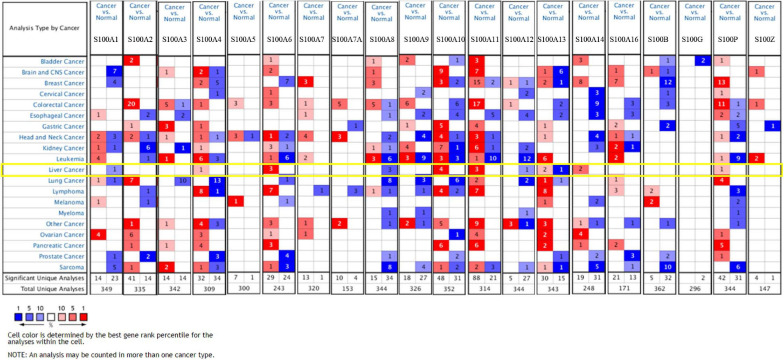
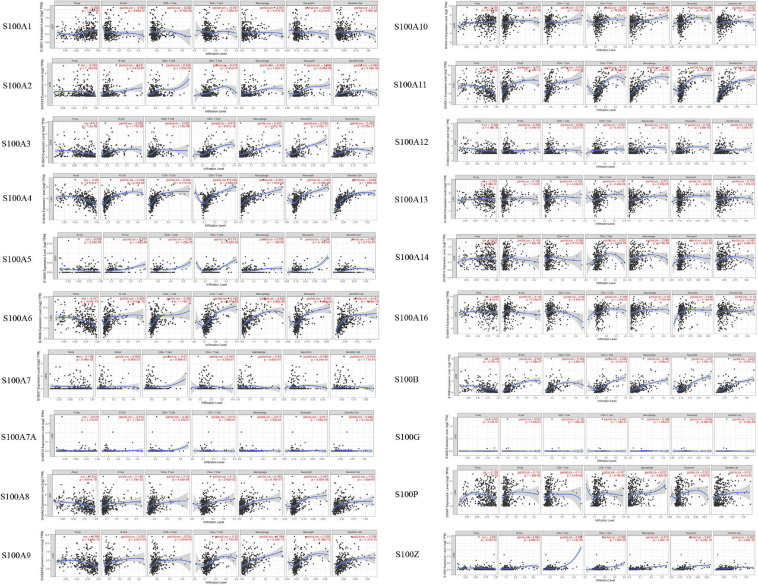
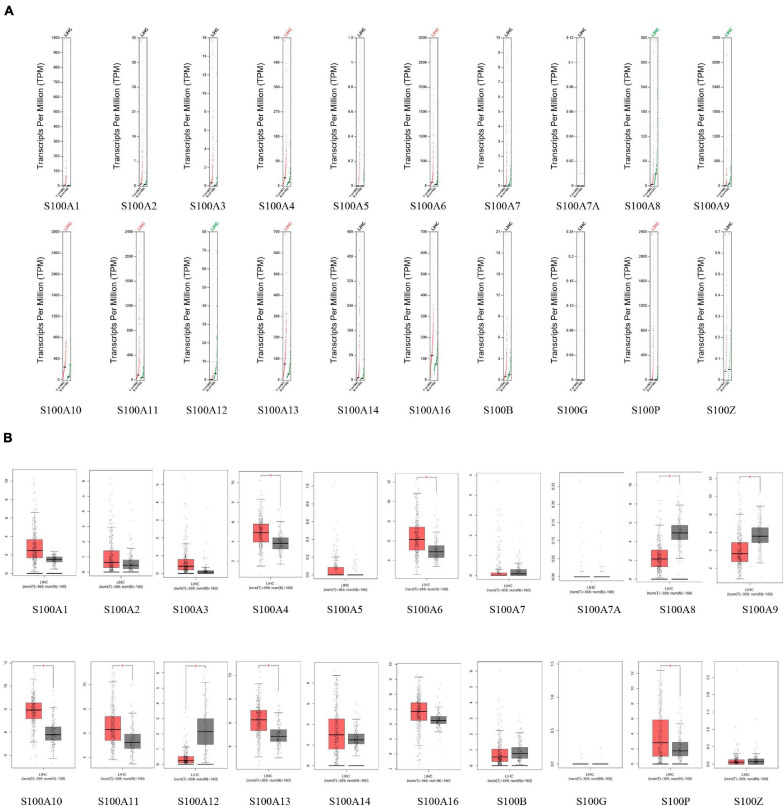
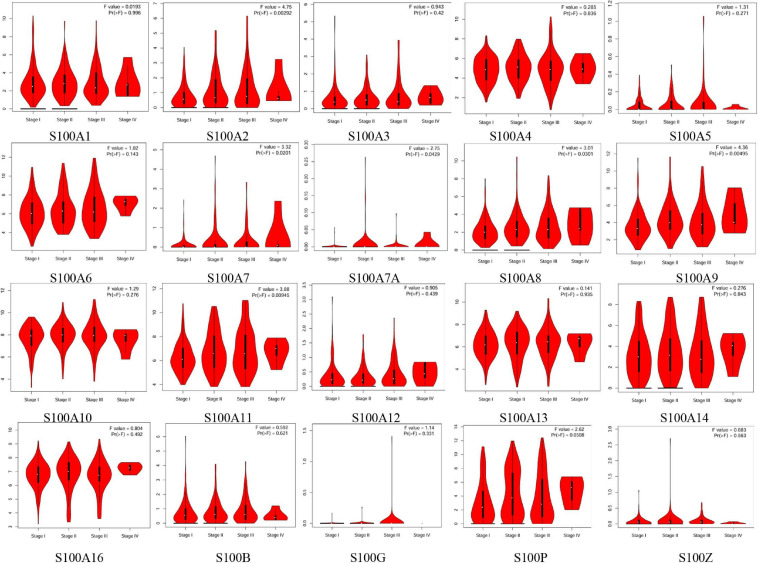
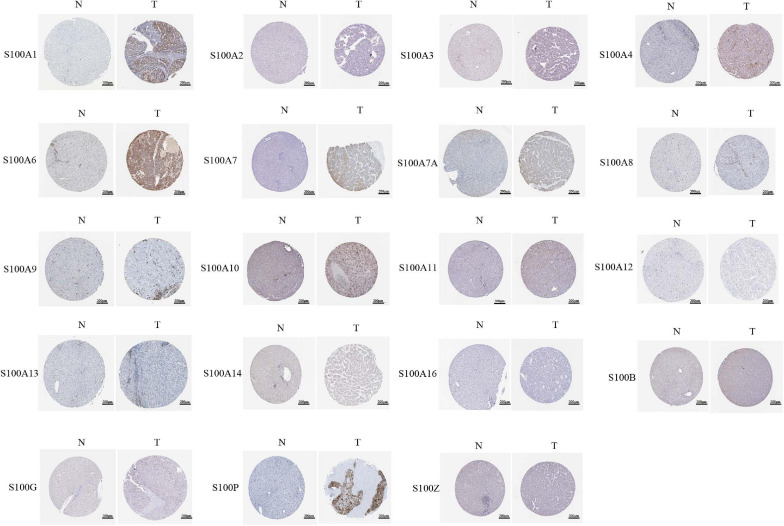
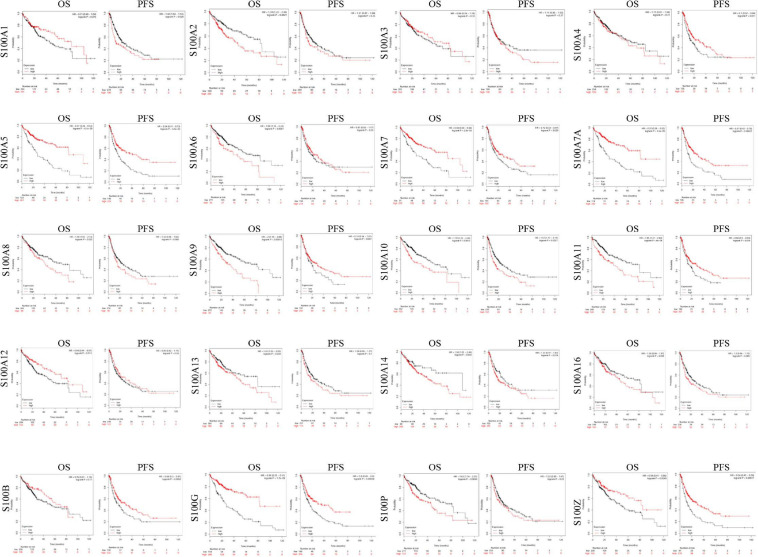
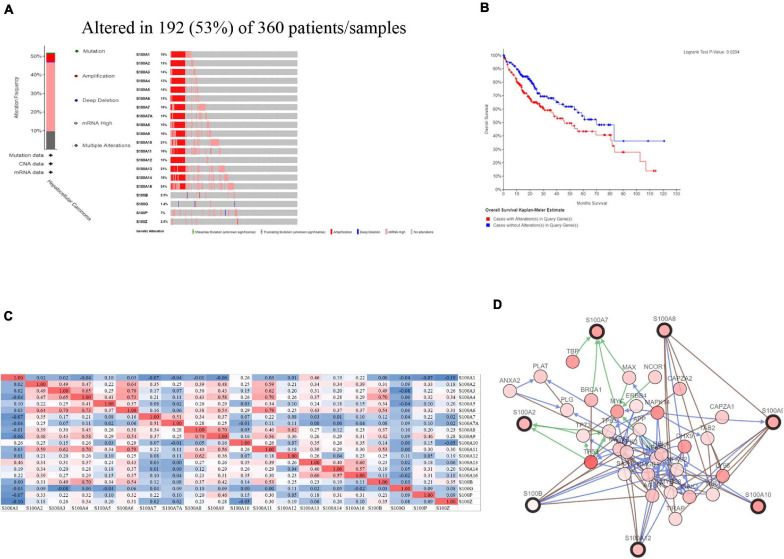
S100 protein family members (S100s) are commonly dysregulated in various tumors including hepatocellular carcinoma (HCC). However, the diverse expression, mutation, prognosis and associations with immune infiltration of S100s in HCC have yet to be analyzed. Herein we investigated the roles of S100s in HCC from the Oncomine, Gene Expression Profiling Interactive Analysis (GEPIA), Human Protein Atlas, Kaplan-Meier Plotter, cBioPortal and TIMER databases. Compared with para-cancer tissues, the expression levels of S100A4/S100A6/S100A10/S100A11/S100A13/S100A14/S100P were higher in HCC tissues, while the expression levels of S100A8/S100A9/S100A12 were decreased in tumor tissues. The mRNA levels of S100A2/S100A7/S100A7A/S100A8/S100A9/S100A11 were correlated with advanced tumor stage. Besides, higher mRNA expressions of S100A6/S100A10/S100A11/S100A13/S100A14/S100P were shown to have shorter overall survival (OS), while higher expression of S100A12 was associated with favorable OS. Further, the mutation rate of S100s was investigated, and the high mutation rate (53%) was associated with shorter OS. Additionally, the expressions of S100s were found to be significantly associated with various immune infiltrating cells. Hence, our results showed that S100A6/S100A10/S100A11/S10012/S100A13/S100A14/S100P may be regarded as new prognostic or therapeutic markers and S100s inhibitors may be helpful in the combination of immunotherapies.
S100蛋白家族成员(S100s)在包括肝细胞癌(HCC)在内的各种肿瘤中通常存在失调。然而,HCC中S100s的多样表达、突变、预后以及与免疫浸润的关联尚未得到分析。在此,我们从Oncomine、基因表达谱交互式分析(GEPIA)、人类蛋白质图谱、Kaplan-Meier Plotter、cBioPortal和TIMER数据库研究了S100s在HCC中的作用。与癌旁组织相比,HCC组织中S100A4/S100A6/S100A10/S100A11/S100A13/S100A14/S100P的表达水平较高,而肿瘤组织中S100A8/S100A9/S100A12的表达水平降低。S100A2/S100A7/S100A7A/S100A8/S100A9/S100A11的mRNA水平与肿瘤晚期相关。此外,S100A6/S100A10/S100A11/S100A13/S100A14/S100P的较高mRNA表达显示总生存期(OS)较短,而S100A12的较高表达与良好的OS相关。进一步研究了S100s的突变率,高突变率(53%)与较短的OS相关。此外,发现S100s的表达与各种免疫浸润细胞显著相关。因此,我们的结果表明,S100A6/S100A10/S100A11/S10012/S100A13/S100A14/S100P可被视为新的预后或治疗标志物,S100s抑制剂可能有助于免疫治疗的联合应用。