
一种利用移动数据限制新冠病毒传播的两步接种技术。
A two-step vaccination technique to limit COVID-19 spread using mobile data.
作者信息
Jadidi MohammadMohsen, Jamshidiha Saeed, Masroori Iman, Moslemi Pegah, Mohammadi Abbas, Pourahmadi Vahid
机构信息
Department of Electrical Engineering, Amirkabir University of Technology, Tehran, Iran.
出版信息
Sustain Cities Soc. 2021 Jul;70:102886. doi: 10.1016/j.scs.2021.102886. Epub 2021 Mar 27.
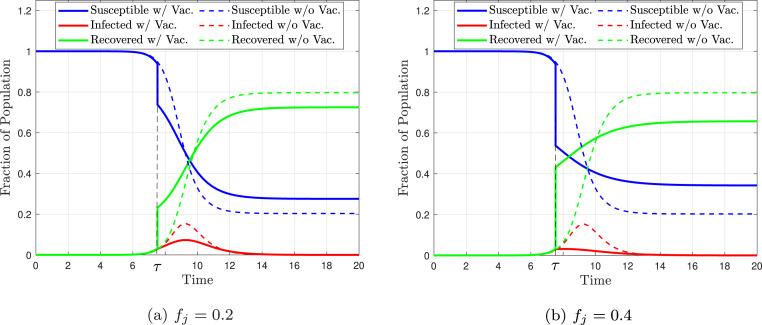
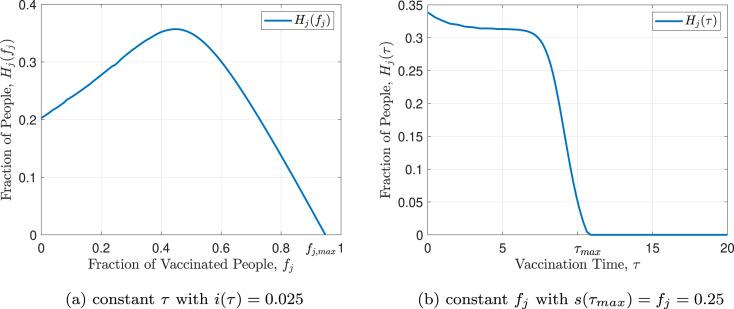
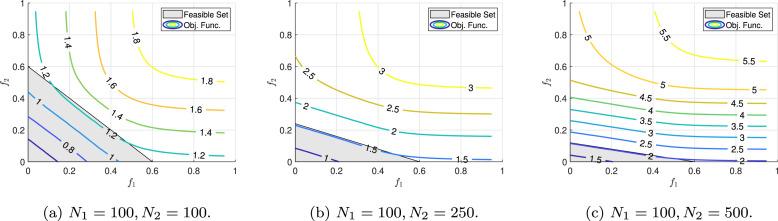
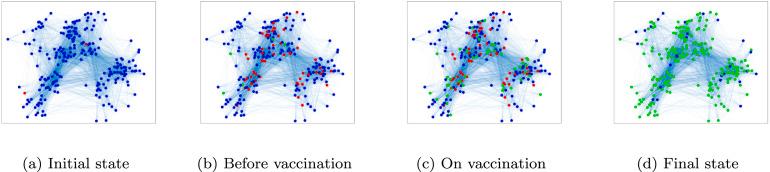
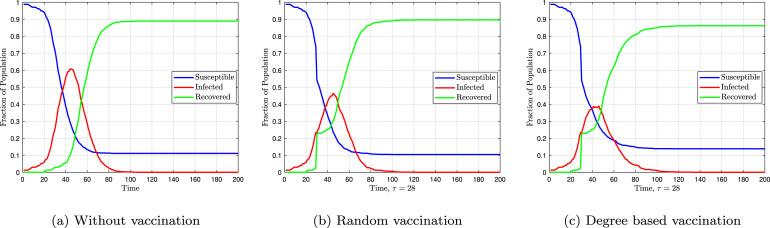
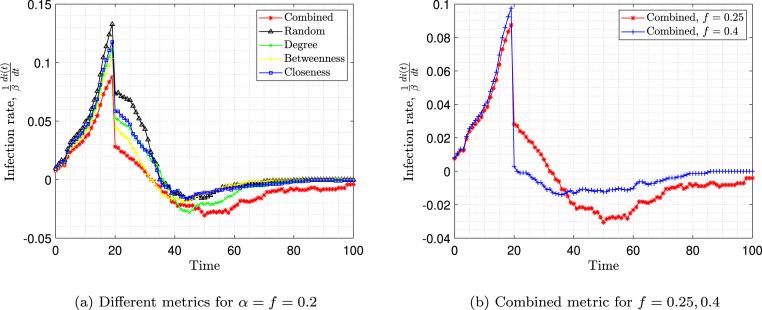
Vaccination is one of the most effective methods to prevent the spread of infectious diseases, but due to limitations in vaccines' availability, especially when faced with a new disease such as COVID-19, not all individuals in the community can be vaccinated. A limited number of candidates should be selected when the supply of vaccines is limited. In this paper, a method is introduced to prioritize the individuals for vaccination in order to achieve the best results in preventing the spread of COVID-19. We divide this problem into two steps: vaccine allocation and targeted vaccination. In vaccine allocation, vaccines are allocated among different population. An algorithm is proposed by defining the maximization of the total immunity among populations as an optimization problem. The aim of the targeted vaccination step is to select the individuals in each population that when vaccinated, create the greatest reduction in the transmission paths of the disease. The contact tracing data for this step is obtained from wireless communication networks and is modeled using graph theory. A metric is presented for selection of the candidates, based on centrality metrics. Simulations indicate that a 30% drop in infection rate could be achieved compared to random vaccination.
接种疫苗是预防传染病传播最有效的方法之一,但由于疫苗供应有限,特别是在面对像新冠肺炎这样的新疾病时,社区中的并非所有个体都能接种疫苗。当疫苗供应有限时,应选择有限数量的接种对象。本文介绍了一种对接种对象进行优先级排序的方法,以便在预防新冠肺炎传播方面取得最佳效果。我们将这个问题分为两个步骤:疫苗分配和靶向接种。在疫苗分配中,疫苗在不同人群中进行分配。通过将人群中总免疫力的最大化定义为一个优化问题,提出了一种算法。靶向接种步骤的目的是在每个人群中选择接种后能最大程度减少疾病传播路径的个体。此步骤的接触者追踪数据来自无线通信网络,并使用图论进行建模。基于中心性指标,提出了一种用于选择接种对象的度量标准。模拟结果表明,与随机接种相比,感染率可降低30%。






 Zotero 插件