Li Zifeng, Wang Hongsheng, Dong Rui, Man Jie, Sun Li, Qian Xiaowen, Zhu Xiaohua, Cao Ping, Yu Yi, Le Jun, Fu Yang, Wang Ping, Jiang Wenjin, Shen Chen, Ma Yangyang, Chen Lian, Xu Yaochen, Shi Jiantao, Zhang Hui, Qian Maoxiang, Zhai Xiaowen
Department of Hematology and Oncology, Children's Hospital of Fudan University, National Children's Medical Center, Shanghai, China.
Department of Pediatric Surgery, Children's Hospital of Fudan University, National Children's Medical Center, Shanghai, China.
Front Oncol. 2021 Mar 18;11:611580. doi: 10.3389/fonc.2021.611580. eCollection 2021.
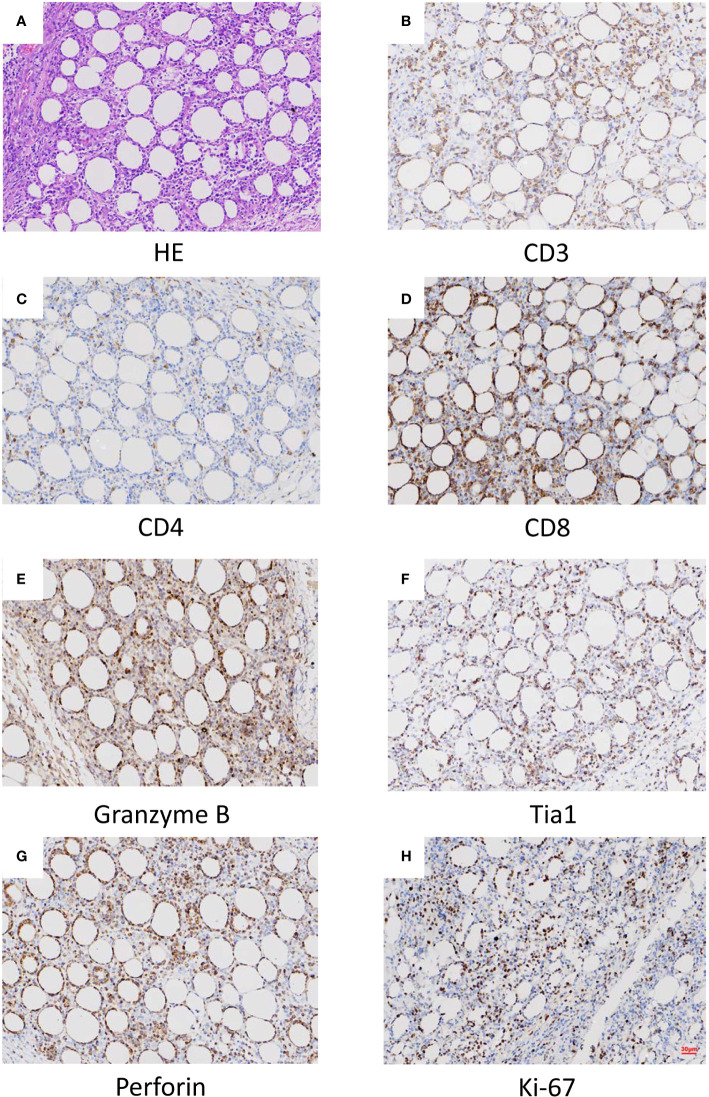
Subcutaneous panniculitis-like T-cell lymphoma (SPTCL) is a malignant primary T-cell lymphoma that is challenging to distinguish from autoimmune disorders and reactive panniculitides. Delay in diagnosis and a high misdiagnosis rate affect the prognosis and survival of patients. The difficulty of diagnosis is mainly due to an incomplete understanding of disease pathogenesis.
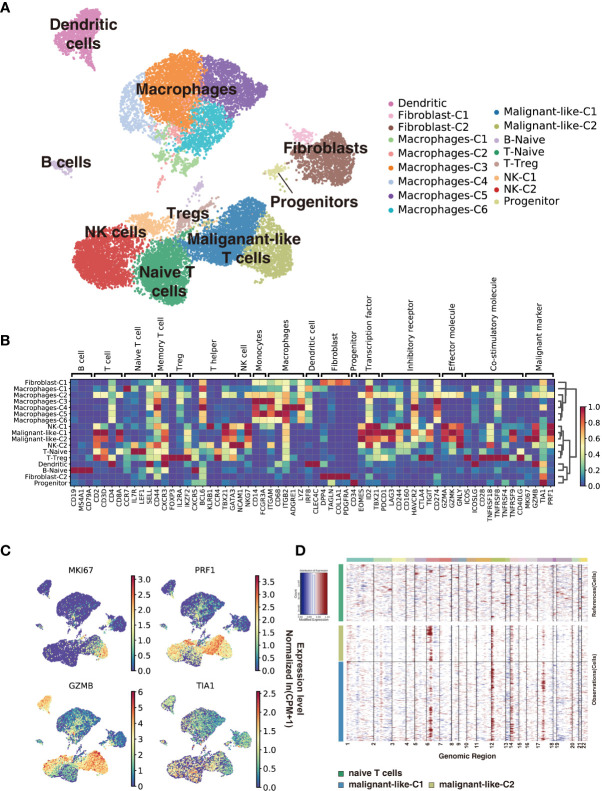
We performed single-cell RNA sequencing of matched subcutaneous lesion tissue, peripheral blood, and bone marrow from a patient with SPTCL, as well as peripheral blood, bone marrow, lymph node, and lung tissue samples from healthy donors as normal controls. We conducted cell clustering, gene expression program identification, gene differential expression analysis, and cell-cell interaction analysis to investigate the ecosystem of SPTCL.
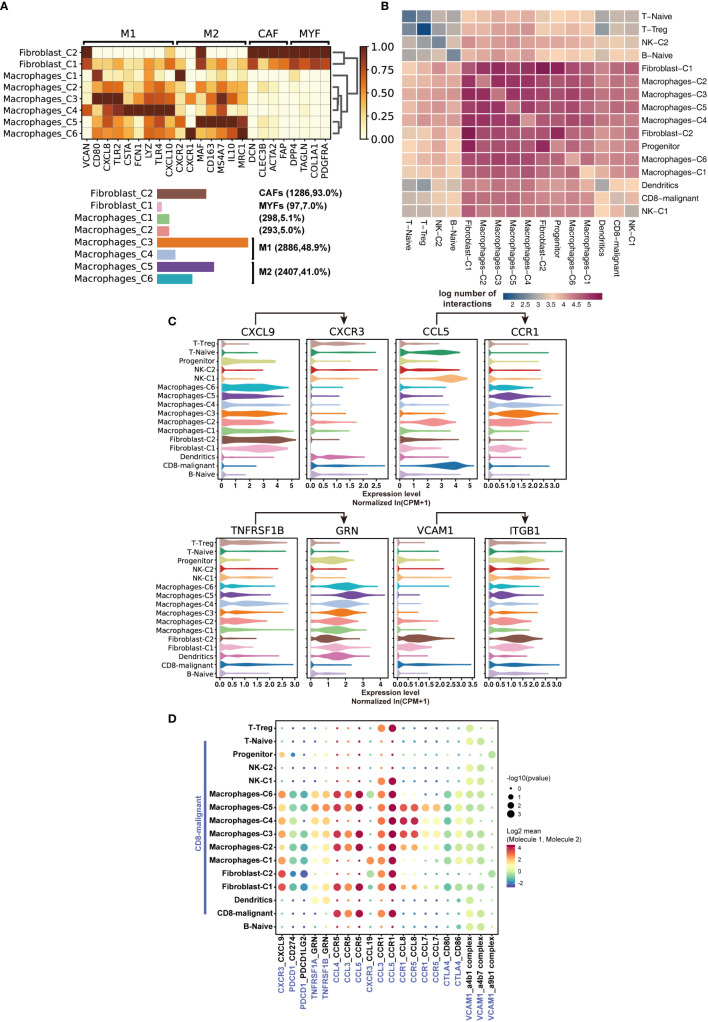
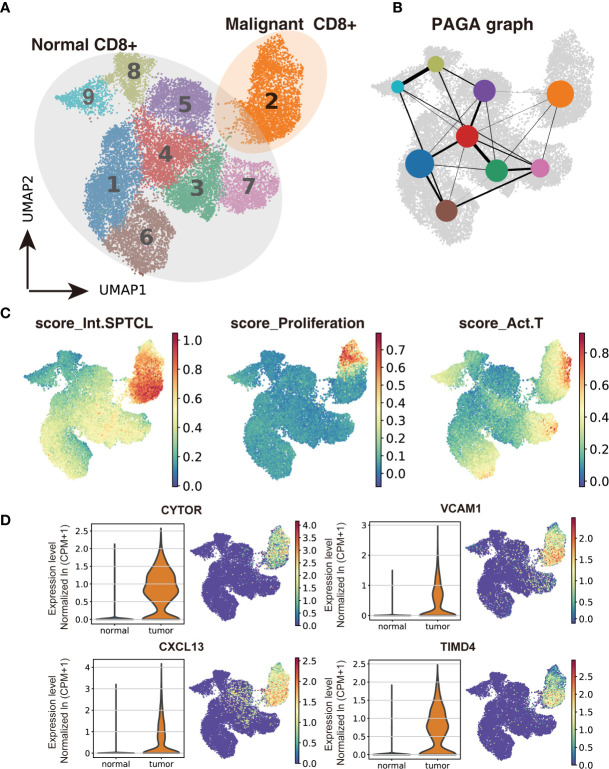
Based on gene expression profiles in a single-cell resolution, we identified and characterized the malignant cells and immune subsets from a patient with SPTCL. Our analysis showed that SPTCL malignant cells expressed a distinct gene signature, including chemokines families, cytotoxic proteins, T cell immune checkpoint molecules, and the immunoglobulin family. By comparing with normal T cells, we identified potential novel markers for SPTCL (e.g., ) specifically differentially expressed in the malignant cells. We also found that macrophages and fibroblasts dominated the cell-cell communication landscape with the SPTCL malignant cells.
This work offers insight into the heterogeneity of subcutaneous panniculitis-like T-cell lymphoma, providing a better understanding of the transcription characteristics and immune microenvironment of this rare tumor.
皮下脂膜炎样T细胞淋巴瘤(SPTCL)是一种恶性原发性T细胞淋巴瘤,难以与自身免疫性疾病和反应性脂膜炎相区分。诊断延迟和高误诊率影响患者的预后和生存。诊断困难主要是由于对疾病发病机制的认识不完整。
我们对一名SPTCL患者的皮下病变组织、外周血和骨髓进行了单细胞RNA测序,并将健康供体的外周血、骨髓、淋巴结和肺组织样本作为正常对照。我们进行了细胞聚类、基因表达程序鉴定、基因差异表达分析和细胞间相互作用分析,以研究SPTCL的生态系统。
基于单细胞分辨率的基因表达谱,我们从一名SPTCL患者中鉴定并表征了恶性细胞和免疫亚群。我们的分析表明,SPTCL恶性细胞表达了独特的基因特征,包括趋化因子家族、细胞毒性蛋白、T细胞免疫检查点分子和免疫球蛋白家族。通过与正常T细胞比较,我们确定了SPTCL潜在的新型标志物(例如 ),这些标志物在恶性细胞中特异性差异表达。我们还发现巨噬细胞和成纤维细胞在与SPTCL恶性细胞的细胞间通讯格局中占主导地位。
这项工作深入了解了皮下脂膜炎样T细胞淋巴瘤的异质性,有助于更好地理解这种罕见肿瘤的转录特征和免疫微环境。