Schreiber Anna R, Kagihara Jodi A, Weiss Jennifer A, Nicklawsky Andrew, Gao Dexiang, Borges Virginia F, Kabos Peter, Diamond Jennifer R
Department of Medicine, University of Colorado Anschutz, Aurora, CO, United States.
Department of Medicine, University of Colorado Cancer Center, Aurora, CO, United States.
Front Oncol. 2021 Mar 17;11:640690. doi: 10.3389/fonc.2021.640690. eCollection 2021.
Immuno-oncology (IO) agents have demonstrated efficacy across many tumor types and have led to change in standard of care. In breast cancer, atezolizumab and pembrolizumab were recently FDA-approved in combination with chemotherapy specifically for patients with PD-L1-positive metastatic triple-negative breast cancer (TNBC). However, the single agent PD-1/PD-L1 inhibitors demonstrate only modest single agent efficacy in breast cancer. The purpose of this study was to investigate the efficacy of novel IO agents in patients with metastatic breast cancer (MBC), beyond TNBC, treated in phase I clinical trials at the University of Colorado.
We performed a retrospective analysis using a database of patients with MBC who received treatment with IO agents in phase I/Ib clinical trials at the University of Colorado Hospital from January 1, 2012 to July 1, 2018. Patient demographics, treatments and clinical outcomes were obtained.
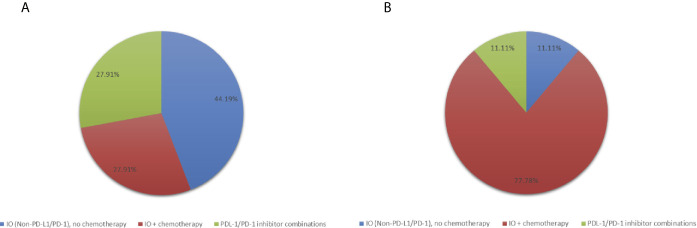
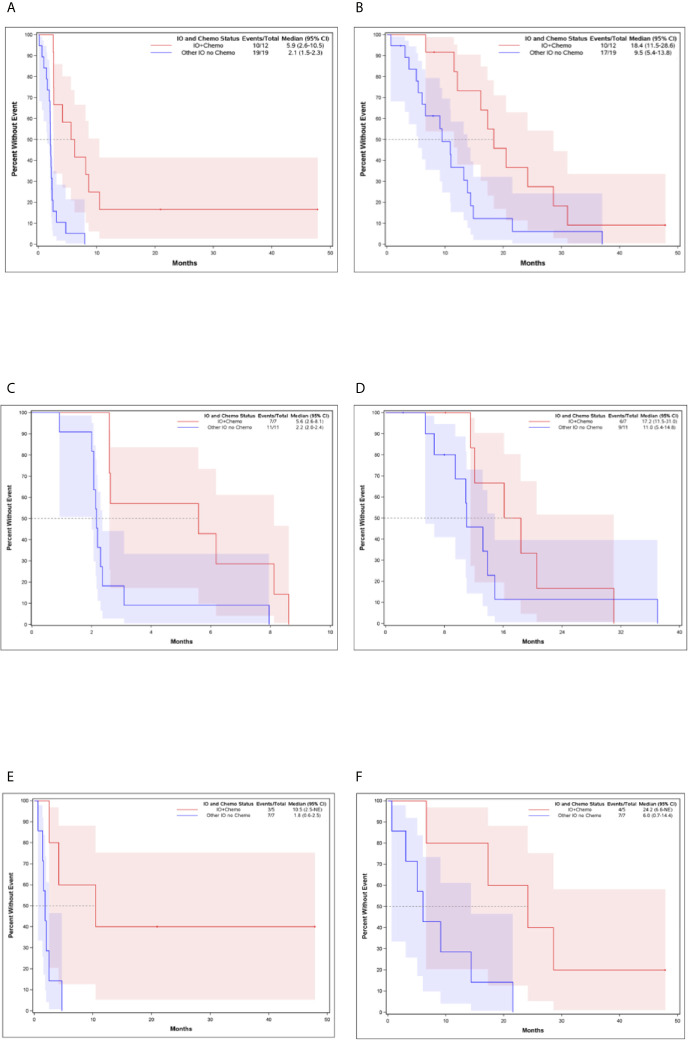
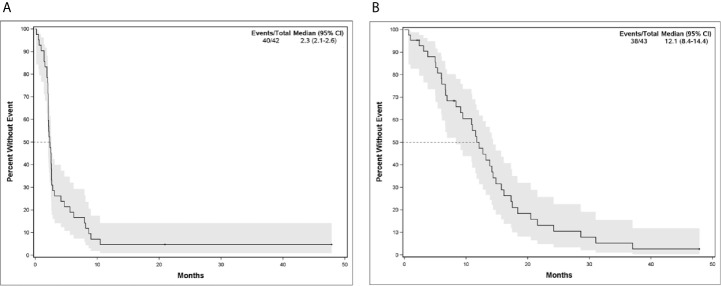
We identified 43 patients treated with an IO agent either as a single agent or in combination. The average age was 53 years; 55.8% had hormone receptor-positive/HER2-negative breast cancer, 39.5% TNBC and 4.7% HER2-positive. Patients received an average of 2 prior lines of chemotherapy (range 0-7) in the metastatic setting. Most patients (72.1%) received IO alone and 27.9% received IO plus chemotherapy. Median progression-free survival (PFS) was 2.3 months and median overall survival (OS) was 12.1 months. Patients remaining on study ≥ 6 months (20.9%) were more likely to be treated with chemotherapy plus IO compared to patients with a PFS < 6 months (77.8% v. 14.7%). No differences in number of metastatic sites, prior lines of chemotherapy, breast cancer subtype, absolute lymphocyte count, or LDH were identified between patients with a PFS ≥ 6 months vs. < 6 months.
Our phase I experience demonstrates benefit from IO therapy that was not limited to patients with TNBC and confirms improved efficacy from IO agents in combination with chemotherapy. A subset of patients with MBC treated in phase I clinical trials with an IO agent derived prolonged clinical benefit. Predictors of response to immunotherapy in breast cancer remain uncharacterized and further research is needed to identify these factors.
免疫肿瘤学(IO)药物已在多种肿瘤类型中显示出疗效,并导致了治疗标准的改变。在乳腺癌中,阿特珠单抗和帕博利珠单抗最近已获得美国食品药品监督管理局(FDA)批准,可与化疗联合使用,专门用于治疗PD-L1阳性转移性三阴性乳腺癌(TNBC)患者。然而,单药PD-1/PD-L1抑制剂在乳腺癌中仅显示出适度的单药疗效。本研究的目的是调查新型IO药物在科罗拉多大学进行的I期临床试验中治疗的转移性乳腺癌(MBC)患者(不包括TNBC)中的疗效。
我们使用2012年1月1日至2018年7月1日在科罗拉多大学医院接受I期/Ib期临床试验中接受IO药物治疗的MBC患者数据库进行了回顾性分析。获取了患者的人口统计学信息、治疗情况和临床结局。
我们确定了43例接受IO药物单药治疗或联合治疗的患者。平均年龄为53岁;55.8%为激素受体阳性/HER2阴性乳腺癌,39.5%为TNBC,4.7%为HER2阳性。患者在转移性疾病阶段平均接受过2线化疗(范围0-7线)。大多数患者(72.1%)仅接受IO治疗,27.9%接受IO加化疗。中位无进展生存期(PFS)为2.三个月,中位总生存期(OS)为12.1个月。与PFS<6个月的患者相比,研究持续≥6个月的患者(20.9%)更有可能接受化疗加IO治疗(77.8%对14.7%)。PFS≥6个月与<6个月的患者在转移部位数量、既往化疗线数、乳腺癌亚型、绝对淋巴细胞计数或乳酸脱氢酶方面未发现差异。
我们的I期经验表明IO治疗有益,且不限于TNBC患者,并证实IO药物与化疗联合使用疗效更佳。在I期临床试验中接受IO药物治疗的一部分MBC患者获得了延长的临床益处。乳腺癌免疫治疗反应的预测因素仍未明确,需要进一步研究以确定这些因素。