Jiang Baohong, Wu Sixuan, Zeng Lijun, Tang Yuanbin, Luo Lunqi, Ouyang Lianjie, Feng Wenjie, Tan Yeru, Li Yuehua
Department of Pharmacy, The First Affiliated Hospital, Hengyang Medical School, University of South China, Hengyang, Hunan, People's Republic of China.
Department of Oncology, The First Affiliated Hospital, Hengyang Medical School, University of South China, Hengyang, Hunan, People's Republic of China.
Cancer Cell Int. 2024 Mar 8;24(1):99. doi: 10.1186/s12935-024-03244-1.
Breast cancer is a major global health concern, and there is a continuous search for novel biomarkers to predict its prognosis. The mitochondrial protein NDUFAF6, previously studied in liver cancer, is now being investigated for its role in breast cancer. This study aims to explore the expression and functional significance of NDUFAF6 in breast cancer using various databases and experimental models.
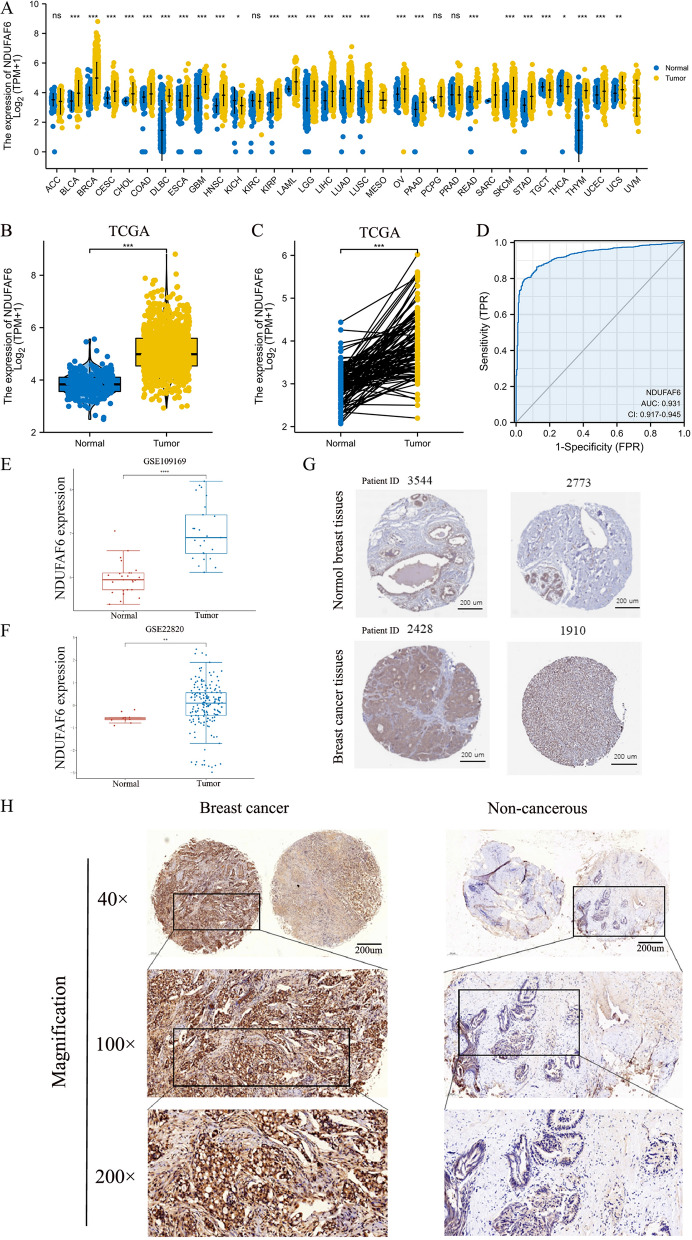
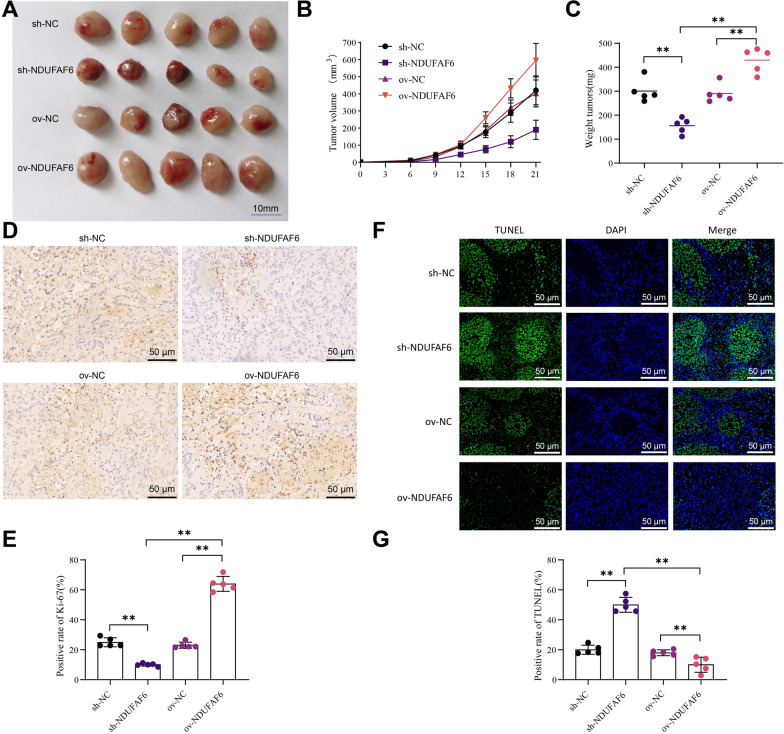
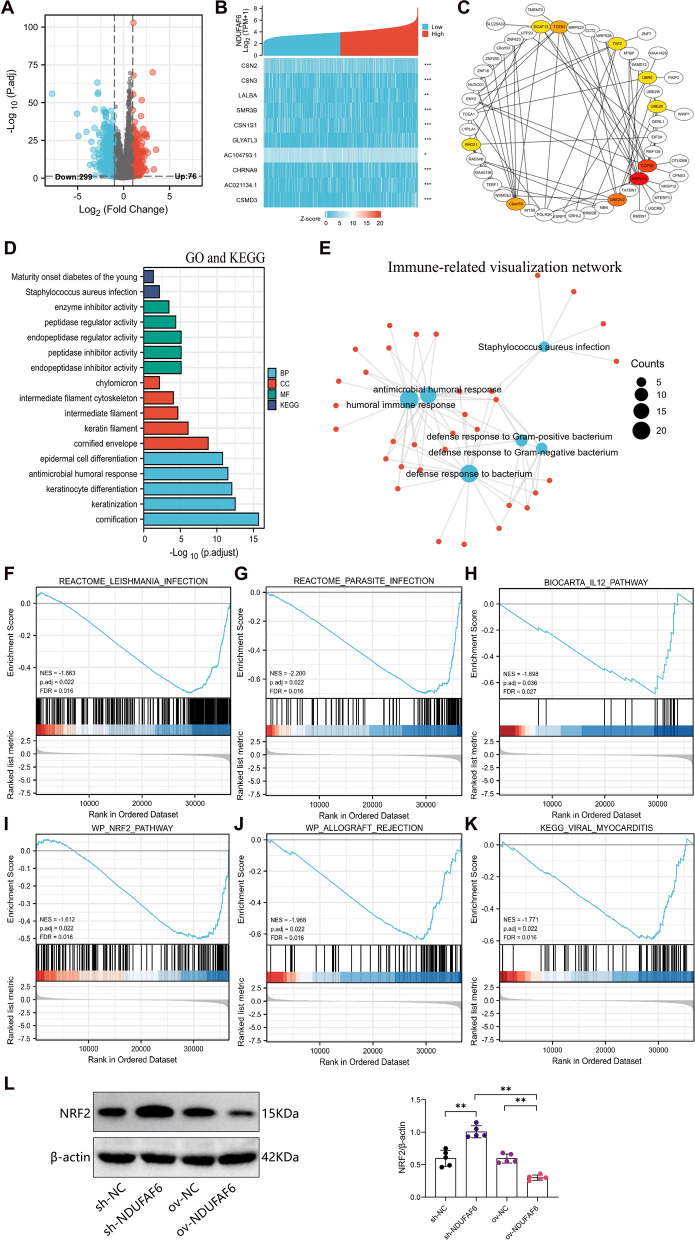
We analyzed breast cancer samples from The Cancer Genome Atlas (TCGA), Gene Expression Omnibus (GEO), and Human Protein Atlas (HPA) databases, supplemented with immunohistochemistry (IHC) staining to assess NDUFAF6 expression. A breast cancer cell xenograft mouse model was used to evaluate tumor growth, apoptosis, and NDUFAF6 expression. Survival probabilities were estimated through Kaplan-Meier plots and Cox regression analysis. A Protein-Protein Interaction (PPI) network was constructed, and differentially expressed genes related to NDUFAF6 were analyzed using GO, KEGG, and GSEA. The relationship between NDUFAF6 expression, immune checkpoints, and immune infiltration was also evaluated.
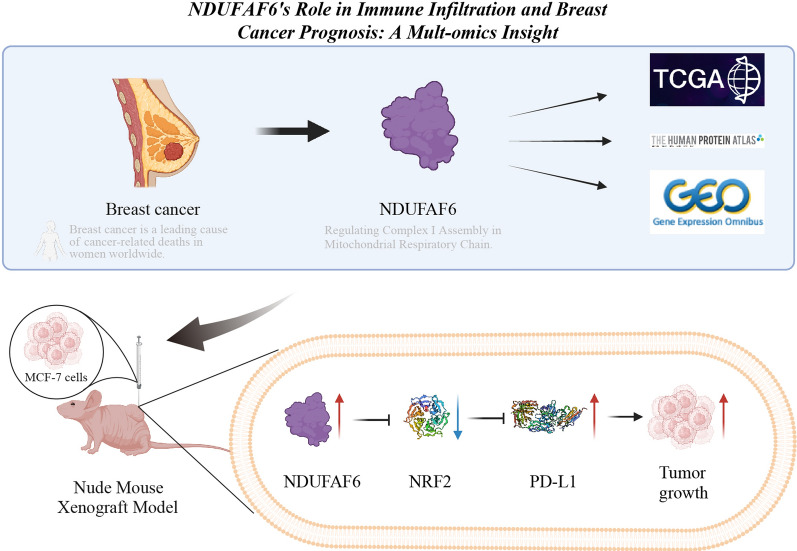
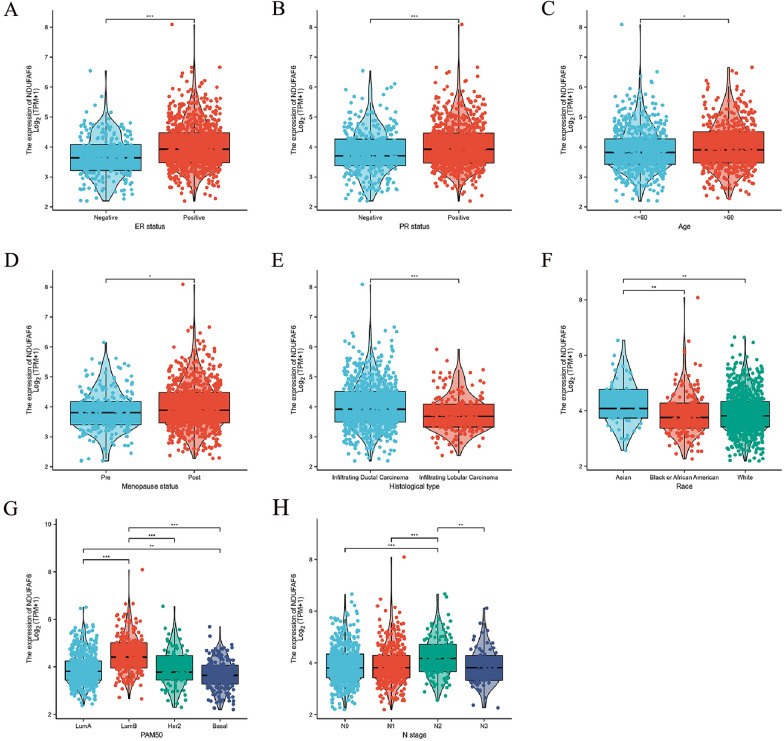
NDUFAF6 was found to be overexpressed in breast cancer patients and in the xenograft mouse model. Its expression correlated with worse clinical features and prognosis. NDUFAF6 expression was an independent predictor of breast cancer outcomes in both univariate and multivariate analyses. Functionally, NDUFAF6 is implicated in several immune-related pathways. Crucially, NDUFAF6 expression correlated with various immune infiltrating cells and checkpoints, particularly promoting PD-L1 expression by inhibiting the NRF2 signaling pathway.
The study establishes NDUFAF6 as a potential prognostic biomarker in breast cancer. Its mechanism of action, involving the inhibition of NRF2 to upregulate PD-L1, highlights its significance in the disease's progression and potential as a target for immunotherapy.
乳腺癌是全球主要的健康问题,人们一直在不断寻找新的生物标志物来预测其预后。线粒体蛋白NDUFAF6此前在肝癌中进行过研究,目前正在研究其在乳腺癌中的作用。本研究旨在利用各种数据库和实验模型,探讨NDUFAF6在乳腺癌中的表达及其功能意义。
我们分析了来自癌症基因组图谱(TCGA)、基因表达综合数据库(GEO)和人类蛋白质图谱(HPA)数据库的乳腺癌样本,并辅以免疫组织化学(IHC)染色来评估NDUFAF6的表达。使用乳腺癌细胞异种移植小鼠模型来评估肿瘤生长、凋亡和NDUFAF6的表达。通过Kaplan-Meier曲线和Cox回归分析估计生存概率。构建蛋白质-蛋白质相互作用(PPI)网络,并使用基因本体论(GO)、京都基因与基因组百科全书(KEGG)和基因集富集分析(GSEA)分析与NDUFAF6相关的差异表达基因。还评估了NDUFAF6表达、免疫检查点和免疫浸润之间的关系。
发现NDUFAF6在乳腺癌患者和异种移植小鼠模型中均过表达。其表达与较差的临床特征和预后相关。在单变量和多变量分析中,NDUFAF6表达都是乳腺癌预后的独立预测因子。在功能上,NDUFAF6参与了多个免疫相关途径。至关重要的是,NDUFAF6表达与各种免疫浸润细胞和检查点相关,特别是通过抑制NRF2信号通路促进PD-L1表达。
该研究确定NDUFAF6为乳腺癌潜在的预后生物标志物。其作用机制涉及抑制NRF2以上调PD-L1,突出了其在疾病进展中的意义以及作为免疫治疗靶点的潜力。