Karbasi Zahra, Niakan Kalhori Sharareh R
Department of Health Information Management, School of Allied Medical Sciences, Tehran University of Medical Sciences, Tehran, Iran.
Med J Islam Repub Iran. 2020 Dec 3;34:163. doi: 10.47176/mjiri.34.163. eCollection 2020.
To learn anatomy, medical students need to look at body structures and manipulate anatomical structures. Simulation-based education is a promising opportunity for the upgrade and sharing of knowledge. The purpose of this review is to investigate the evaluation of virtual technologies in teaching anatomy to medical students.
In this review, we searched PubMed, Web of Sciences, Scopus, and Embase for relevant articles in November 2018. Information retrieval was done without time limitation. The search was based on the following keywords: virtual reality, medical education, and anatomy.
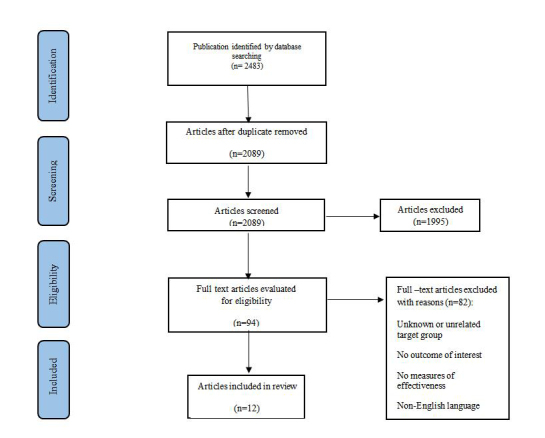
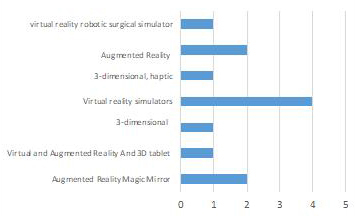
2483 articles were identified by searching databases. Finally, the fulltext of 12 articles was reviewed. The results of the review showed that virtual technologies had been used to train internal human anatomy, ear anatomy, nose anatomy, temporal bone anatomy, surgical anatomy, neuroanatomy, and cardiac anatomy.
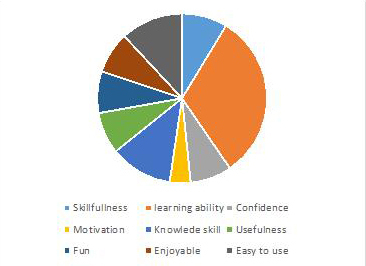
Virtual reality, augmented reality, and games can enhance students' anatomical learning skills and are proper alternatives to traditional methods in case of no access to the cadavers and mannequin.
为学习解剖学,医学生需要观察身体结构并操作解剖结构。基于模拟的教育是知识升级与共享的一个有前景的契机。本综述的目的是调查虚拟技术在医学生解剖学教学中的评估情况。
在本综述中,我们于2018年11月在PubMed、科学网、Scopus和Embase中检索相关文章。信息检索无时间限制。检索基于以下关键词:虚拟现实、医学教育和解剖学。
通过检索数据库共识别出2483篇文章。最后,对12篇文章的全文进行了综述。综述结果表明,虚拟技术已被用于训练人体内部解剖学、耳部解剖学、鼻部解剖学、颞骨解剖学、手术解剖学、神经解剖学和心脏解剖学。
虚拟现实、增强现实和游戏可以提高学生的解剖学学习技能,在无法获取尸体和人体模型的情况下是传统方法的合适替代方案。