Zheng Yujia, Tian He, Zhou Zheng, Xiao Chu, Liu Hengchang, Liu Yu, Wang Liyu, Fan Tao, Zheng Bo, Tan Fengwei, Xue Qi, Gao Gengshu, Li Chunxiang, He Jie
Department of Thoracic Surgery, National Cancer Center/National Clinical Research Center for Cancer/Cancer Hospital, Peking Union Medical College, Chinese Academy of Medical Sciences, Beijing, China.
Department of Colorectal Surgery, National Cancer Center/National Clinical Research Center for Cancer/Cancer Hospital, Peking Union Medical College, Chinese Academy of Medical Sciences, Beijing, China.
Front Cell Dev Biol. 2021 Mar 19;9:651406. doi: 10.3389/fcell.2021.651406. eCollection 2021.
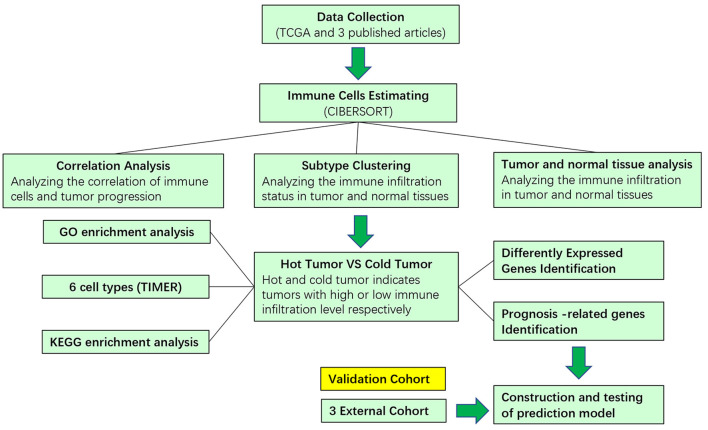
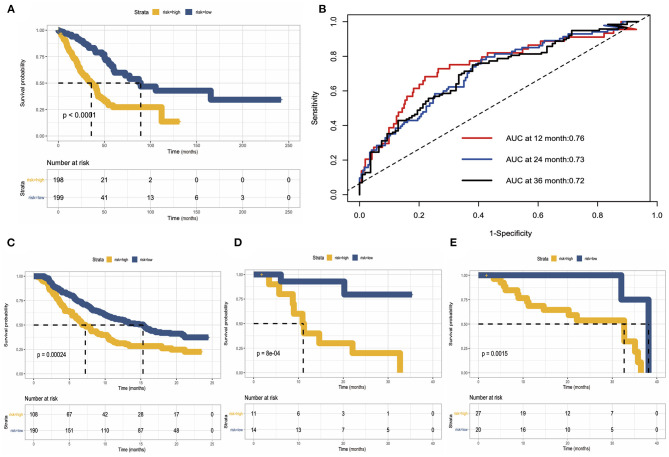
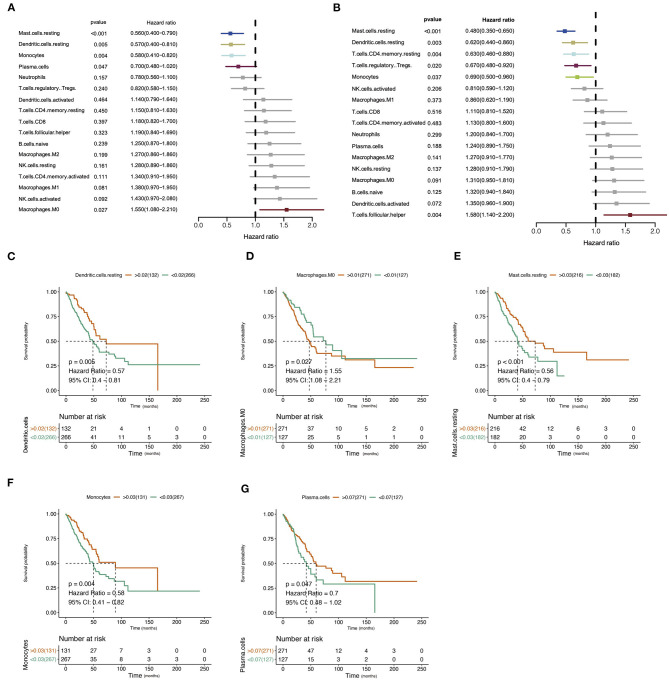
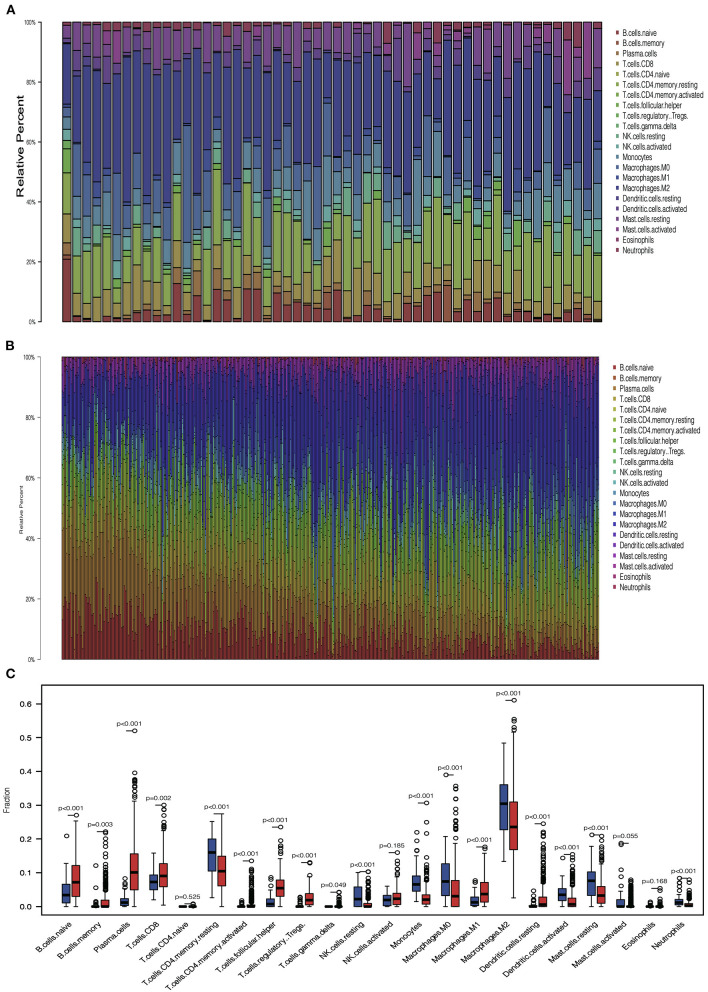
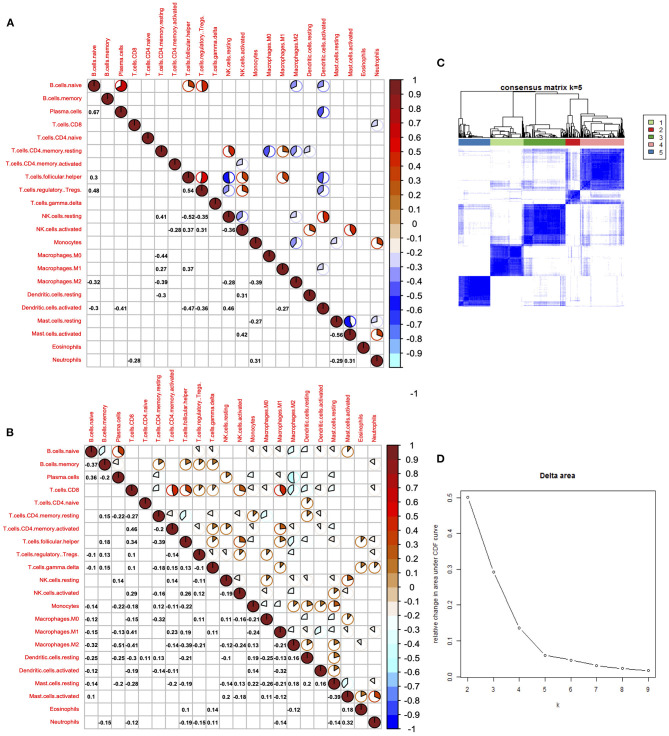
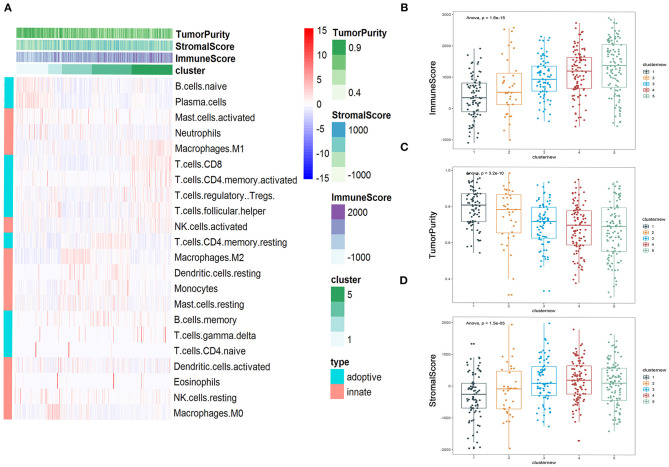
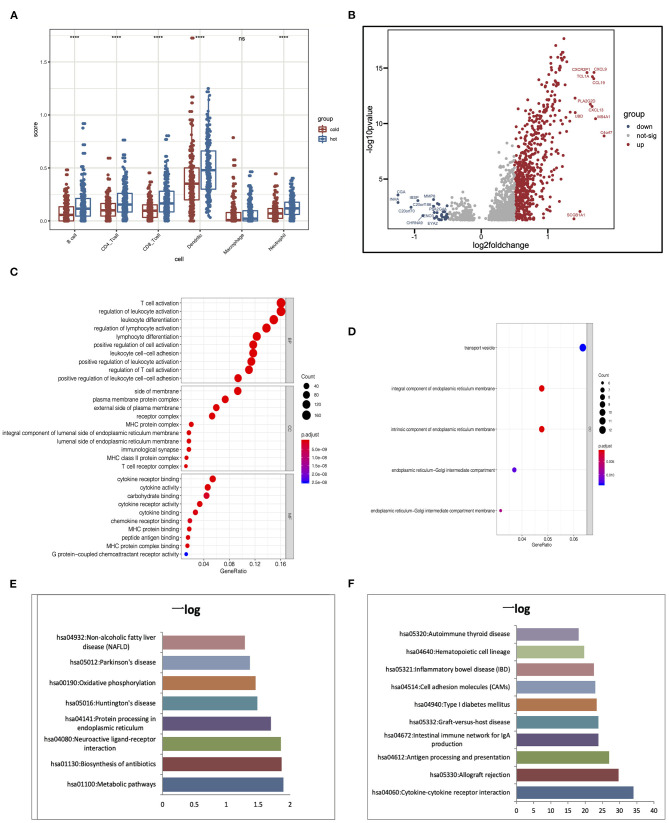
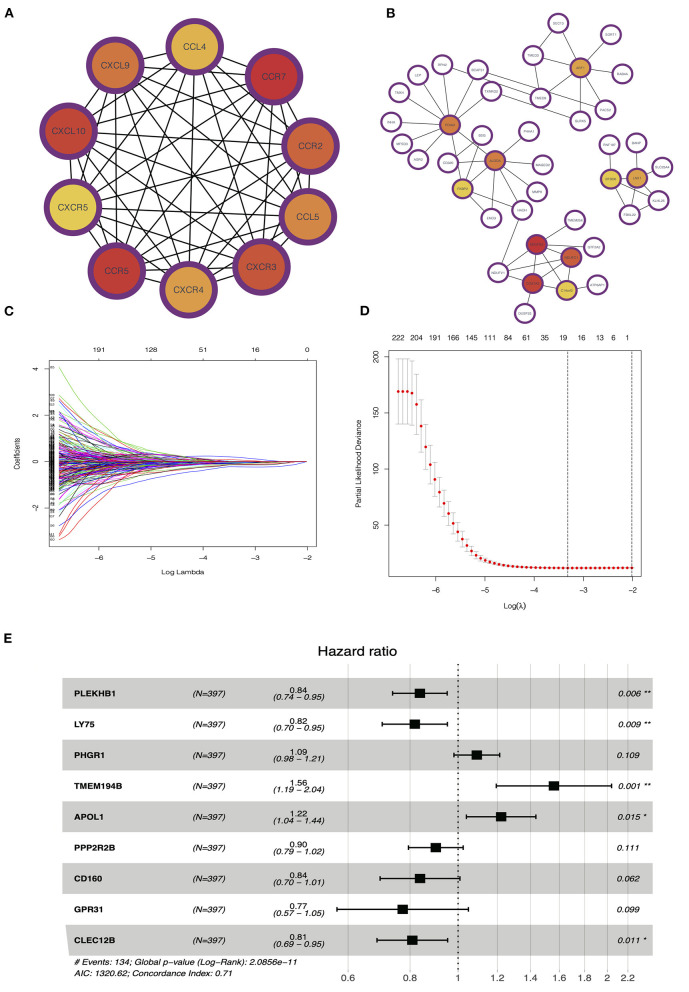
Lung adenocarcinoma is one of the most malignant diseases worldwide. The immune checkpoint inhibitors targeting programmed cell death protein 1 (PD-1) and programmed cell death-ligand 1 (PD-L1) have changed the paradigm of lung cancer treatment; however, there are still patients who are resistant. Further exploration of the immune infiltration status of lung adenocarcinoma (LUAD) is necessary for better clinical management. In our study, the CIBERSORT method was used to calculate the infiltration status of 22 immune cells in LUAD patients from The Cancer Genome Atlas (TCGA). We clustered LUAD based on immune infiltration status by consensus clustering. The differentially expressed genes (DEGs) between cold and hot tumor group were identified. Gene Ontology (GO) and Kyoto Encyclopedia of Genes and Genomes (KEGG) enrichment analysis were performed. Last, we constructed a Cox regression model. We found that the infiltration of M0 macrophage cells and follicular helper T cells predicted an unfavorable overall survival of patients. Consensus clustering of 22 immune cells identified 5 clusters with different patterns of immune cells infiltration, stromal cells infiltration, and tumor purity. Based on the immune scores, we classified these five clusters into hot and cold tumors, which are different in transcription profiles. Hot tumors are enriched in cytokine-cytokine receptor interaction, while cold tumors are enriched in metabolic pathways. Based on the hub genes and prognostic-related genes, we developed a Cox regression model to predict the overall survival of patients with LUAD and validated in other three datasets. In conclusion, we developed an immune-related signature that can predict the prognosis of patients, which might facilitate the clinical application of immunotherapy in LUAD.
肺腺癌是全球最具恶性的疾病之一。靶向程序性细胞死亡蛋白1(PD-1)和程序性细胞死亡配体1(PD-L1)的免疫检查点抑制剂改变了肺癌治疗模式;然而,仍有患者存在耐药情况。进一步探究肺腺癌(LUAD)的免疫浸润状态对于更好的临床管理很有必要。在我们的研究中,使用CIBERSORT方法计算了来自癌症基因组图谱(TCGA)的LUAD患者中22种免疫细胞的浸润状态。我们通过一致性聚类根据免疫浸润状态对LUAD进行聚类。鉴定了冷肿瘤组和热肿瘤组之间的差异表达基因(DEG)。进行了基因本体(GO)和京都基因与基因组百科全书(KEGG)富集分析。最后,我们构建了一个Cox回归模型。我们发现M0巨噬细胞和滤泡辅助性T细胞的浸润预示着患者总体生存情况不佳。对22种免疫细胞的一致性聚类确定了5个具有不同免疫细胞浸润、基质细胞浸润和肿瘤纯度模式的簇。根据免疫评分,我们将这五个簇分为热肿瘤和冷肿瘤,它们在转录谱上有所不同。热肿瘤富含细胞因子-细胞因子受体相互作用,而冷肿瘤富含代谢途径。基于枢纽基因和预后相关基因,我们开发了一个Cox回归模型来预测LUAD患者的总体生存情况,并在其他三个数据集中进行了验证。总之,我们开发了一种可预测患者预后的免疫相关特征,这可能有助于免疫疗法在LUAD中的临床应用。