Elzeki Omar M, Shams Mahmoud, Sarhan Shahenda, Abd Elfattah Mohamed, Hassanien Aboul Ella
Faculty of Computers and Information, Mansoura University, Mansoura, Egypt.
Faculty of Artificial Intelligence, Kafrelsheikh University, Kafrelsheikh, Egypt.
PeerJ Comput Sci. 2021 Feb 18;7:e358. doi: 10.7717/peerj-cs.358. eCollection 2021.
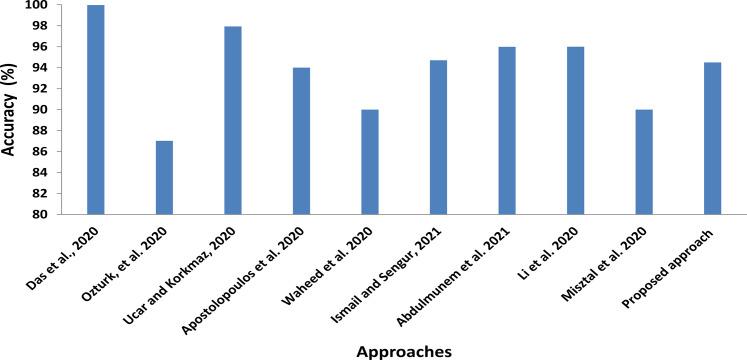
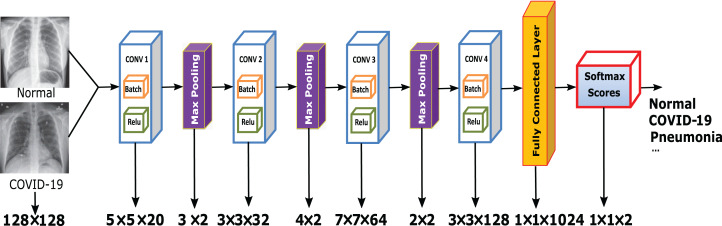
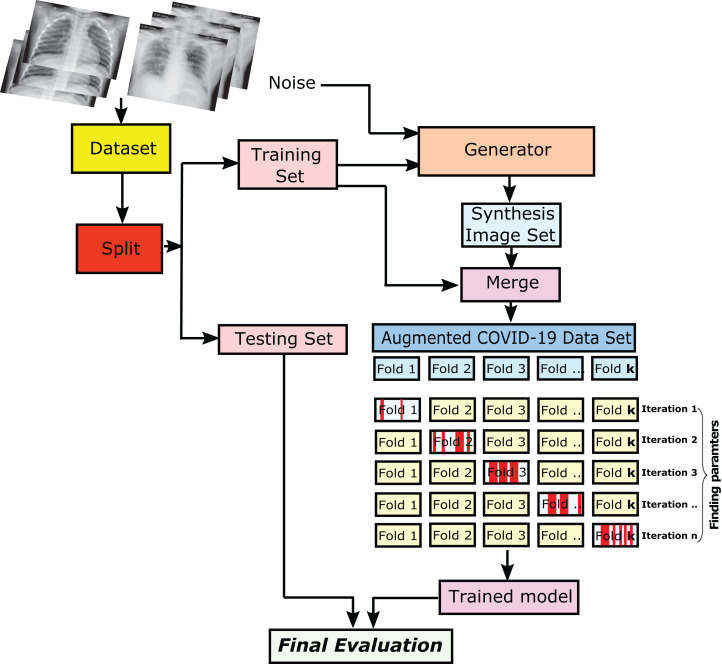
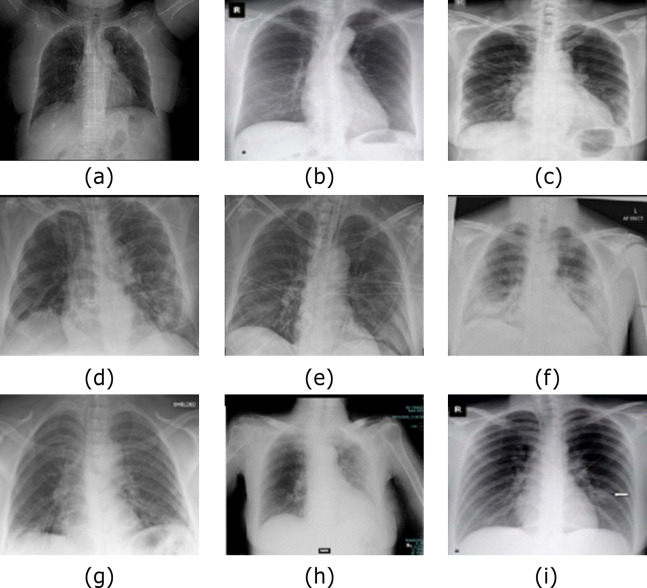
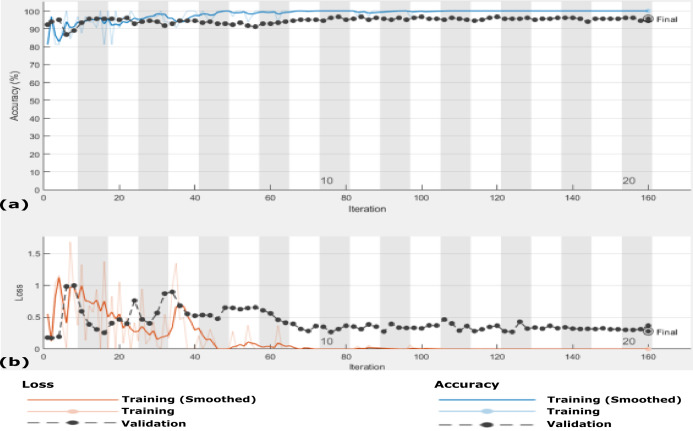
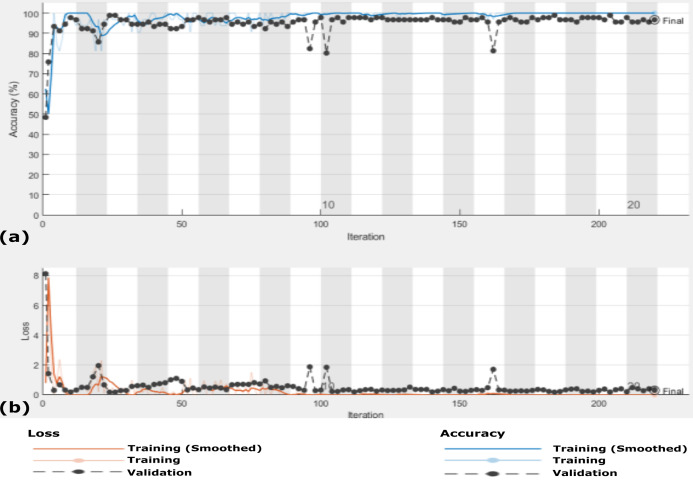
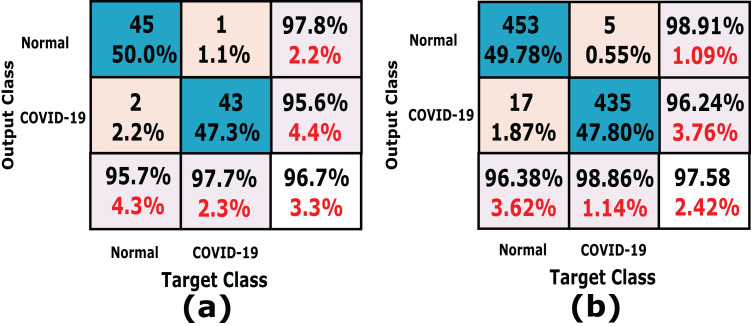
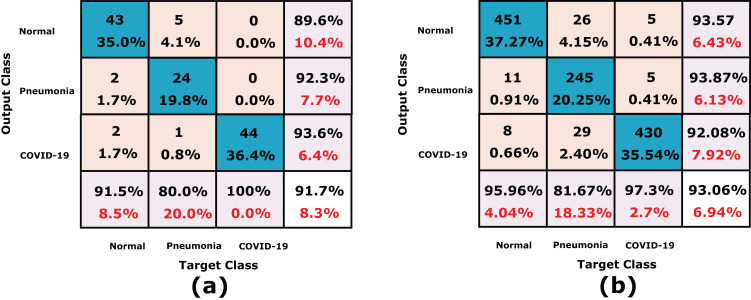
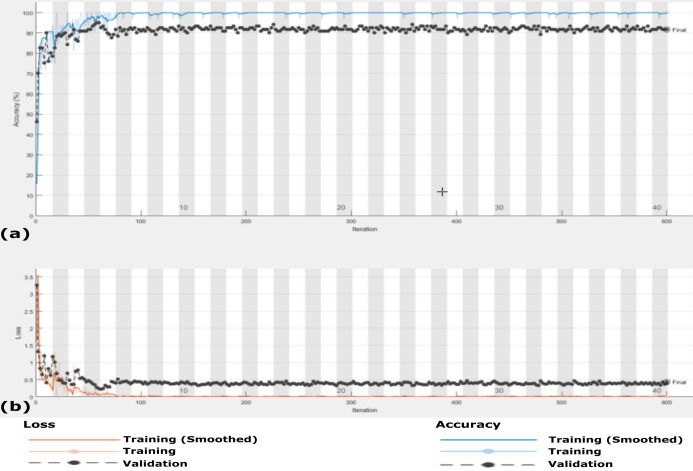
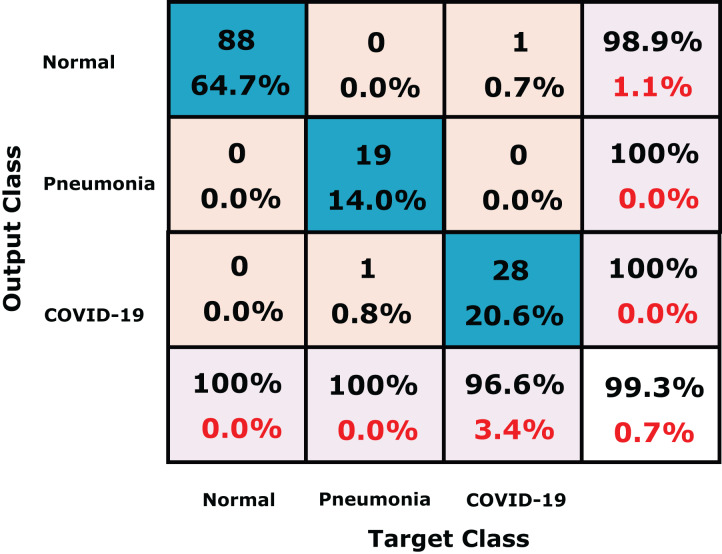
Chest X-ray (CXR) imaging is one of the most feasible diagnosis modalities for early detection of the infection of COVID-19 viruses, which is classified as a pandemic according to the World Health Organization (WHO) report in December 2019. COVID-19 is a rapid natural mutual virus that belongs to the coronavirus family. CXR scans are one of the vital tools to early detect COVID-19 to monitor further and control its virus spread. Classification of COVID-19 aims to detect whether a subject is infected or not. In this article, a model is proposed for analyzing and evaluating grayscale CXR images called Chest X-Ray COVID Network (CXRVN) based on three different COVID-19 X-Ray datasets. The proposed CXRVN model is a lightweight architecture that depends on a single fully connected layer representing the essential features and thus reducing the total memory usage and processing time verse pre-trained models and others. The CXRVN adopts two optimizers: mini-batch gradient descent and Adam optimizer, and the model has almost the same performance. Besides, CXRVN accepts CXR images in grayscale that are a perfect image representation for CXR and consume less memory storage and processing time. Hence, CXRVN can analyze the CXR image with high accuracy in a few milliseconds. The consequences of the learning process focus on decision making using a scoring function called SoftMax that leads to high rate true-positive classification. The CXRVN model is trained using three different datasets and compared to the pre-trained models: GoogleNet, ResNet and AlexNet, using the fine-tuning and transfer learning technologies for the evaluation process. To verify the effectiveness of the CXRVN model, it was evaluated in terms of the well-known performance measures such as precision, sensitivity, 1-score and accuracy. The evaluation results based on sensitivity, precision, recall, accuracy, and F1 score demonstrated that, after GAN augmentation, the accuracy reached 96.7% in experiment 2 (Dataset-2) for two classes and 93.07% in experiment-3 (Dataset-3) for three classes, while the average accuracy of the proposed CXRVN model is 94.5%.
胸部X光(CXR)成像是早期检测新型冠状病毒肺炎(COVID-19)病毒感染最可行的诊断方式之一,根据世界卫生组织(WHO)2019年12月的报告,COVID-19被列为大流行病。COVID-19是一种快速自然传播的病毒,属于冠状病毒家族。胸部X光扫描是早期检测COVID-19以进一步监测和控制其病毒传播的重要工具之一。COVID-19的分类旨在检测一个人是否被感染。在本文中,基于三个不同的COVID-19 X光数据集,提出了一种用于分析和评估灰度CXR图像的模型,称为胸部X光COVID网络(CXRVN)。所提出的CXRVN模型是一种轻量级架构,它依赖于一个表示基本特征的单一全连接层,从而减少了总内存使用量和处理时间,优于预训练模型和其他模型。CXRVN采用两种优化器:小批量梯度下降和Adam优化器,并且该模型具有几乎相同的性能。此外,CXRVN接受灰度的CXR图像,这是CXR的完美图像表示,占用更少的内存存储和处理时间。因此,CXRVN可以在几毫秒内高精度地分析CXR图像。学习过程的结果集中在使用称为SoftMax的评分函数进行决策,这导致了高比率的真阳性分类。CXRVN模型使用三个不同的数据集进行训练,并与预训练模型GoogleNet、ResNet和AlexNet进行比较,在评估过程中使用微调技术和迁移学习技术。为了验证CXRVN模型的有效性,根据精度、灵敏度、F1分数和准确率等著名的性能指标对其进行评估。基于灵敏度、精度、召回率、准确率和F1分数的评估结果表明,在进行生成对抗网络(GAN)增强后,在实验2(数据集2)中,两类的准确率达到96.7%,在实验3(数据集3)中三类的准确率达到93.07%,而所提出的CXRVN模型的平均准确率为94.5%。