Abdulsalam Hamwi Wael, Almustafa Muhammad Mazen
Department of Web Technologies, Syrian Virtual University, Syria.
Inform Med Unlocked. 2022;32:101004. doi: 10.1016/j.imu.2022.101004. Epub 2022 Jul 8.
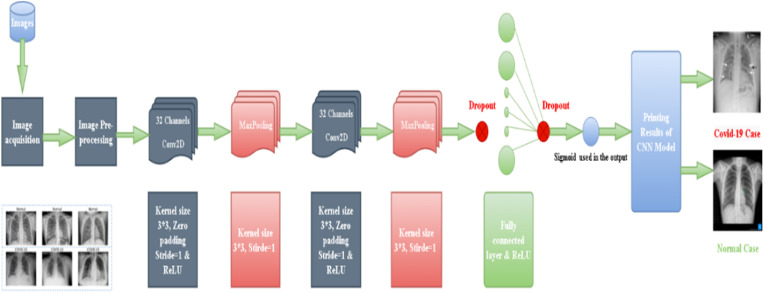
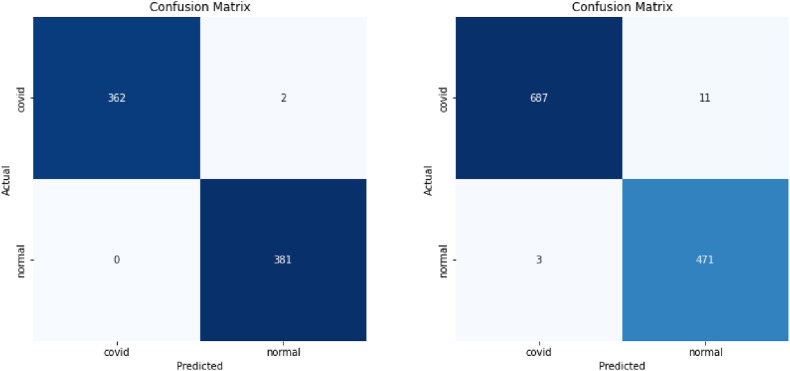
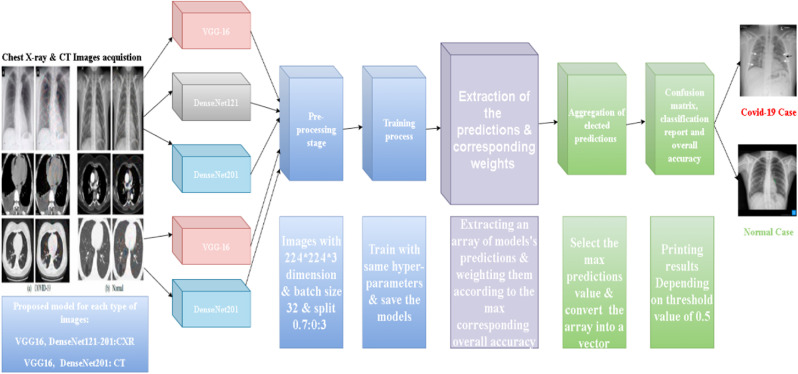
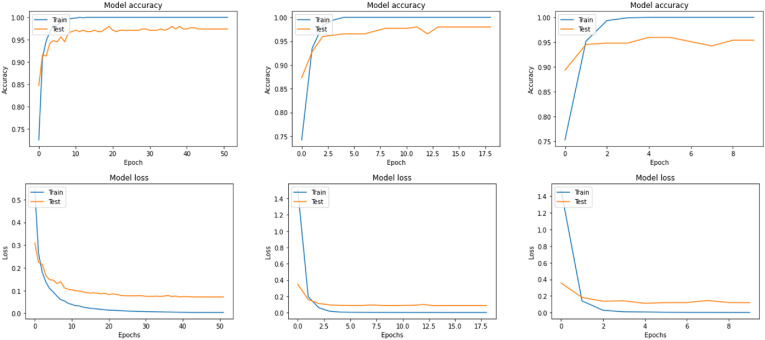
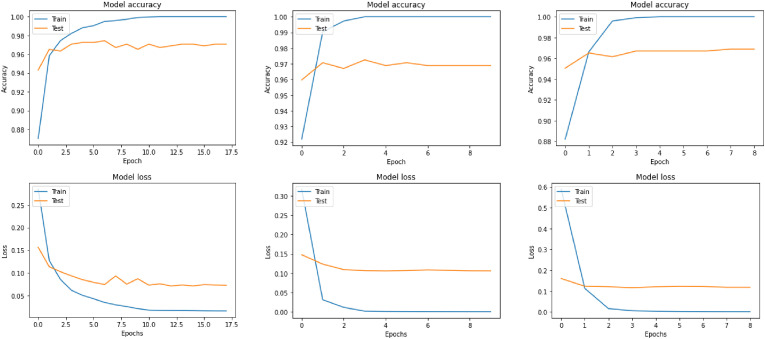
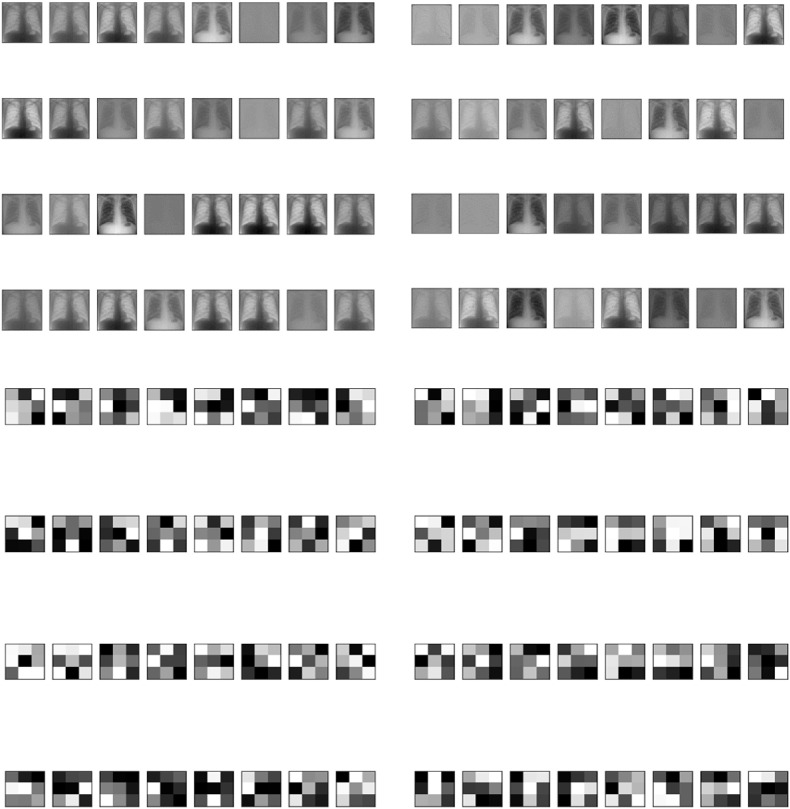
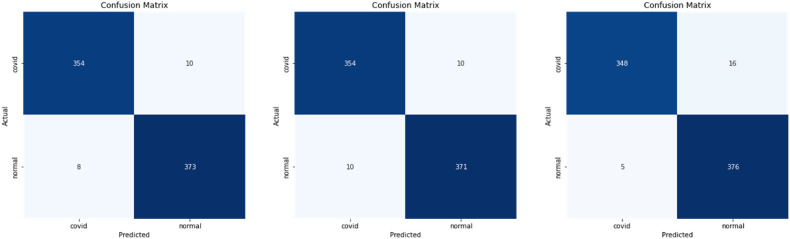
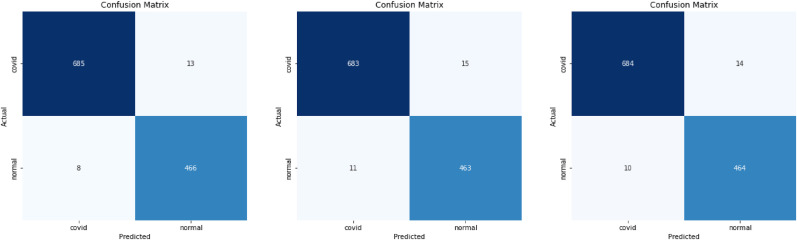
The contagious SARS-CoV-2 has had a tremendous impact on the life and health of many communities. It was first rampant in early 2019 and so far, 539 million cases of COVID-19 have been reported worldwide. This is reminiscent of the 1918 influenza pandemic. However, we can detect the infected cases of COVID-19 by analysing either X-rays or CT, which are presumably considered the least expensive methods. In the existence of state-of-the-art convolutional neural networks (CNNs), which integrate image pre-processing techniques with fully connected layers, we can develop a sophisticated AI system contingent on various pre-trained models. Each pre-trained model we involved in our study assumed its role in extracting some specific features from different chest image datasets in many verified sources, such as (Mendeley, Kaggle, and GitHub). First, for CXR datasets associated with the CNN trained model from the beginning, whereby is comprised of four layers beginning with the Conv2D layer, which comprises 32 filters, followed by the MaxPooling and afterwards, we reiterated similarly. We used two techniques to avoid overgeneralization, the early stopping and the Dropout techniques. After all, the output was one neuron to classify both cases of 0 or 1, followed by a sigmoid function; in addition, we used the Adam optimizer owing to the more improved outcomes than what other optimizers conducted; ultimately, we referred to our findings by using a confusion matrix, classification report (Recall & Precision), sensitivity and specificity; in this approach, we achieved a classification accuracy of 96%. Our three integrated pre-trained models (VGG16, DenseNet201, and DenseNet121) yielded a remarkable test accuracy of 98.81%. Besides, our merged models (VGG16, DenseNet201) trained on CT images with the utmost effort; this model held an accurate test of 99.73% for binary classification with the (Normal/Covid-19) scenario. Comparing our results with related studies shows that our proposed models were superior to the previous CNN machine learning models in terms of various performance metrics. Our pre-trained model associated with the CT dataset achieved 100% of the F1score and the loss value was approximately 0.00268.
具有传染性的严重急性呼吸综合征冠状病毒2(SARS-CoV-2)对许多社区的生活和健康产生了巨大影响。它于2019年初首次肆虐,截至目前,全球已报告5.39亿例新冠肺炎病例。这让人想起1918年的流感大流行。然而,我们可以通过分析X射线或CT来检测新冠肺炎感染病例,这大概被认为是最便宜的方法。在存在将图像预处理技术与全连接层相结合的先进卷积神经网络(CNN)的情况下,我们可以基于各种预训练模型开发一个复杂的人工智能系统。我们在研究中涉及的每个预训练模型都在从许多经过验证的来源(如Mendeley、Kaggle和GitHub)的不同胸部图像数据集中提取一些特定特征方面发挥了作用。首先,对于一开始与CNN训练模型相关的胸部X光(CXR)数据集,它由四层组成,从包含32个滤波器的Conv2D层开始,接着是最大池化层,之后我们类似地进行重复。我们使用了两种技术来避免过度泛化,即早期停止和随机失活(Dropout)技术。毕竟,输出是一个神经元,用于对0或1两种情况进行分类,后面跟着一个 sigmoid 函数;此外,由于比其他优化器有更优的结果,我们使用了Adam优化器;最终,我们通过使用混淆矩阵、分类报告(召回率和精确率)、灵敏度和特异性来阐述我们的发现;通过这种方法,我们实现了96%的分类准确率。我们的三个集成预训练模型(VGG16、DenseNet201和DenseNet121)产生了98.81%的显著测试准确率。此外,我们在CT图像上全力训练的合并模型(VGG16、DenseNet201);在(正常/新冠肺炎)场景下,该模型对于二元分类的准确测试率为99.73%。将我们的结果与相关研究进行比较表明,我们提出的模型在各种性能指标方面优于先前的CNN机器学习模型。我们与CT数据集相关的预训练模型实现了100%的F1分数,损失值约为0.00268。