Elzeki Omar M, Abd Elfattah Mohamed, Salem Hanaa, Hassanien Aboul Ella, Shams Mahmoud
Faculty of Computers and Information Sciences, Mansoura University, Mansoura, Egypt.
Misr Higher Institute for Commerce and Computers, Mansoura, Egypt.
PeerJ Comput Sci. 2021 Feb 10;7:e364. doi: 10.7717/peerj-cs.364. eCollection 2021.
COVID-19 is a new strain of viruses that causes life stoppage worldwide. At this time, the new coronavirus COVID-19 is spreading rapidly across the world and poses a threat to people's health. Experimental medical tests and analysis have shown that the infection of lungs occurs in almost all COVID-19 patients. Although Computed Tomography of the chest is a useful imaging method for diagnosing diseases related to the lung, chest X-ray (CXR) is more widely available, mainly due to its lower price and results. Deep learning (DL), one of the significant popular artificial intelligence techniques, is an effective way to help doctors analyze how a large number of CXR images is crucial to performance.
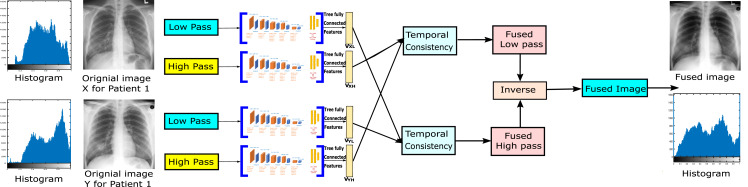
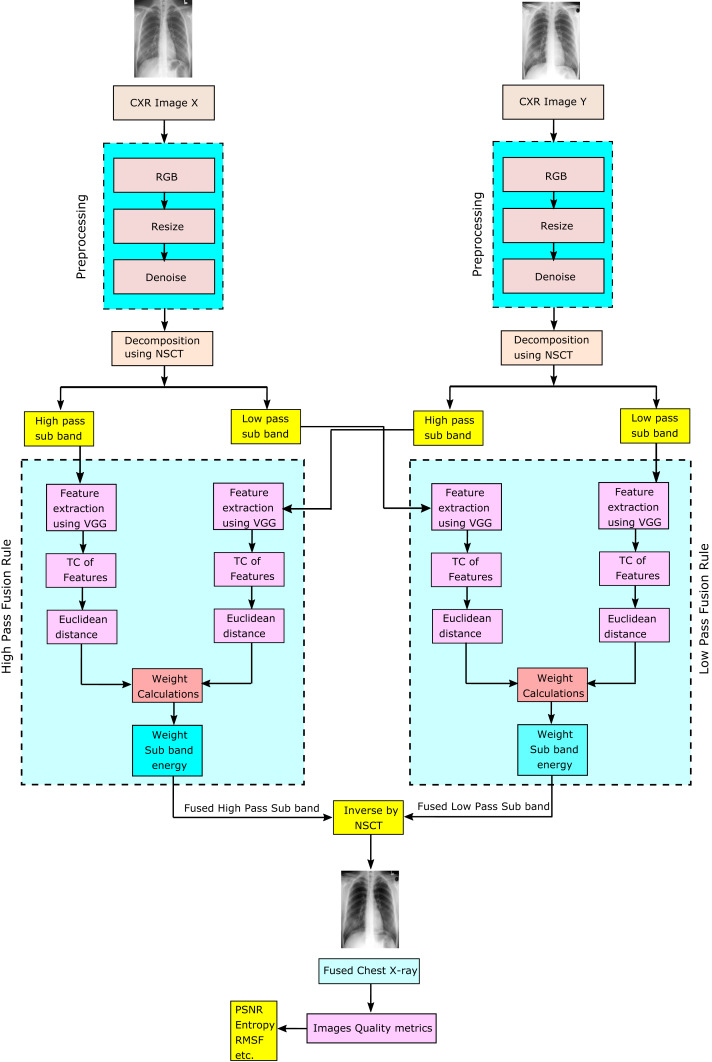
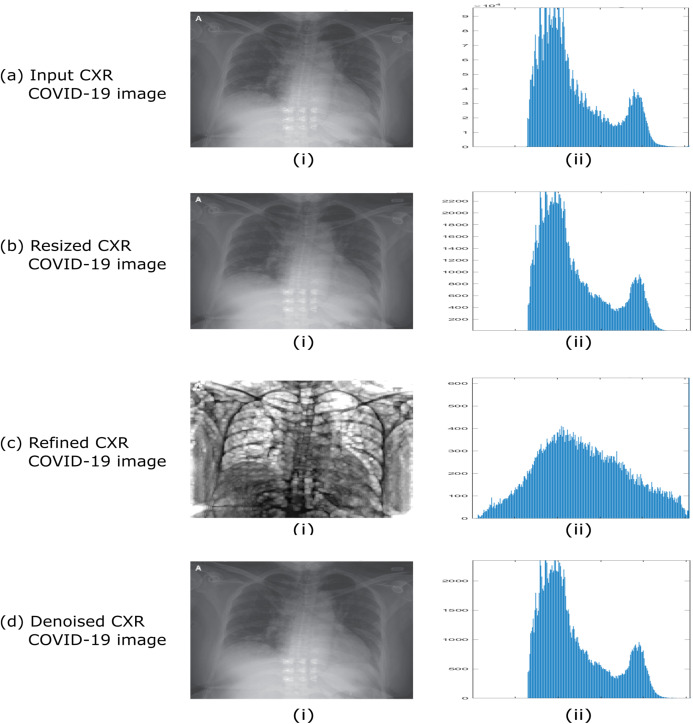
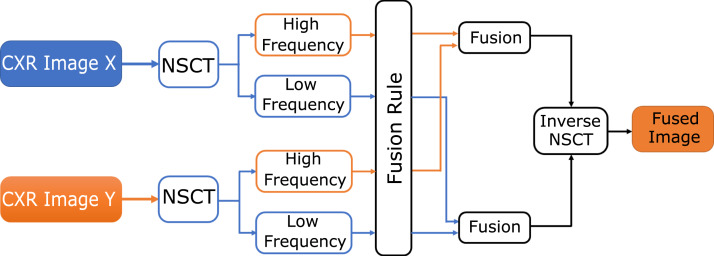
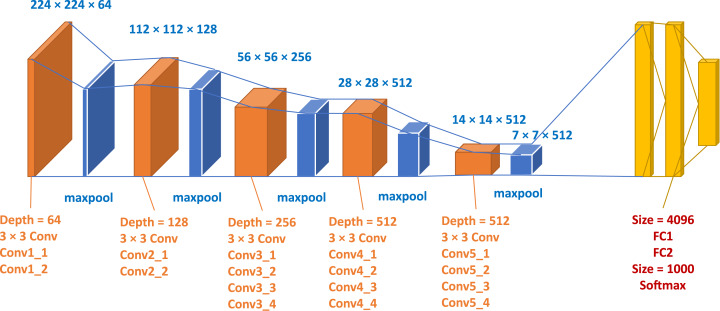
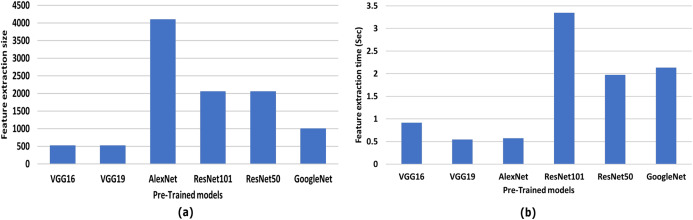
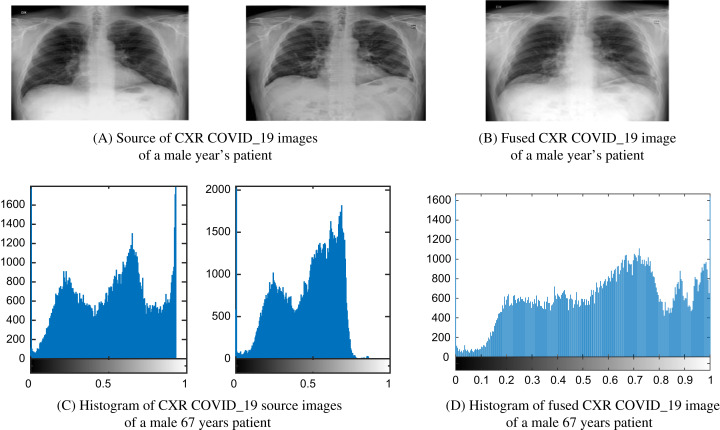
In this article, we propose a novel perceptual two-layer image fusion using DL to obtain more informative CXR images for a COVID-19 dataset. To assess the proposed algorithm performance, the dataset used for this work includes 87 CXR images acquired from 25 cases, all of which were confirmed with COVID-19. The dataset preprocessing is needed to facilitate the role of convolutional neural networks (CNN). Thus, hybrid decomposition and fusion of Nonsubsampled Contourlet Transform (NSCT) and CNN_VGG19 as feature extractor was used.
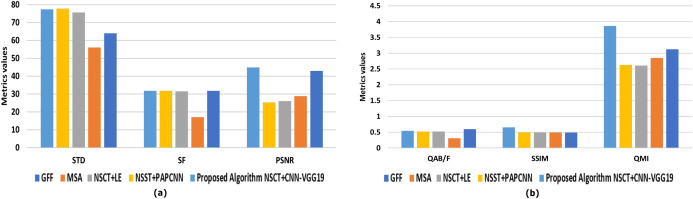
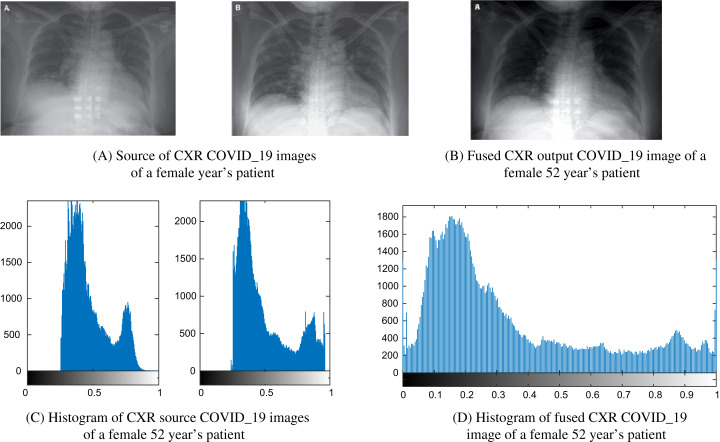
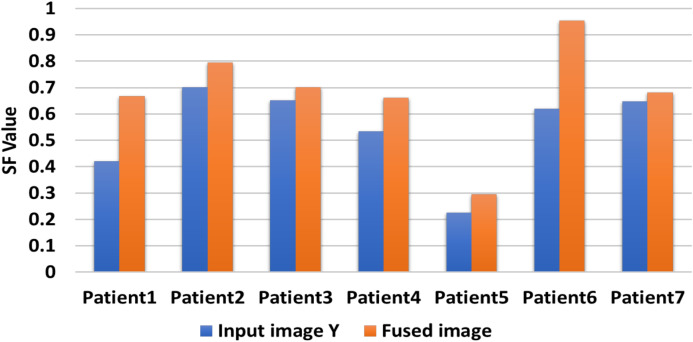
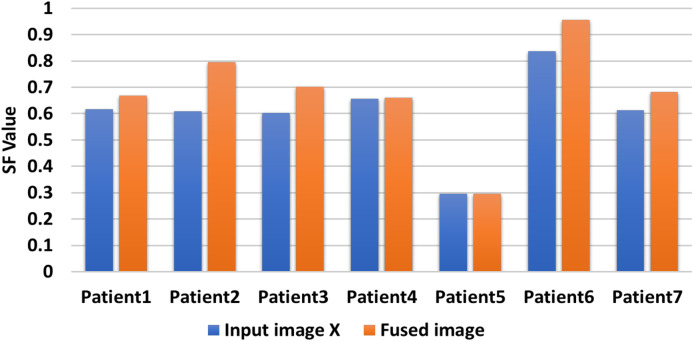
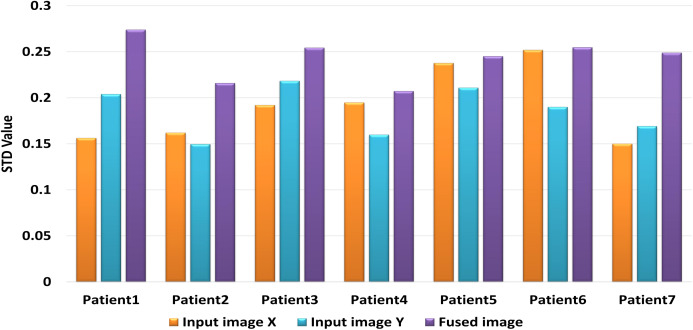
Our experimental results show that imbalanced COVID-19 datasets can be reliably generated by the algorithm established here. Compared to the COVID-19 dataset used, the fuzed images have more features and characteristics. In evaluation performance measures, six metrics are applied, such as Q, Q, PSNR, SSIM, SF, and STD, to determine the evaluation of various medical image fusion (MIF). In the Q, PSNR, SSIM, the proposed algorithm NSCT + CNN_VGG19 achieves the greatest and the features characteristics found in the fuzed image is the largest. We can deduce that the proposed fusion algorithm is efficient enough to generate CXR COVID-19 images that are more useful for the examiner to explore patient status.
A novel image fusion algorithm using DL for an imbalanced COVID-19 dataset is the crucial contribution of this work. Extensive results of the experiment display that the proposed algorithm NSCT + CNN_VGG19 outperforms competitive image fusion algorithms.
新型冠状病毒肺炎(COVID-19)是一种导致全球生活停摆的新型病毒株。目前,新型冠状病毒COVID-19正在全球迅速传播,对人们的健康构成威胁。实验医学检测与分析表明,几乎所有COVID-19患者都会出现肺部感染。虽然胸部计算机断层扫描是诊断肺部相关疾病的一种有用的成像方法,但胸部X线(CXR)因其价格更低且能给出结果,因而应用更为广泛。深度学习(DL)作为一种广受欢迎的重要人工智能技术,是帮助医生分析大量CXR图像对诊断至关重要的有效途径。
在本文中,我们提出一种新颖的基于深度学习的感知两层图像融合方法,以从COVID-19数据集中获取更多信息丰富的CXR图像。为评估所提算法的性能,本研究使用的数据集包括从25例确诊为COVID-19的病例中获取的87张CXR图像。需要对数据集进行预处理,以促进卷积神经网络(CNN)发挥作用。因此,采用了非下采样轮廓波变换(NSCT)与CNN_VGG19作为特征提取器进行混合分解与融合。
我们的实验结果表明,本文所建立的算法能够可靠地生成不均衡的COVID-19数据集。与所使用的COVID-19数据集相比,融合后的图像具有更多特征。在评估性能指标方面,应用了Q、Q、峰值信噪比(PSNR)、结构相似性指数(SSIM)、空间频率(SF)和标准差(STD)这六个指标来确定对各种医学图像融合(MIF)的评估。在Q、PSNR、SSIM方面,所提算法NSCT + CNN_VGG19表现最佳,且融合图像中发现的特征最为丰富。我们可以推断,所提融合算法足以有效地生成对检查者探索患者病情更有用的CXR COVID-19图像。
针对不均衡的COVID-19数据集提出一种基于深度学习的新型图像融合算法是本研究的关键贡献。大量实验结果表明,所提算法NSCT + CNN_VGG19优于有竞争力的图像融合算法。