Wu Zhen Yu, Lee Young Joo, Shin Yungil, Choi Soojeong, Baek Soo Yeon, Chun Jung Whan, Albinsaad Loai Saleh, Choi Woo Jung, Kim Namkug, Ko BeomSeok
Department of Breast Surgery, Shanghai East Hospital, Tongji University School of Medicine, Shanghai, China.
Division of Breast Surgery, Department of Surgery, Asan Medical Center, University of Ulsan College of Medicine, Seoul, Korea.
J Breast Cancer. 2021 Jun;24(3):349-355. doi: 10.4048/jbc.2021.24.e14. Epub 2021 Feb 26.
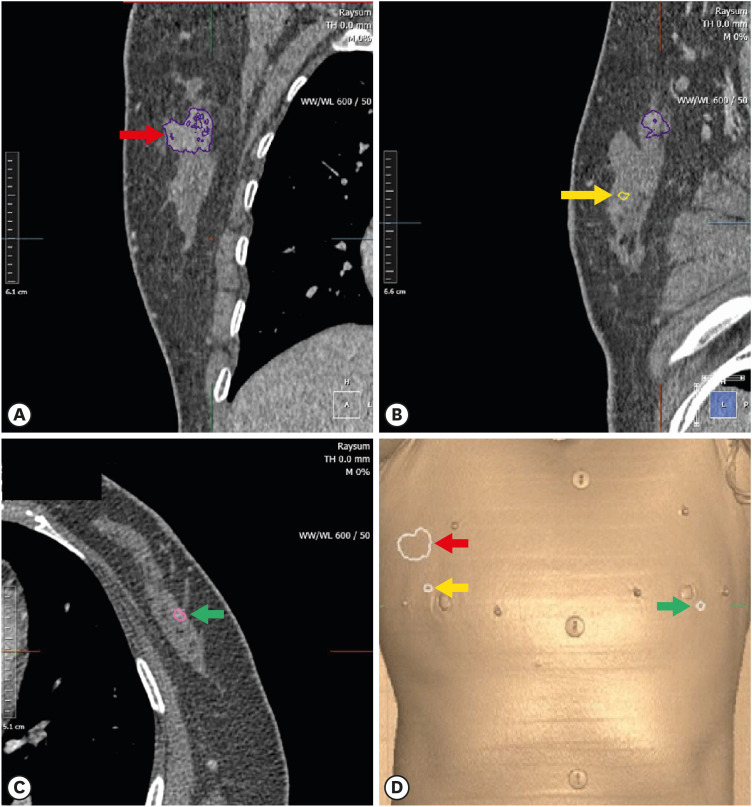
Tumor localization is challenging in the context of ductal carcinoma (DCIS) treated with breast-conserving surgery. Conventional localization methods are generally performed under the guidance of ultrasonography or mammography and are rarely performed with magnetic resonance imaging (MRI), which is more sensitive than the aforementioned modalities in detecting DCIS. Here, we report the application of MRI-based individualized 3-dimensional (3D)-printed breast surgical guides (BSGs) for patients with breast cancer. We successfully resected indeterminate and suspicious lesions that were only detected using preoperative MRI, and the final histopathologic results confirmed DCIS with clear resection margins. MRI guidance combined with 3D-printed BSGs can be used for DCIS localization, especially for lesions easily detectable using MRI only.
在接受保乳手术治疗的导管原位癌(DCIS)背景下,肿瘤定位具有挑战性。传统的定位方法通常在超声或乳腺X线摄影引导下进行,很少在磁共振成像(MRI)引导下进行,而MRI在检测DCIS方面比上述方法更敏感。在此,我们报告了基于MRI的个体化三维(3D)打印乳腺手术导板(BSG)在乳腺癌患者中的应用。我们成功切除了仅通过术前MRI检测到的不确定和可疑病变,最终组织病理学结果证实为DCIS且切缘清晰。MRI引导联合3D打印BSG可用于DCIS定位,特别是对于仅通过MRI容易检测到的病变。