College of Food Science and Nutritional Engineering, National Engineering Research Center for Fruit and Vegetable Processing, Key Laboratory of Fruits and Vegetables Processing, Ministry of Agriculture; Engineering Research Centre for Fruits and Vegetables Processing, Ministry of Education, China Agricultural University, No.17, Qinghua East Road, Haidian District, Beijing, 100083, China.
Department of Anatomy, Histology and Embryology, Health Science Center, Peking University, Beijing, China.
Microbiome. 2021 Apr 5;9(1):83. doi: 10.1186/s40168-021-01028-7.
Ulcerative colitis is a type of chronic inflammatory bowel disease closely associated with gut microbiota dysbiosis and intestinal homeostasis dysregulation. Barley leaf (BL) has a long history of use in Traditional Chinese Medicine with potential health-promoting effects on intestinal functions. However, its mechanism of action is not yet clear. Here, we explore the potential modulating roles of gut microbial metabolites of BL to protect against colitis and elucidate the underlying molecular mechanisms.
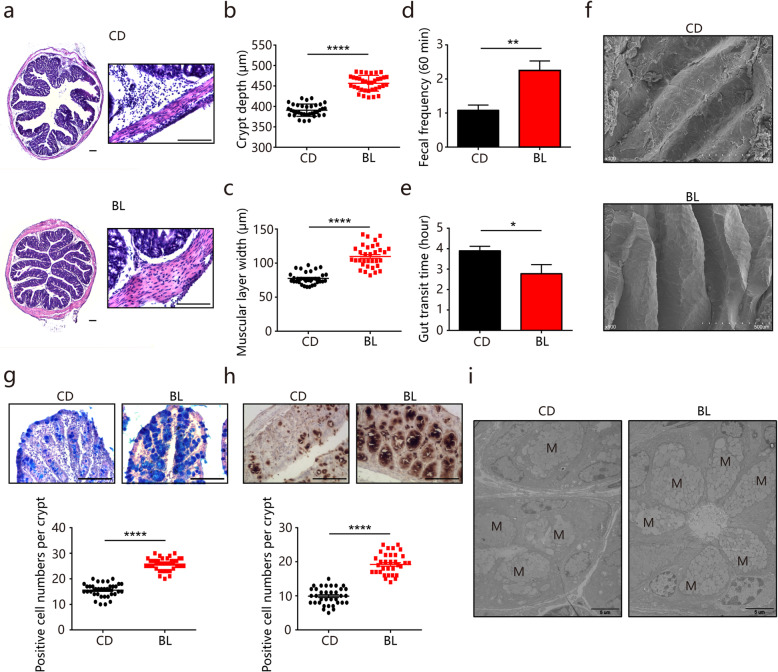
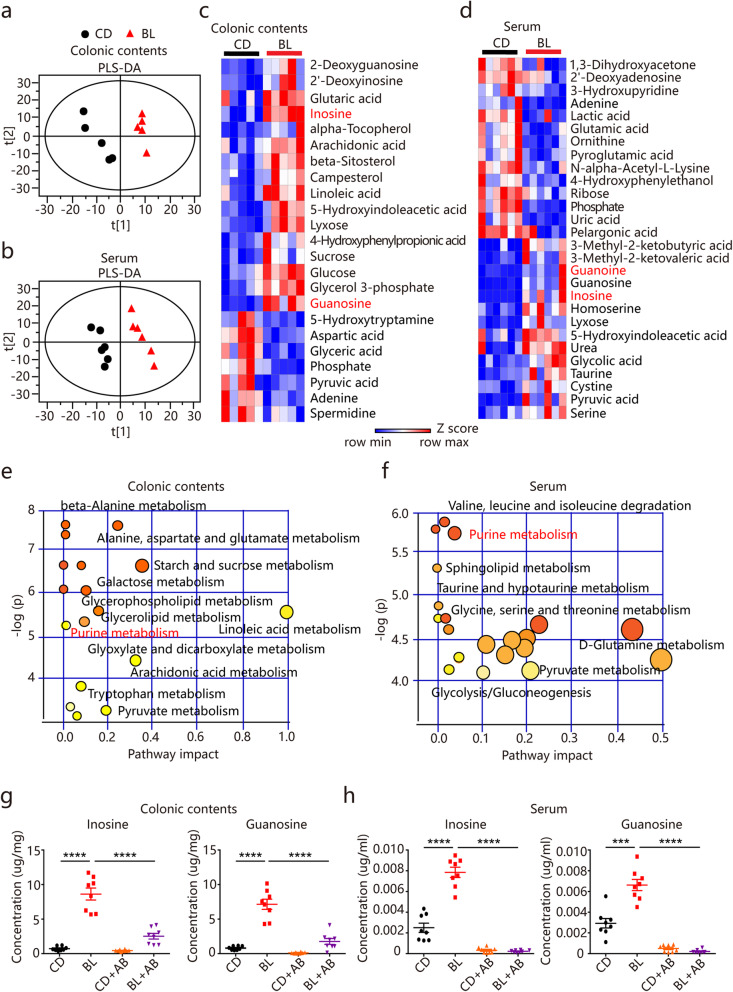
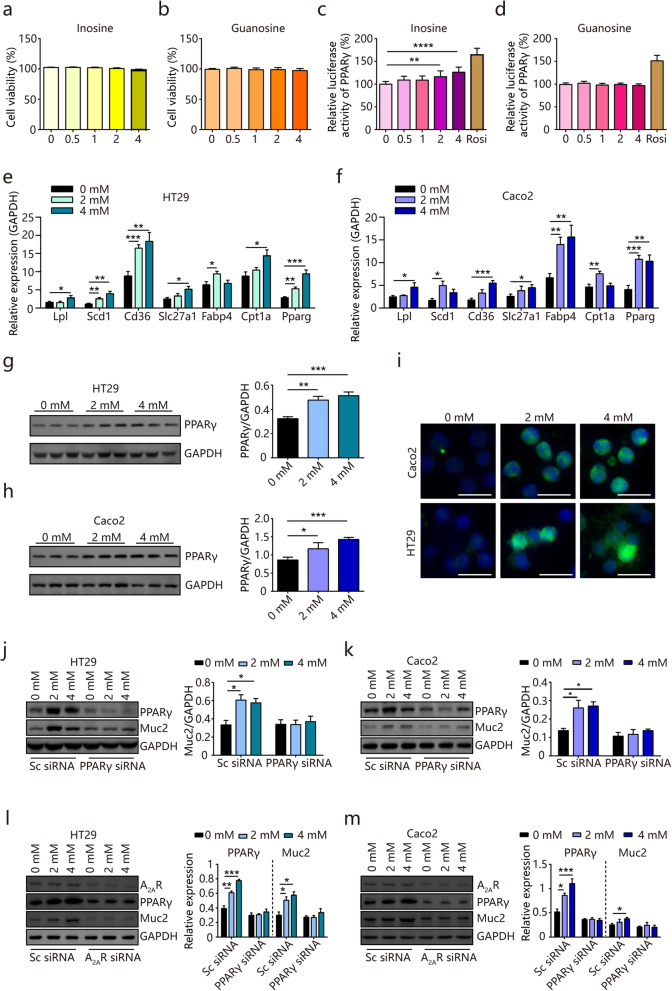
Using 16S rRNA gene-based microbiota analysis, we first found that dietary supplementation of BL ameliorated dextran sulfate sodium (DSS)-induced gut microbiota dysbiosis. The mechanisms by which BL protected against DSS-induced colitis were resulted from improved intestinal mucosal barrier functions via the activation of peroxisome proliferator-activated receptor (PPAR)γ signaling. In addition, metabolomic profiling analysis showed that the gut microbiota modulated BL-induced metabolic reprograming in the colonic tissues particularly by the enhancement of glycolysis process. Notably, dietary BL supplementation resulted in the enrichment of microbiota-derived purine metabolite inosine, which could activate PPARγ signaling in human colon epithelial cells. Furthermore, exogenous treatment of inosine reproduced similar protective effects as BL to protect against DSS-induced colitis through improving adenosine 2A receptor (AR)/PPARγ-dependent mucosal barrier functions.
Overall, our findings suggest that the gut microbiota-inosine-AR/PPARγ axis plays an important role in the maintenance of intestinal homeostasis, which may represent a novel approach for colitis prevention via manipulation of the gut microbial purine metabolite. Video Abstract.
溃疡性结肠炎是一种与肠道微生物失调和肠道内稳态失调密切相关的慢性炎症性肠病。大麦叶(BL)在中药中有悠久的应用历史,对肠道功能具有潜在的促进健康作用。然而,其作用机制尚不清楚。在这里,我们探索了 BL 肠道微生物代谢物对预防结肠炎的潜在调节作用,并阐明了潜在的分子机制。
使用 16S rRNA 基因的微生物分析,我们首先发现,BL 的饮食补充可改善葡聚糖硫酸钠(DSS)诱导的肠道微生物失调。BL 预防 DSS 诱导的结肠炎的机制是通过激活过氧化物酶体增殖物激活受体(PPAR)γ信号来改善肠道黏膜屏障功能。此外,代谢组学分析显示,肠道微生物群调节了 BL 诱导的结肠组织中的代谢重编程,特别是通过增强糖酵解过程。值得注意的是,BL 的饮食补充导致微生物衍生嘌呤代谢物肌苷的富集,肌苷可激活人结肠上皮细胞中的 PPARγ 信号。此外,外源性肌苷处理可通过改善腺苷 2A 受体(AR)/PPARγ 依赖性黏膜屏障功能,产生与 BL 类似的保护作用,以预防 DSS 诱导的结肠炎。
总的来说,我们的研究结果表明,肠道微生物群-肌苷-AR/PPARγ 轴在维持肠道内稳态中起着重要作用,这可能代表了通过操纵肠道微生物嘌呤代谢物预防结肠炎的一种新方法。