Departamento de Bioquímica, Facultad de Medicina, Universidad Nacional Autónoma de México (UNAM), Mexico City, Mexico.
Front Endocrinol (Lausanne). 2021 Mar 22;12:627745. doi: 10.3389/fendo.2021.627745. eCollection 2021.
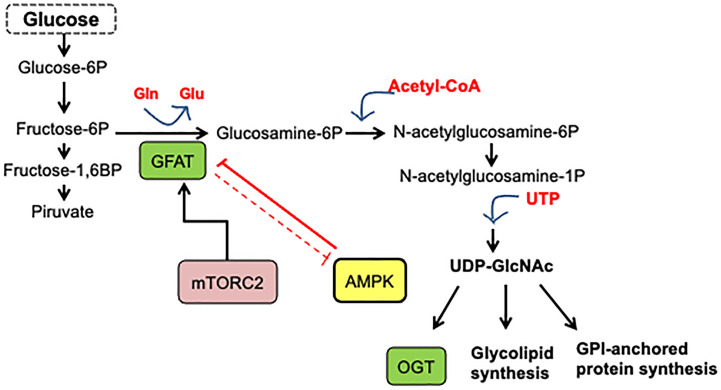
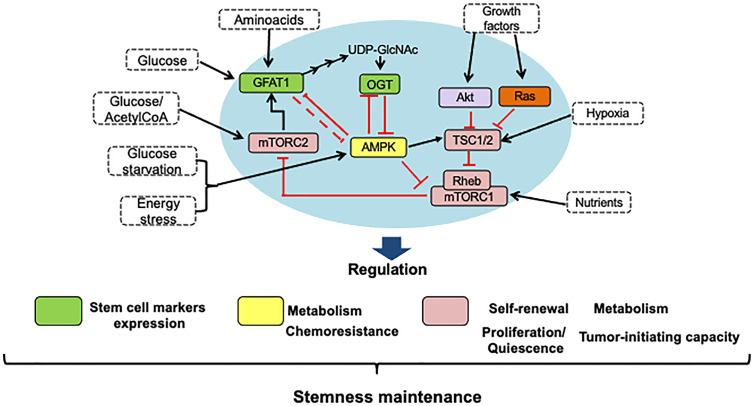
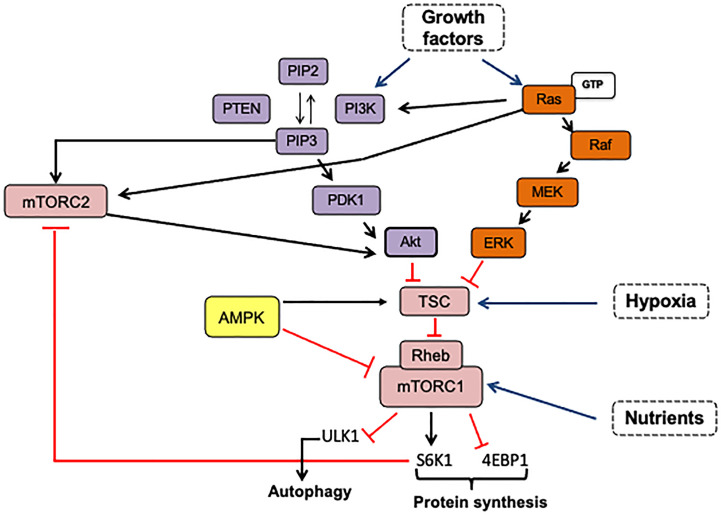
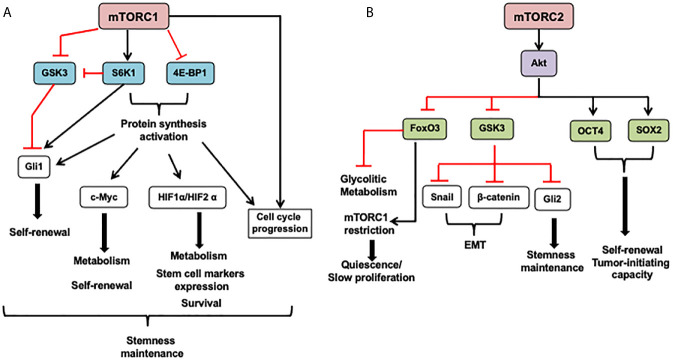
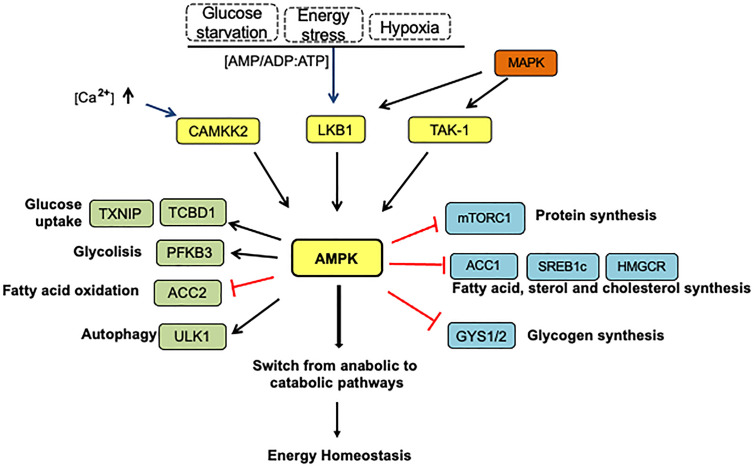
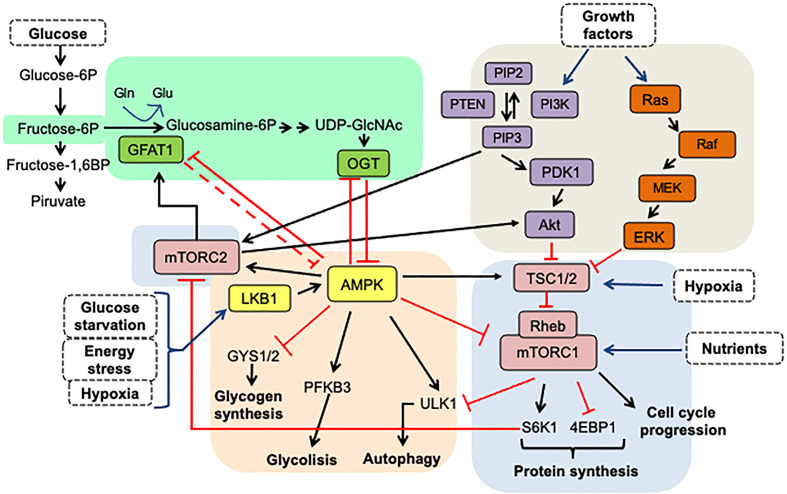
Cancer cells characteristically have a high proliferation rate. Because tumor growth depends on energy-consuming anabolic processes, including biosynthesis of protein, lipid, and nucleotides, many tumor-associated conditions, including intermittent oxygen deficiency due to insufficient vascularization, oxidative stress, and nutrient deprivation, results from fast growth. To cope with these environmental stressors, cancer cells, including cancer stem cells, must adapt their metabolism to maintain cellular homeostasis. It is well- known that cancer stem cells (CSC) reprogram their metabolism to adapt to live in hypoxic niches. They usually change from oxidative phosphorylation to increased aerobic glycolysis even in the presence of oxygen. However, as opposed to most differentiated cancer cells relying on glycolysis, CSCs can be highly glycolytic or oxidative phosphorylation-dependent, displaying high metabolic plasticity. Although the influence of the metabolic and nutrient-sensing pathways on the maintenance of stemness has been recognized, the molecular mechanisms that link these pathways to stemness are not well known. Here in this review, we describe the most relevant signaling pathways involved in nutrient sensing and cancer cell survival. Among them, Adenosine monophosphate (AMP)-activated protein kinase (AMPK) pathway, mTOR pathway, and Hexosamine Biosynthetic Pathway (HBP) are critical sensors of cellular energy and nutrient status in cancer cells and interact in complex and dynamic ways.
癌细胞通常具有较高的增殖率。由于肿瘤生长依赖于能量消耗的合成代谢过程,包括蛋白质、脂质和核苷酸的生物合成,许多与肿瘤相关的情况,包括由于血管化不足导致的间歇性缺氧、氧化应激和营养剥夺,都是由于快速生长而产生的。为了应对这些环境应激源,包括癌症干细胞在内的癌细胞必须调整其代谢以维持细胞内稳态。众所周知,癌症干细胞(CSC)会重新编程其代谢以适应缺氧微环境。即使在有氧气的情况下,它们通常也会从氧化磷酸化转变为增加的有氧糖酵解。然而,与大多数依赖糖酵解的分化癌细胞不同,CSC 可以高度依赖糖酵解或氧化磷酸化,表现出高度的代谢可塑性。尽管已经认识到代谢和营养感应途径对维持干细胞特性的影响,但将这些途径与干细胞特性联系起来的分子机制尚不清楚。在这篇综述中,我们描述了参与营养感应和癌细胞存活的最相关信号通路。其中,单磷酸腺苷(AMP)激活的蛋白激酶(AMPK)通路、雷帕霉素靶蛋白(mTOR)通路和己糖胺生物合成途径(HBP)是癌细胞中细胞能量和营养状态的关键传感器,它们以复杂和动态的方式相互作用。