Akinbo Olalekan, Obukosia Silas, Ouedraogo Jeremy, Sinebo Woldeyesus, Savadogo Moussa, Timpo Samuel, Mbabazi Ruth, Maredia Karim, Makinde Diran, Ambali Aggrey
Centre of Excellence for Rural Resources and Food Systems, Diran Makinde Center, African Union Development Agency-NEPAD, Ouagadougou, Burkina Faso.
Centre of Excellence for Human Capital Institutions Development, African Union Development Agency-NEPAD, Nairobi, Kenya.
Front Plant Sci. 2021 Mar 22;12:605937. doi: 10.3389/fpls.2021.605937. eCollection 2021.
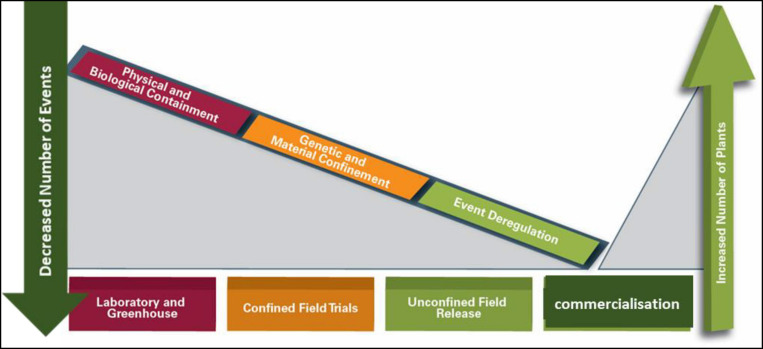
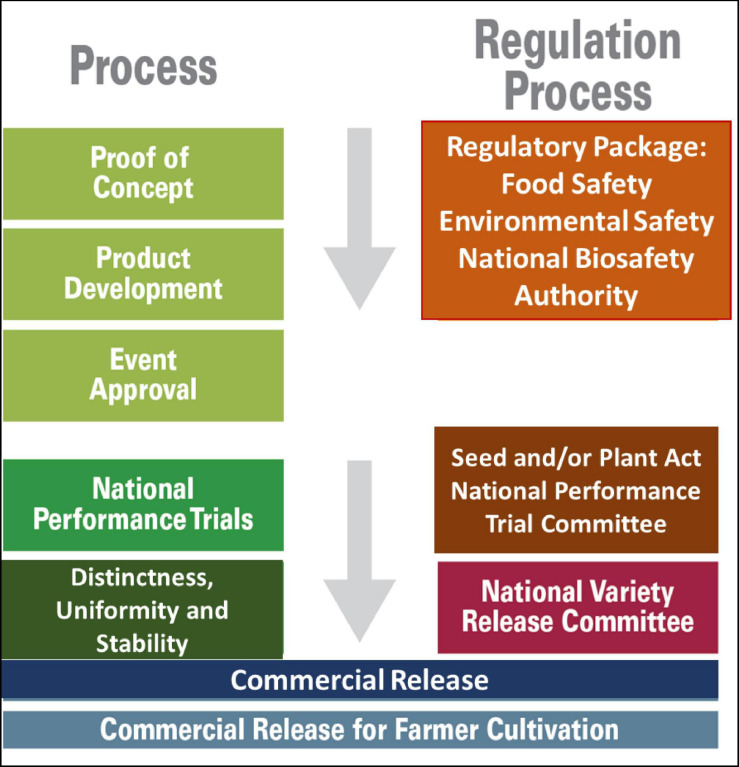
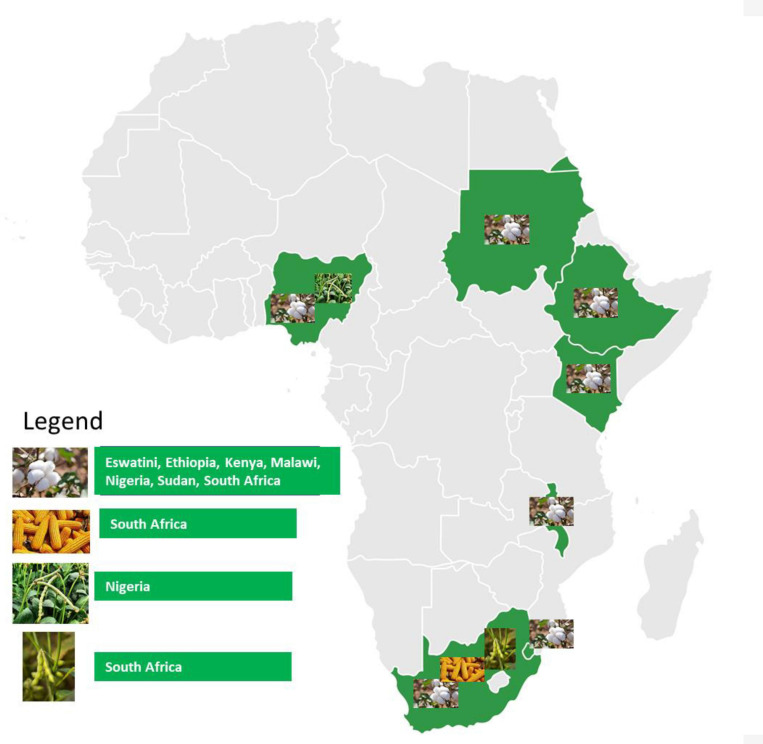
African countries face key challenges in the deployment of GM crops due to incongruities in the processes for effective and efficient commercial release while simultaneously ensuring food and environmental safety. Against the backdrop of the preceding scenario, and for the effective and efficient commercial release of GM crops for cultivation by farmers, while simultaneously ensuring food and environmental safety, there is a need for the close collaboration of and the interplay between the biosafety competent authorities and the variety release authorities. The commercial release of genetically modified (GM) crops for cultivation requires the approval of biosafety regulatory packages. The evaluation and approval of lead events fall under the jurisdiction of competent national authorities for biosafety (which may be ministries, autonomous authorities, or agencies). The evaluation of lead events fundamentally comprises a review of environmental, food, and feed safety data as provided for in the Biosafety Acts, implementing regulations, and, in some cases, the involvement of other relevant legal instruments. Although the lead GM event may be commercially released for farmers to cultivate, it is often introgressed into locally adapted and farmer preferred non-GM cultivars that are already released and grown by the farmers. The introduction of new biotechnology products to farmers is a process that includes comprehensive testing in the laboratory, greenhouse, and field over some time. The process provides answers to questions about the safety of the products before being introduced into the environment and marketplace. This is the first step in regulatory approvals. The output of the research and development phase of the product development cycle is the identification of a safe and best performing event for advancement to regulatory testing, likely commercialization, and general release. The process of the commercial release of new crop varieties in countries with established formal seed systems is guided by well-defined procedures and approval systems and regulated by the Seed Acts and implemented regulations. In countries with seed laws, no crop varieties are approved for commercial cultivation prior to the fulfillment of the national performance trials and the distinctness, uniformity, and stability tests, as well as prior to the approval by the National Variety Release Committee. This review outlines key challenges faced by African countries in the deployment of GM crops and cites lessons learned as well as best practices from countries that have successfully commercialized genetically engineered crops.
由于在有效且高效的商业化放行过程中存在不协调之处,同时还要确保食品安全和环境安全,非洲国家在转基因作物的推广方面面临重大挑战。在上述背景下,为了让转基因作物能够有效且高效地商业化放行以供农民种植,同时确保食品安全和环境安全,生物安全主管部门和品种放行部门需要密切协作并相互配合。转基因作物用于种植的商业化放行需要生物安全监管包的批准。主要事件的评估和批准由国家生物安全主管部门(可能是部委、自治机构或代理机构)负责。主要事件的评估从根本上包括对《生物安全法》、实施条例以及某些情况下其他相关法律文书所规定的环境、食品和饲料安全数据的审查。尽管主要转基因事件可能会被商业化放行以供农民种植,但它通常会被导入到农民已经种植的、适应当地环境且受农民青睐的非转基因品种中。向农民引入新的生物技术产品是一个需要在实验室、温室和田间进行一段时间全面测试的过程。这个过程在产品被引入环境和市场之前,回答了有关产品安全性的问题。这是监管批准的第一步。产品开发周期研发阶段的产出是确定一个安全且表现最佳的事件,以便推进到监管测试、可能的商业化和全面放行。在拥有成熟正规种子系统的国家,新作物品种的商业化放行过程由明确的程序和批准系统指导,并受《种子法》及实施条例监管。在有种子法律的国家,在完成国家性能试验、特异性、一致性和稳定性测试以及获得国家品种放行委员会批准之前,任何作物品种都不会被批准用于商业种植。本综述概述了非洲国家在转基因作物推广方面面临的主要挑战,并列举了从已成功实现转基因作物商业化的国家吸取的经验教训以及最佳做法。