Department of Community and Global Health, Graduate School of Medicine, The University of Tokyo, Tokyo, Japan.
Department of Health Sciences, Faculty of Medical Sciences, Kyushu University, Fukuoka, Japan.
J Glob Health. 2021 Mar 27;11:04017. doi: 10.7189/jogh.11.04017.
Improving maternal and newborn health remains one of the most critical public health challenges, particularly in low- and lower-middle-income countries. To overcome this challenge, interventions to improve the continuum of care based on real-world settings need to be provided. The Ghana Ensure Mothers and Babies Regular Access to Care (EMBRACE) Implementation Research Team conducted a unique intervention program involving over 21 000 women to improve the continuum of care, thereby demonstrating an intervention program's effectiveness in a real-world setting. This study evaluates the implementation process of the EMBRACE intervention program based on the RE-AIM framework.
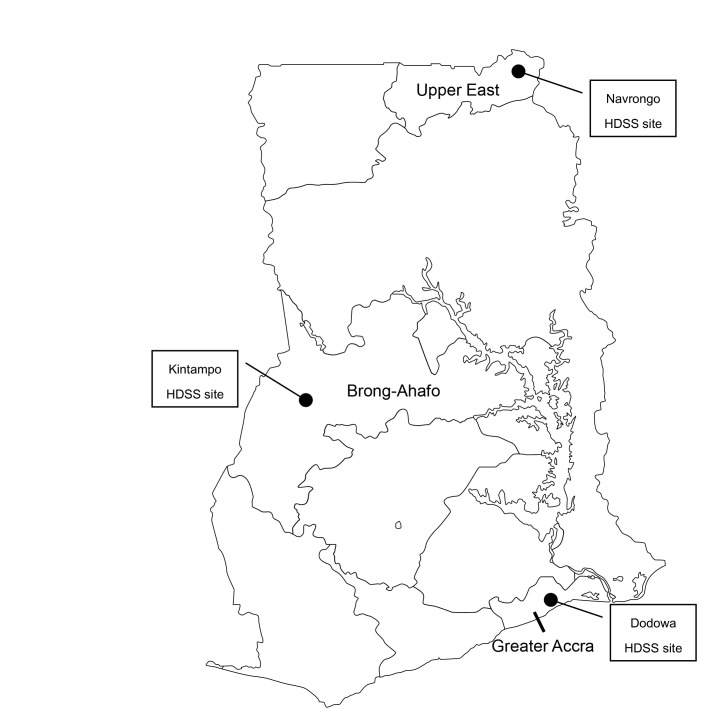
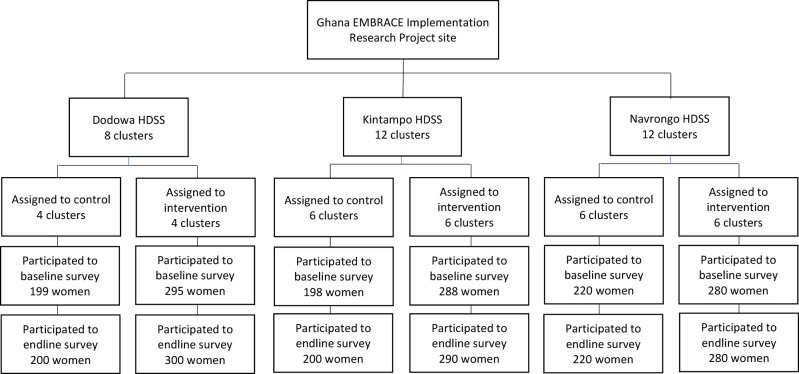
A cluster-randomized controlled trial was conducted in 32 sub-district-based clusters in Ghana. Interventions comprised of four components, and to evaluate the implementation process, we conducted baseline and endline questionnaire surveys for women who gave birth and lived in the study site. The key informant interviews of health workers and intervention monitoring were conducted at the health facilities in the intervention area. The data were analyzed using 34 components of the RE-AIM framework and classified under five general criteria (Reach, Effectiveness, Adoption, Implementation, and Maintenance).
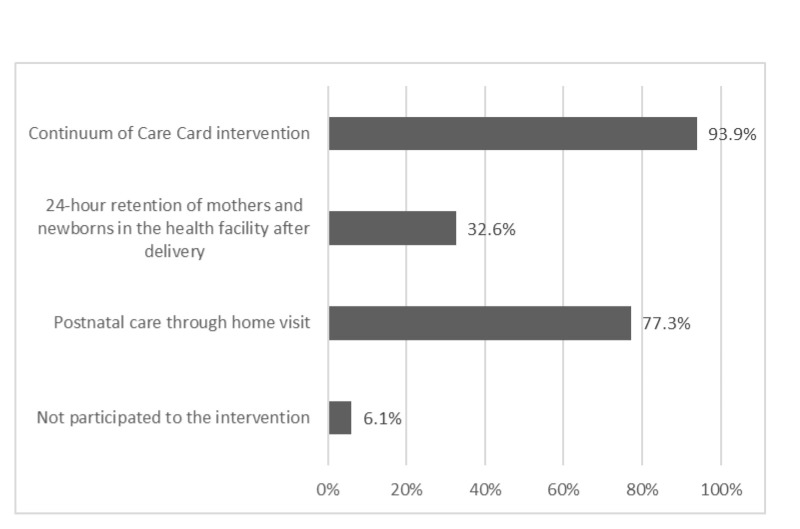
In total, 1480 and 1490 women participated in the baseline and endline questionnaire survey, respectively. In the intervention area, 83.8% of women participated (reach). The completion rate of the continuum of care increased from 7.5% to 47.1%. Newborns who had danger signs immediately after birth decreased after the intervention (relative risk = 0.82, 95% confidence interval = 0.68-0.99) (effectiveness). In the intervention area, 94% of all health facilities participated. Mothers willing to use their continuum of care cards in future pregnancies reached 87% (adoption). Supervision and manual use resolved the logistical and human resource challenges identified initially (implementation). The government included the continuum of care measures in their routine program and developed a new Maternal and Child Health Record Book, which was successfully disseminated nationwide (maintenance).
Following the RE-AIM framework evaluation, the EMBRACE intervention program was considered effective and as having great potential for scaling across in real-world settings, especially where the continuum of care needs to be improved.
ISRCTN 90618993.
改善母婴健康仍然是最具挑战性的公共卫生问题之一,尤其是在低收入和中低收入国家。为了克服这一挑战,需要提供基于真实环境的改善护理连续性的干预措施。加纳确保母婴定期获得护理(EMBRACE)实施研究小组开展了一项独特的干预项目,涉及超过 21000 名妇女,以改善护理连续性,从而展示了现实环境中干预项目的有效性。本研究基于 RE-AIM 框架评估了 EMBRACE 干预项目的实施过程。
在加纳的 32 个分区基础的集群中开展了一项集群随机对照试验。干预措施包括四个部分,为了评估实施过程,我们对在研究现场分娩和居住的妇女进行了基线和终点问卷调查。在干预地区的卫生设施进行了卫生工作者的关键知情人访谈和干预监测。使用 RE-AIM 框架的 34 个组成部分进行数据分析,并分为五个一般标准(覆盖范围、效果、采用、实施和维护)。
共有 1480 名妇女参加了基线问卷调查,1490 名妇女参加了终点问卷调查。在干预地区,有 83.8%的妇女参加了(覆盖范围)。连续护理的完成率从 7.5%增加到 47.1%。新生儿出生后立即出现危险信号的情况在干预后减少(相对风险=0.82,95%置信区间=0.68-0.99)(效果)。在干预地区,所有卫生设施中有 94%参与。在未来怀孕时愿意使用连续护理卡的母亲达到 87%(采用)。监督和手册使用解决了最初确定的后勤和人力资源挑战(实施)。政府将连续护理措施纳入其常规方案,并开发了一本新的母婴健康记录簿,该记录簿成功在全国范围内传播(维护)。
根据 RE-AIM 框架评估,EMBRACE 干预项目被认为是有效的,并且具有在现实环境中扩大规模的巨大潜力,特别是在需要改善护理连续性的地方。
ISRCTN 90618993。