Institute of Analytical Chemistry, Chemo- and Biosensors, University of Regensburg, Regensburg, Germany.
Mikrochim Acta. 2021 Apr 7;188(5):159. doi: 10.1007/s00604-021-04792-3.
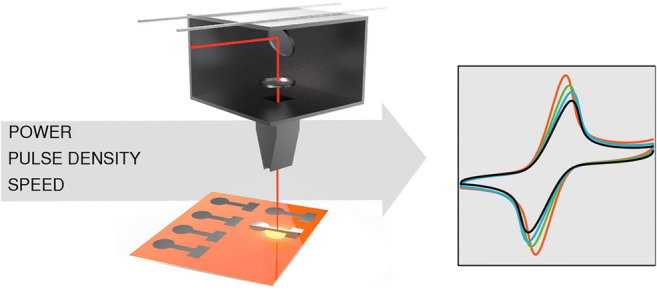
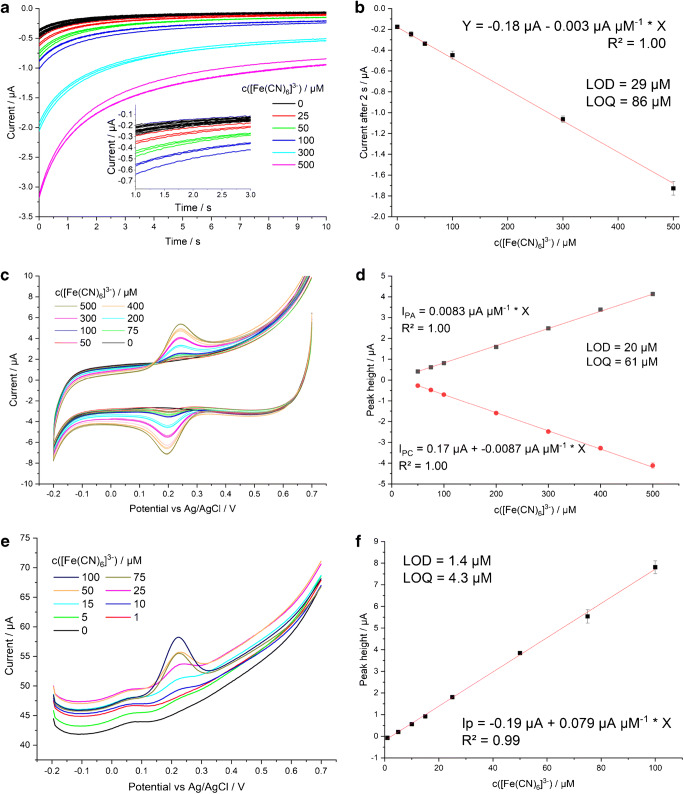
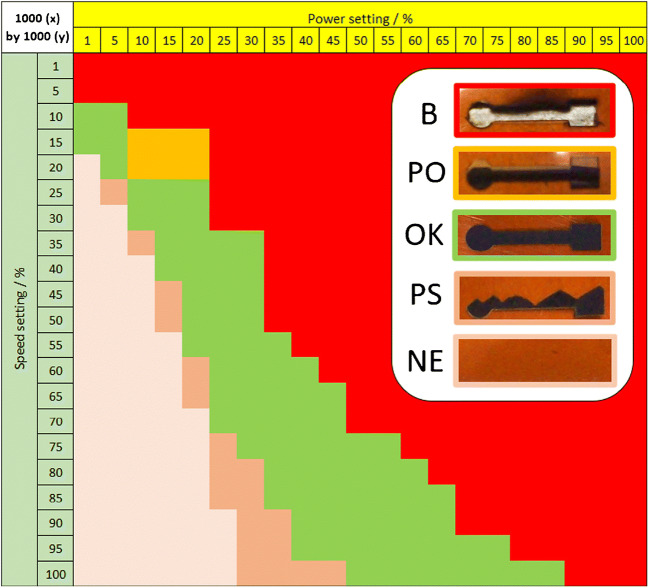
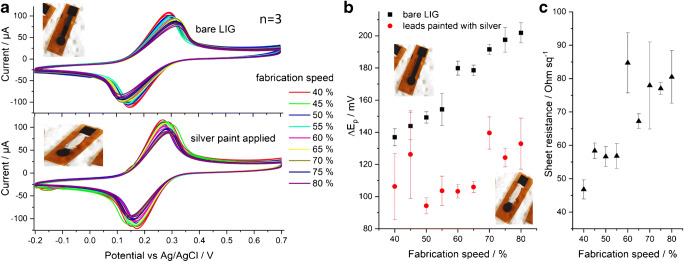
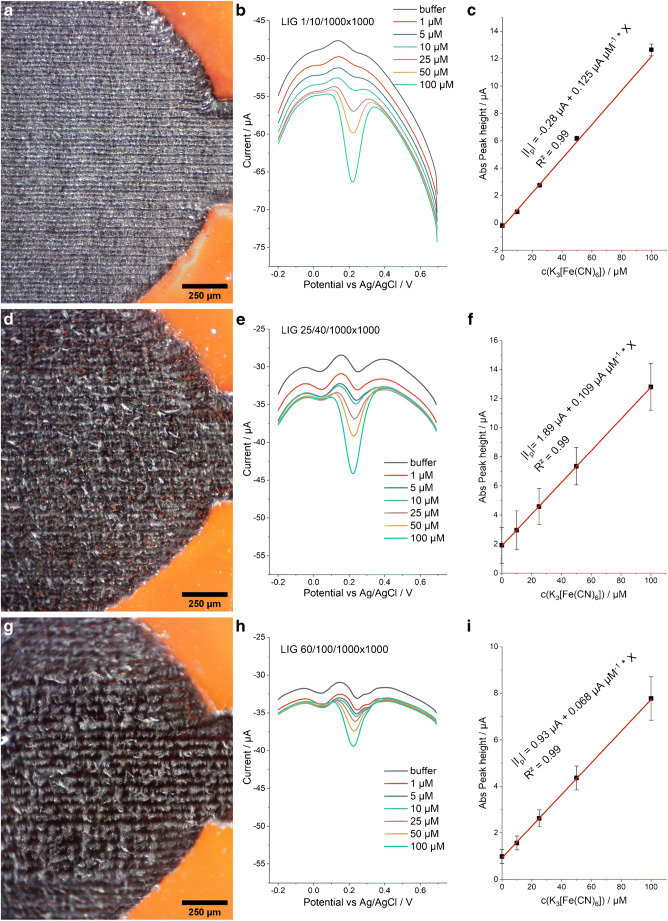
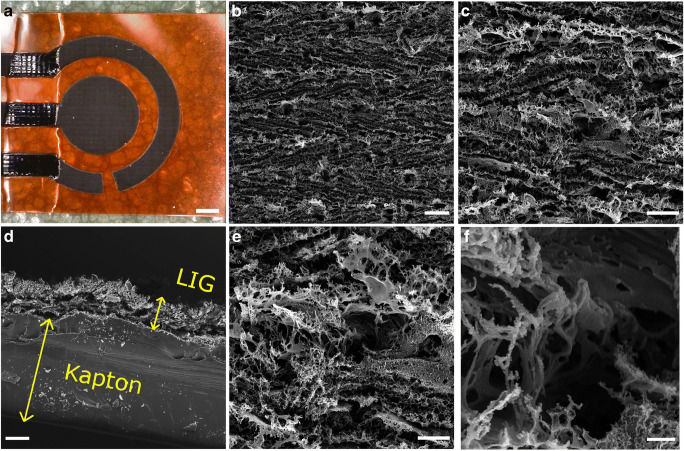
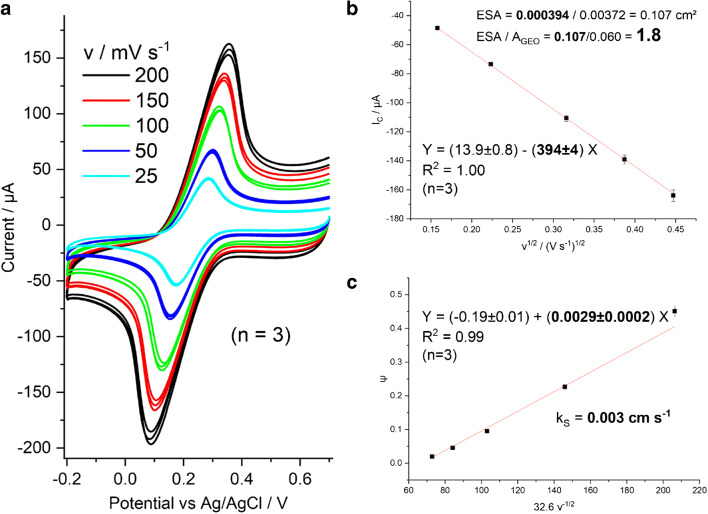
Laser-induced graphene (LIG) has emerged as a promising electrode material for electrochemical point-of-care diagnostics. LIG offers a large specific surface area and excellent electron transfer at low-cost in a binder-free and rapid fabrication process that lends itself well to mass production outside of the cleanroom. Various LIG micromorphologies can be generated when altering the energy input parameters, and it was investigated here which impact this has on their electroanalytical characteristics and performance. Energy input is well controlled by the laser power, scribing speed, and laser pulse density. Once the threshold of required energy input is reached a broad spectrum of conditions leads to LIG with micromorphologies ranging from delicate irregular brush structures obtained at fast, high energy input, to smoother and more wall like albeit still porous materials. Only a fraction of these LIG structures provided high conductance which is required for appropriate electroanalytical performance. Here, it was found that low, frequent energy input provided the best electroanalytical material, i.e., low levels of power and speed in combination with high spatial pulse density. For example, the sensitivity for the reduction of K[Fe(CN)] was increased almost 2-fold by changing fabrication parameters from 60% power and 100% speed to 1% power and 10% speed. These general findings can be translated to any LIG fabrication process independent of devices used. The simple fabrication process of LIG electrodes, their good electroanalytical performance as demonstrated here with a variety of (bio)analytically relevant molecules including ascorbic acid, dopamine, uric acid, p-nitrophenol, and paracetamol, and possible application to biological samples make them ideal and inexpensive transducers for electrochemical (bio)sensors, with the potential to replace the screen-printed systems currently dominating in on-site sensors used.
激光诱导石墨烯(LIG)已成为电化学即时诊断的有前途的电极材料。LIG 在无粘合剂和快速制造过程中提供了大的比表面积和优异的电子转移,成本低廉,非常适合在洁净室外大规模生产。改变能量输入参数时,可以产生各种 LIG 微观形态,并且在这里研究了这种微观形态对其电分析特性和性能的影响。通过激光功率、划线速度和激光脉冲密度可以很好地控制能量输入。一旦达到所需能量输入的阈值,广泛的条件导致 LIG 具有从快速、高能量输入获得的精细不规则刷子结构到更平滑和更壁状但仍多孔的材料的微观形态。只有一小部分这些 LIG 结构提供了适当电分析性能所需的高电导率。在这里,发现低、频繁的能量输入提供了最佳的电分析材料,即低水平的功率和速度与高空间脉冲密度相结合。例如,通过将制造参数从 60%的功率和 100%的速度改变为 1%的功率和 10%的速度,对 K[Fe(CN)]的还原的灵敏度提高了近 2 倍。这些一般发现可以转化为任何独立于使用的器件的 LIG 制造工艺。LIG 电极的简单制造工艺,以及在这里用各种(生物)分析相关分子(包括抗坏血酸、多巴胺、尿酸、对硝基苯酚和扑热息痛)展示的良好电分析性能,以及可能应用于生物样品,使它们成为电化学(生物)传感器的理想且廉价的换能器,有可能取代目前在现场传感器中占主导地位的丝网印刷系统。